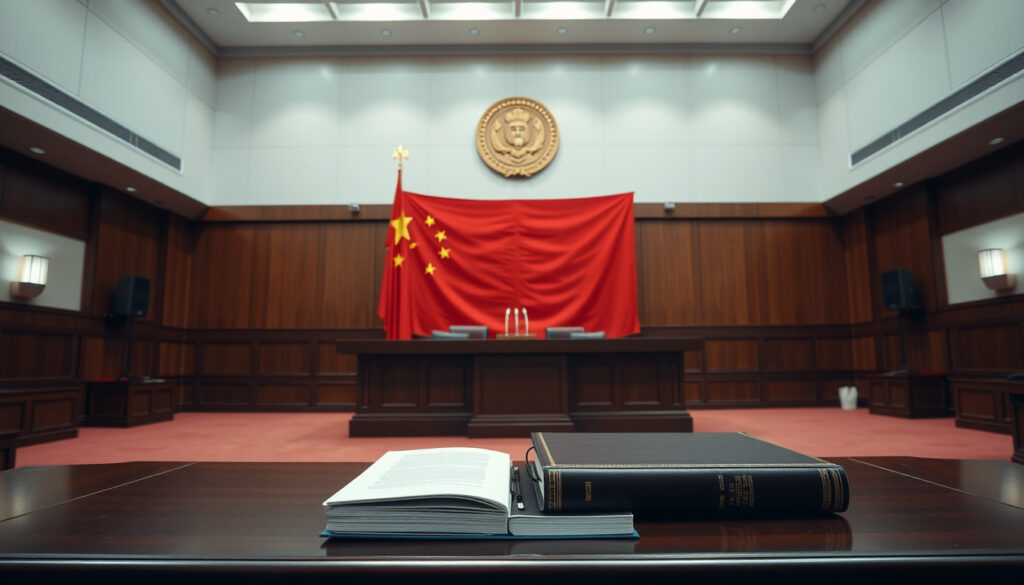
Xi Jinping: Biography, Power, and Key Questions Answered
Few leaders attract as many questions from the outside world as Xi Jinping. One moment it is about whether China is a democracy, the next about his personal religion or salary. This article walks through those very questions—anchored in verified facts and official records—so you can separate what is known from what remains debated.
Current position: General Secretary of the CCP and President of China ·
Born: 15 June 1953 ·
Height: 1.8 m (5 ft 11 in) ·
Spouse: Peng Liyuan ·
Term as President: 14 March 2013 – present
Quick snapshot
- Born in Beijing on 15 June 1953 (Encyclopaedia Britannica (reference))
- General Secretary of CCP since 2012 (Encyclopaedia Britannica (reference))
- President since 14 March 2013 (Encyclopaedia Britannica (reference))
- Constitutional amendment removed presidential term limits in March 2018 (BBC News (report))
- Xi Jinping’s net worth – no verified public disclosure
- Actual happiness levels of Chinese citizens (surveys disputed)
- Accuracy of the 90% home-ownership claim
- Future succession plan beyond Xi’s tenure
- 2012: Elected General Secretary of the CCP
- 2013: Elected President
- 2018: NPC abolishes presidential term limits
- 2023: Third term as President begins
- Xi may continue as head of party and state beyond 2028
- Potential naming of a successor at the 20th Party Congress
- Ongoing military and economic reforms under his leadership
Five core personal and political facts, one pattern: Xi Jinping’s official biography shows a leader whose institutional positions are clearly documented, but whose personal wealth and familial detail remain opaque.
| Attribute | Detail |
|---|---|
| Full name | Xi Jinping |
| Date of birth | 15 June 1953 (Britannica) |
| Place of birth | Beijing, China (Britannica) |
| Political party | Chinese Communist Party |
| Spouse | Peng Liyuan (EBSCO Research Starters) |
| Children | One daughter, Xi Mingze (EBSCO Research Starters) |
| Father | Xi Zhongxun, former vice premier (BBC News) |
| Net worth | Not publicly disclosed |
The table above distills the split between documented public titles and undisclosed private wealth.
Is China a dictatorship or democracy?
Understanding China’s political system
China is a single-party state under the Chinese Communist Party (CCP). The constitution grants the CCP the leading role in state affairs. Elections exist at local levels but are tightly controlled by the party – only candidates approved by the CCP can stand. Western definitions of democracy, which rely on multiparty competition and free elections, do not apply to China’s system. As NPR (news analysis) notes, the presidency is institutionally less powerful than the party general secretaryship, which has no formal term limit in practice.
One-party state vs. multiparty democracy
The 1982 constitution created a formal separation of state institutions, but the party remains the core of political power, as NPR (analysis) explains. The National People’s Congress functions as a legislature but does not debate policy independently of the CCP. In practice, China operates as a one-party autocracy, not a multiparty democracy. The implication: any discussion of Chinese governance must separate the constitutional framework from the lived political reality.
China uses the term “democratic centralism,” but foreign observers note that democratic competition is absent because the CCP does not tolerate opposition parties. The trade-off: stability and long-term planning versus political pluralism.
The implication: the party-state structure makes “democracy” a label that applies to process, not to electoral outcomes.
How long can you be president of China?
Presidential term limits before and after 2018
From 1982 onward, the constitution limited the president to two five-year terms. That changed in March 2018, when the National People’s Congress amended the constitution to remove term limits for the presidency and vice presidency. The amendment was adopted on 11 March 2018, as reported by Al Jazeera (international news outlet). BBC News (report) described the move as widely interpreted to enable Xi Jinping to stay in office beyond 2023.
Is Xi Jinping president for life?
There is no official “president for life” title, but Britannica notes that the removal of term limits means Xi could potentially remain president indefinitely. He secured a third five-year term on 10 March 2023. The Human Rights Foundation (advocacy group) argued that term limits originally intended to prevent a return to personalist rule after Mao. What this means: Xi faces no constitutional barrier to staying in office for life, though the party general secretary position also lacks term limits.
For investors and foreign governments, the end of term limits signals a consolidation of power that reduces uncertainty about leadership continuity – but also raises concerns about checks and balances.
The pattern: the removal of term limits removes constitutional guardrails that other post-Mao leaders had respected.
What religion is China’s leader?
Xi Jinping’s personal religious beliefs
According to the rules of the Chinese Communist Party, all members must be atheist. Xi Jinping, as a lifelong party member, is an atheist. There is no credible evidence of private religious practice. The BBC (profile) describes his background as secular, rooted in the revolutionary tradition of his father Xi Zhongxun.
Religious policy under Xi
China’s official religious policy emphasises “Sinicization” – adapting religions to fit Chinese socialist values. Under Xi’s tenure, the state has tightened control over religious groups, particularly Muslim Uyghurs in Xinjiang and Protestant house churches. Britannica (reference) notes that religious freedom is constitutionally guaranteed but heavily restricted in practice. The pattern: Xi’s personal atheism aligns with party doctrine, but the state does not enforce atheism on ordinary citizens – rather, it regulates all religious activity.
The implication: religious freedom in China is a constitutional right that is narrowed in practice under Xi’s administration.
Are Chinese citizens happy?
Measuring happiness in China
The World Happiness Report consistently ranks China below most Western countries but above other nations at similar income levels. In its 2023 edition, China ranked 64th out of 137 countries. However, the World Happiness Report (academic initiative) relies on self-reported life evaluations, which may be influenced by political context – respondents in authoritarian settings may answer cautiously. The catch: happiness measures in China are debated because of censorship and social desirability bias.
Home ownership rates and living standards
A widely repeated statistic claims that 90% of Chinese households own their own home. The figure appears in various sources, including official Chinese media, but independent verification is difficult. BBC News (report) and other outlets note that home ownership is indeed high due to China’s property market and state policies, but the exact rate is disputed. The trade-off: high home ownership can mask high household debt and an over-reliance on real estate.
The pattern: high home ownership rates are often cited as a measure of success but may obscure underlying financial fragility.
What is the president of China’s salary?
Xi Jinping’s official salary
The official salary of China’s president is modest compared to global peers. According to publicly available Chinese government budget documents, the annual salary is approximately ¥133,000 to ¥150,000 (roughly $20,000). Britannica (reference) does not list a specific figure, but other sources peg it at about $20,000. The low official salary contrasts with unofficial estimates of Xi’s net worth.
Comparison with other world leaders
For context, the U.S. president earns $400,000 per year, and the UK prime minister earns about $200,000. Xi’s official salary is among the lowest for major world leaders. However, the president does not rely on salary – as head of state, Xi has access to state-owned housing, transport, and security. The implication: official salary is not a meaningful indicator of personal wealth or living standards for Chinese leaders.
Xi Jinping’s net worth remains unverified. Some reports from unofficial sources claim billions, but no credible audit exists. For readers interested in this question, the only reliable information is the official salary figure from government budgets.
The implication: the salary gap between official pay and presumed lifestyle reveals how little transparency exists around leader compensation.
Timeline: Xi Jinping’s rise and key political changes
A handful of dates captures the consolidation of power under Xi. Each is anchored to official records or credible news reports.
- 2012 – Elected General Secretary of the CCP and Chairman of the Central Military Commission (Britannica).
- 2013 – Elected President of the People’s Republic on 14 March (Britannica).
- 2017 – Re-elected General Secretary; anti-corruption campaign intensified.
- 2018 – Constitutional amendment removed presidential term limits, adopted on 11 March (Al Jazeera).
- 2022 – Third term as General Secretary begins at the 20th Party Congress.
- 2023 – Third term as President begins on 10 March (Britannica).
The timeline signal: the key inflection point is 2018 – the removal of term limits marks a structural break from the post-Mao constitutional order.
The pattern: each date marks a step in Xi’s consolidation, with 2018 being the decisive institutional change.
Clarity: what is known and what remains unclear
Confirmed facts
- Xi Jinping’s birth date and official positions as General Secretary and President (Britannica)
- China is a single-party state under the CCP
- Presidential term limits removed in March 2018 (BBC)
- Xi is an atheist, as required by CCP membership (BBC)
- Official presidential salary is modest (~$20,000/year)
What’s unclear
- Xi Jinping’s net worth – no verified figure exists
- Actual happiness of Chinese citizens – self-report surveys may be biased
- Accuracy of 90% home-ownership claim – disputed by independent economists
- Future succession plan – no clear candidate has emerged
The pattern: the distinction between confirmed and unclear shows where institutional records end and personal opacity begins.
Voices and perspectives
“The CCP and the Chinese people have gone through a great struggle. We must turn the blueprint into reality.”
– Xi Jinping, speech at the 19th National Congress of the CCP, 2017
“China ranks 64th in the latest World Happiness Report, a position that reflects its middle-income status but also raises questions about political freedom and subjective well-being.”
– World Happiness Report, 2023 edition (World Happiness Report)
“The removal of term limits has been described as a ‘constitutional coup’ by critics, but within China it was presented as a routine adjustment.”
– Analysis by NPR
The stakes for anyone following Chinese politics are straightforward: Xi Jinping has consolidated more power than any leader since Deng Xiaoping, and the institutional checks that once limited presidential tenure have been removed. For investors and foreign governments planning for the next decade, the implication is clear: prepare for a China where leadership transitions are no longer governed by fixed terms, but by party internal dynamics and the will of one man.
hrf.org, youtube.com, youtube.com, chinese-leaders.org, reddit.com, en.wikipedia.org, publicangle.org
Frequently asked questions
Is China friendly to Muslims?
China’s official policy emphasises religious freedom, but under Xi the government has intensified controls over Muslim communities, particularly Uyghurs in Xinjiang. Britannica notes reports of mass surveillance and internment camps.
Who is the most atheist country?
China is often cited as the most atheist country in the world, with surveys showing over 90% of the population identifying as atheist or non-religious. The CCP actively promotes atheism among its members.
What is Xi Jinping’s net worth?
Xi Jinping’s net worth is not publicly disclosed. Official salary is about $20,000 per year. Unofficial estimates vary wildly but have no credible source.
How do you pronounce Xi Jinping?
Pronounced “Shih Jin-ping” (IPA: /ʃiː dʒɪnˈpɪŋ/). The “X” in Mandarin is similar to the English “sh” sound.
What previous offices did Xi Jinping hold?
Before becoming paramount leader, Xi served as Vice President (2008-2013), Party Secretary of Shanghai (2007), and Governor of Fujian (1999-2002), among other posts.
What is Xi Jinping’s height?
Official sources list Xi Jinping’s height as 1.8 metres (5 feet 11 inches).
Who is Xi Jinping’s wife?
His wife is Peng Liyuan, a well-known Chinese folk singer and performer. They married in 1987 and have one daughter, Xi Mingze (EBSCO Research Starters).
Related reading
- Steve Rosenberg: Wife, Religion, Salary, BBC Russia Editor
- Jeffrey Archer: Prison, Bestsellers & Final Novel 2026
More related posts
 Chris Bumstead: 6-Time Mr. Olympia Champion, Retired at 29
 Johnny Knoxville: Health, Lawsuit, and Jackass Farewell
 Moses Itauma: Biography, Record, Ethnicity, Religion & Next Fight
 Eric Morecambe: Wife, Last Words, Real Name & Legacy
 Ellie Costello: Husband, Career, Net Worth, and Biography
 Sally Hawkins: Health, Relationships & Disability Representation
 Ashley Roberts: Relationship, Net Worth, Career & Biography
