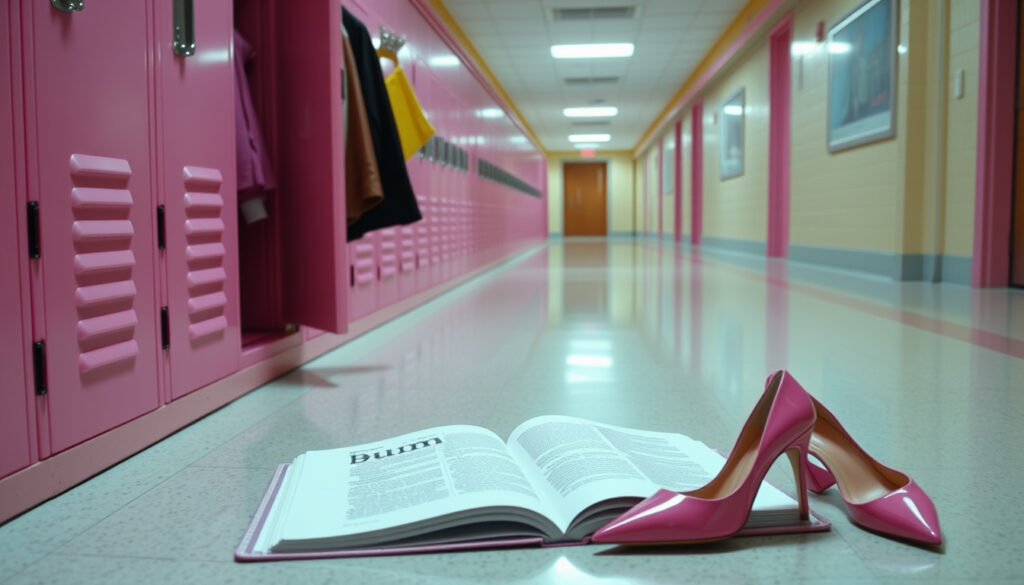
Regina George: Character Analysis & Cultural Impact (Mean Girls)
Two decades after Mean Girls hit theaters, Regina George remains the benchmark for the pop-culture queen bee. The character, played by Rachel McAdams in 2004 and by Reneé Rapp in the 2024 musical adaptation, has sparked academic analysis and a second life on social media.
Portrayed by (2004): Rachel McAdams ·
Portrayed by (2024): Reneé Rapp ·
First appearance: 2004 film Mean Girls ·
Character role: Main antagonist ·
Based on: Queen Bees and Wannabes by Rosalind Wiseman
Quick snapshot
- Regina George is the central queen-bee antagonist of Mean Girls and the leader of the Plastics (IMDb (cast listing))
- Rachel McAdams portrayed Regina in the 2004 film (Business Insider (cast comparison))
- Reneé Rapp portrayed Regina in the 2024 musical film (Business Insider (cast comparison))
- Whether the 2024 version intentionally changes Regina’s backstory from the original (TODAY (film comparison))
- Exact impact of the Regina George character on real-world bullying behavior (Seattle University ScholarWorks (research gap))
- How much of Regina George’s backstory was adapted directly from Rosalind Wiseman’s case studies vs. invented for the film (TODAY (film comparison))
- 2004: Mean Girls released; Regina George introduced, played by Rachel McAdams (Wikipedia (film entry))
- 2017–2018: Broadway musical Mean Girls premieres, featuring Regina played by Taylor Louderman (Business Insider (musical timeline))
- 2024: Mean Girls musical film released, Regina played by Reneé Rapp (Screen Rant (interview))
- The character will likely continue to be referenced in new media—meme culture keeps her alive (The Express Tribune (20th-anniversary piece))
- Academic studies of relational aggression may still use Regina as a case study (Seattle University ScholarWorks (academic analysis))
Regina George isn’t just a fictional mean girl—she’s a cultural diagnostic tool. The character’s staying power shows how much early-2000s teen cinema shaped our understanding of popularity, and the 2024 adaptation proves the archetype still resonates with Gen Z.
Key facts about Regina George at a glance:
| First appearance | 2004 film Mean Girls |
| Last appearance (canon) | Mean Girls (2024 musical adaptation) |
| Original actress (2004) | Rachel McAdams |
| Current actress (2024) | Reneé Rapp |
| Based on | Queen Bees and Wannabes by Rosalind Wiseman |
| Character arc | From bully to redeemed student |
What is Regina George famous for?
Regina George is the main antagonist of Mean Girls, famous for ruling her high school as the leader of the Plastics. Her role was based on a case study in Rosalind Wiseman’s book Queen Bees and Wannabes (Wikipedia (film background)). In the 2004 film, Rachel McAdams brought a chilling mix of charm and cruelty that turned Regina into a benchmark for teen villains.
Her role as the leader of the Plastics
- Regina heads the Plastics, a trio of popular girls who enforce a strict social code (IMDb (character description))
- The group’s rules—like wearing pink on Wednesdays—became instantly quotable
The iconic “fetch” attempt
- Regina tries to make “fetch” happen as a slang term; it never catches on, but the line itself became iconic
- Scholars have analyzed her language use as a tool for maintaining status (Seattle University ScholarWorks (linguistic analysis))
Portrayal by Rachel McAdams
- McAdams was 25 when she played a high-school student, delivering a performance that was both comedic and menacing (Business Insider (cast details))
- Her interpretation set the template for every later version
Regina’s fame rests on a perfect storm: a sharp script, McAdams’s layered performance, and a moment in pop culture that needed a villain who was both aspirational and cautionary.
The pattern is clear: each actress brought her own era’s anxieties to the role, keeping Regina relevant across generations.
Why is Regina George so iconic?
Regina George is often cited as a defining character of 2000s teen cinema (The Express Tribune (20th-anniversary reflections)). Her lines like “That is so fetch” became part of the language, and her style—pink outfits, the Burn Book—influenced fashion and social behavior. Media studies scholars have examined her as a symbol of relational aggression (Wikipedia (themes)).
Cultural impact and catchphrases
- “On Wednesdays we wear pink” is one of the most quoted movie lines ever
- The Burn Book concept has been referenced in real-world discussions of gossip and cyberbullying
Representation of high school social hierarchies
- Regina embodies the “Queen Bee” archetype—dominant, manipulative, and controlling (Common Purpose (leadership analysis))
- Academic research has used her character to illustrate how girls enforce social norms through exclusion (Seattle University ScholarWorks (Queen Bee role))
Influence on fashion
- The Plastics’ dress code—pastels, miniskirts, and preppy accessories—defined “mean girl” style for a generation
- The 2024 film updated the look with contemporary streetwear while keeping Regina’s dominance intact (TODAY (style comparison))
The catch is that her iconic status relies on the very cruelty the film critiques, creating a complicated legacy.
What happened to Regina George?
In the 2004 film, Regina’s downfall begins when Cady and the Plastics plot against her. She is hit by a school bus and suffers a spinal injury, which forces her to wear a back brace. By the end, she softens—joining the mathletes and showing a kinder side (Wikipedia (plot summary)).
Her downfall in the film’s climax
- Cady infiltrates the Plastics and feeds Regina poisoned Kalteen bars, causing her to gain weight and lose status
- The bus accident is the physical culmination of Regina’s comeuppance
Injuries from the school bus accident
- Regina’s spine is injured, and she later appears in a brace—a humbling image for the former queen bee
Final redemption arc
- After the accident, Regina reconciles with others and becomes a mathlete, suggesting growth
- The 2024 film keeps this arc but uses social media to amplify her public humiliation (TODAY (2024 differences))
The implication: Regina’s arc—from tyrant to redeemed student—offers a moral that even the most powerful bully can change, but only after a public collapse of her carefully built empire.
Why do we wear pink on Wednesdays?
The rule “On Wednesdays we wear pink” is established by Regina as part of the Plastics’ strict dress code (IMDb (quotes)). It became an instant meme and a shorthand for the absurdity of clique rules.
Origin of the rule in the film
- The line is delivered by Regina during a cafeteria scene where Cady first learns the Plastics’ codes
- She declares it with absolute authority, cementing her role as rule-maker
The Plastics’ dress code
- Members must wear pink on Wednesdays, ponytails on Mondays, and never wear the same outfit twice
- The code is part of the group’s control over identity and belonging
Symbolism of pink and conformity
- Pink in the film signals femininity, popularity, and compliance with Regina’s standards
- Scholars have noted that the color rule reflects how enforced conformity stifles individuality (Wikipedia (themes))
What this means is that a simple line about fashion became shorthand for understanding how arbitrary popularity rules can be.
Is Mean Girls appropriate for kids?
Mean Girls is rated PG-13 in the US for sexual content, crude humor, bullying, and language (Wikipedia (rating)). Common Sense Media recommends ages 14+.
Age rating and content warnings
- The 2004 film includes references to sex, drugs, and underage drinking
- The 2024 version, while a musical, still contains bullying and mature themes
Themes of bullying and gossip
- Regina’s behavior—spreading rumors, manipulating friends—models real-world relational aggression
- Parents may want to discuss these themes with younger teens
Parental guidance recommendations
- Common Sense Media suggests that 14+ is appropriate, with mature 13-year-olds possibly fine with dialogue
- The film can be used as a teaching tool about bullying and peer pressure
The catch: Mean Girls may be inappropriate for pre-teens due to its raw depiction of high-school cruelty, but it can serve as a conversation starter for families about social dynamics.
Timeline: Regina George across media
- 2004 – Mean Girls film released; Regina introduced by Rachel McAdams (Wikipedia (release date))
- 2017–2018 – Broadway musical premieres; Taylor Louderman plays Regina (Business Insider (musical timeline))
- 2024 – Musical film released; Reneé Rapp plays Regina (Screen Rant (interview))
Clarity check: What we know and what we don’t
Confirmed facts
- Regina George is the main antagonist of Mean Girls
- She is portrayed by Rachel McAdams (2004) and Reneé Rapp (2024)
- The character is derived from Rosalind Wiseman’s book
What’s unclear
- Whether the 2024 film’s changes to Regina’s backstory are intentional or just modern updates
- The exact influence of the character on real-world bullying rates
- How much of Regina George’s backstory was adapted directly from Wiseman’s case studies vs. invented for the film
Quotes that defined a character
“That is so fetch.”
— Regina George (Rachel McAdams), Mean Girls 2004 (IMDb (quotes))
“Regina in the new movie was different from the person I was at 18 or 19 while doing the role on stage.”
— Reneé Rapp, Mean Girls 2024 (YouTube interview)
Regina George remains a cultural fixture because her character captured something real about teenage power struggles. For parents and educators trying to explain relational aggression, or for fans revisiting the film, the ultimate mean girl is both a warning and a mirror. The choice to keep watching—or to discuss her behavior with a younger viewer—is clear: either let the character live as a harmless meme, or use her story to talk about the consequences of exclusion and cruelty.
reddit.com, tribune.com.pk, meangirls.fandom.com, alisechaffins.substack.com, lageblick.de
For a deeper look at the character’s legacy, this detailed character analysis offers valuable insights into her portrayal and cultural significance.
Frequently asked questions
How old is Regina George?
Her exact age is not stated, but she is a junior in high school, likely 16–17 in the 2004 film.
What grade is Regina George in?
She is in 11th grade (junior year) at North Shore High School.
What did Regina George’s father do?
The film does not specify her father’s occupation; he is never shown.
Does Regina George have siblings?
No siblings are mentioned or appear in either film.
What happens to Regina George at the end of Mean Girls?
After being hit by a bus and recovering, she joins the mathletes and shows a kinder, more humble attitude.
Is Regina George based on a real person?
She is based on composite case studies from Rosalind Wiseman’s book Queen Bees and Wannabes, not one specific person.
What is Regina George’s phone number (in the movie)?
In the Burn Book, the number shown is 847-116-9132, though it’s likely made up for the film.
Related reading
More related posts
 Tia Mowry: Her Diagnosis, Divorce, and Life Now
 Beverley Knight: Net Worth, Husband, Children, Most Famous Song
 When Will Interest Rates Go Down? 2026 Forecast & Mortgage Advice
 Mark Bonnar: Biography, Career, and Personal Life
 Air Fry Chicken Breast – Juicy Times and Temperatures
 Pubs with Food Near Me: Top Gastropubs in Mullingar
 Rachel Riley: Biography, Husband, Children, Net Worth & Career
 Edward VI: Death, Reign, and Legacy – Who Succeeded
