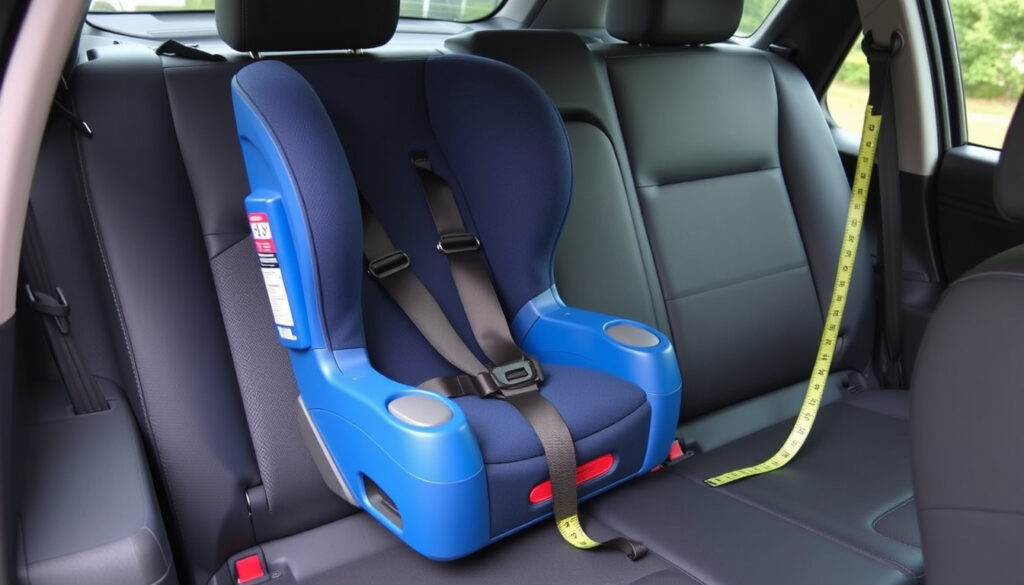
Booster Seat Age: When to Switch, Rules & Types
If you’ve ever watched a six-year-old slump in a car seat belt that cuts across their neck, you already know why booster seats matter. That awkward fit isn’t just uncomfortable—it’s unsafe. Across Ireland, the UK, and the US, official rules set clear height and weight benchmarks, but the details differ. This guide maps out the legal requirements, explains when to switch from a high-back to a backless booster, and gives you a straight decision framework so you can choose what’s right for your child and your car.
Minimum age for booster seat (UK/Ireland): 4 years ·
Maximum height before no booster needed (UK): 135 cm ·
Minimum weight for backless booster (common recommendation): 15 kg (33 lb) ·
Legal requirement in Ireland for child seats: Until 12 years or 135 cm ·
NHTSA recommendation for booster use: Until child fits adult seat belt properly, typically 4’9″ (145 cm)
Quick snapshot
- Children must use a booster seat until at least 4 years old in most regions (NHTSA car seat guidelines).
- UK and Ireland law require booster seats until 12 years or 135 cm (UK Government child car seat rules; Health Service Executive (HSE) Ireland).
- Backless boosters require a vehicle head restraint and properly fitting seatbelt (Aviva Ireland blog).
- Optimal age to switch from high-back to backless booster is debated; some experts recommend waiting until 5–6 years for better side protection (Consumer Reports booster seat guide).
- Effectiveness of booster seats for children above 55 kg (120 lb) varies by model and vehicle seat design. (Consumer Reports booster seat guide)
- Forward‑facing harness: from 9–18 kg (approx. 9 months–4 years). (Tusla guidance)
- High‑back booster: from 15–25 kg (approx. 4–6 years) (Tusla guidance).
- Backless booster: from 22–36 kg (approx. 6–12 years) (Tusla guidance).
- When a child reaches 150 cm in height or 36 kg in weight, they can legally use an adult seat belt without a booster (AIG Ireland guidance).
- Many safety organisations recommend continuing to use a booster beyond the legal minimum until the seat belt fits correctly across the chest and lap. (AIG Ireland guidance)
Six key figures summarise the most important booster‑seat thresholds across different rulesets.
| Label | Value |
|---|---|
| Minimum age for booster seat (Ireland/UK) | 4 years |
| Minimum weight for backless booster | 15 kg (33 lb) |
| Maximum height before booster not required (UK/Ireland law) | 135 cm |
| NHTSA recommended height for seat belt alone | 4 feet 9 inches (145 cm) |
| Number of children killed in car crashes annually (US, 2023) | 608 (ages 0–12) |
| Correct booster use reduces injury risk by | 45% compared to seat belt alone (NHTSA) |
At what age should a child go into a booster seat?
Age and weight milestones for booster readiness
Most official guidelines set the minimum booster age at 4 years. The Aviva Ireland blog states that booster seats are for children aged four years and older until they are big enough to use the seat belt without additional support. But age alone isn’t enough: the child must have outgrown their forward‑facing harness seat, typically at a weight around 18 kg (40 lb) or at the height limit of the seat (nidirect government services).
- Forward‑facing harness: usually up to 18 kg (approx. 4 years) – check seat label.
- Booster seat minimum: 15 kg (33 lb) for backless models, but 18 kg is safer for high‑back (Tusla guidance).
- Most children are booster‑ready around age 4, but small‑for‑age children may need the harness longer.
Why forward‑facing harness seats are used before boosters
A forward‑facing harness seat distributes crash forces across the child’s stronger shoulders and pelvis, while a booster relies on the vehicle’s seat belt. The HSE Ireland emphasises that a child must be big enough for the adult belt to lie across the chest and hips, not the stomach or neck. That’s why harness seats are recommended until the child reaches the seat’s weight or height limit.
What are the rules for booster seats in Ireland?
Legal requirements under Irish law
Irish law, enforced by the Road Safety Authority (RSA), mandates that children under 150 cm in height or under 36 kg must use a child restraint suitable for their weight and size (Health Service Executive (HSE) Ireland). This usually means a child needs a car seat until around 12 years old, but the actual requirement depends on height and weight (HSE Ireland). The Tusla guidance specifies that children aged 3 years or over who are under 150 cm and under 36 kg must use the correct child seat, booster seat, or booster cushion.
Taxis are exempt from the child restraint law in Ireland (HSE Ireland). If you travel by taxi, plan accordingly.
Height and weight limits specified by the RSA
The RSA publishes a conversion table: children from 22–36 kg (approximately ages 6–12) should use a booster seat or booster cushion (Tusla guidance). Booster cushions do not have an integral harness; the adult seat belt goes around the child and the seat (Tusla guidance). The driver is legally responsible for ensuring passengers under 17 use the correct restraint (Tusla guidance).
The implication: failing to follow the rules can result in a fixed‑penalty fine and, in a crash, a child who is not properly restrained faces a much higher risk of injury. The AIG Ireland guidance recommends continuing use beyond the legal minimum for added safety.
When to switch to backless booster?
Minimum requirements for backless booster use
Backless boosters are generally approved for children over 15 kg (33 lb) and around 4 years old. However, many experts recommend waiting until the child is older for better side protection. The Aviva Ireland blog notes that booster seats help position the seat belt correctly across the child’s chest and lap. But with a backless booster, the vehicle’s seat must provide adequate head support.
Vehicle seat and head restraint considerations
The vehicle must have a head restraint that reaches at least to the top of the child’s ears (NHTSA car seat guidelines). If the vehicle seatback is low or lacks a head restraint, a high‑back booster is the better choice. The AIG Ireland guidance emphasises that the lap belt must lie across the child’s upper thighs, not the stomach, and the shoulder belt across the chest, not the neck.
- Check that the child can sit properly without slouching.
- Ensure the lap belt stays low on the hips, not riding up.
- If the child slouches or plays with the belt, stick with a high‑back.
A 4-year-old may meet the minimum weight for a backless booster (15 kg), but side‑impact protection is significantly reduced without the high‑back structure. Most safety advocates recommend staying in a high‑back until at least age 5–6.
High‑Back Boosters vs Backless Booster Seats
Two booster designs, one key difference in crash protection. The table below lays out the trade‑offs.
| Feature | High‑back booster | Backless booster |
|---|---|---|
| Side impact protection | Provides head and torso side wings (Aviva Ireland blog) | No side protection – relies on vehicle seat |
| Portability | Bulkier, heavier | Light, easy to move between cars |
| Age/weight range typical | 4–12 years (15–36 kg) (Tusla guidance) | 6–12 years (22–36 kg) (Tusla guidance) |
| Regulation | R129 (i‑Size) or R44 approved | Often R44 approved; some R129 |
| Cost | Higher (typically €60–150) | Lower (typically €20–50) |
The pattern: high-back boosters prioritise protection, while backless models prioritise portability and cost.
Safety features: side impact protection vs portability
High‑back boosters offer better head and side support, reducing risk in side‑impact crashes. The AIG Ireland guidance states that a booster seat should be used as long as possible. Backless boosters trade that protection for convenience – they’re easy to stash in a second car or take on holiday.
Age and weight ranges each type supports
According to Tusla guidance, booster seats cover 22–36 kg (approx. 6–12 years). However, many high‑back models start at 15 kg (4 years). The Aviva Ireland blog confirms that booster seats are for children aged four years and older until they can use the seat belt alone.
Installation and fit considerations
Installation of a high‑back booster is usually more involved: you need to route the seat belt through specified guides and ensure the backrest is secured. Backless boosters simply sit on the vehicle seat and the child buckles up. The nidirect government services note that the correct fit is critical – the belt must not twist and must be tight against the child’s body.
Can my 4 year old use a backless booster?
Weight and maturity checklist
Technically, a 4‑year‑old who weighs at least 15 kg can legally use a backless booster in Ireland (HSE Ireland). But the child must be able to sit still, not slouch, and keep the seatbelt in the correct position for the entire journey. Many 4‑year‑olds lack that maturity.
When to choose a high‑back instead
The AIG Ireland guidance recommends continuing with a high‑back booster for as long as the child fits because of the added side‑impact protection. A 4‑year‑old’s head is still proportionally large and vulnerable, and a high‑back’s side wings can make a critical difference in a side‑impact crash (NHTSA).
Upsides
- High‑back booster offers superior side protection.
- Keeps child in correct position without slouching.
- Often includes additional comfort features (cup holders, padding).
Downsides
- More expensive and bulky.
- Heavier to move between cars.
- May not fit low‑profile vehicle seats well.
How to install a booster seat correctly
Proper installation is the difference between a booster that protects and one that slides around in a crash. Follow these steps:
- Read the manual: Every booster seat has specific weight, height, and installation instructions. The nidirect government services stress that you must follow both the car seat and vehicle owner manuals.
- Place the booster on the vehicle seat: It should sit flat and stable. For backless, the vehicle seat must have a head restraint that reaches at least to the top of the child’s ears (NHTSA).
- Seat the child: The child’s back should be flat against the seatback. The lap belt must lie across the upper thighs, not the stomach. The shoulder belt should cross the middle of the chest and shoulder, not the neck or face (Aviva Ireland blog).
- Buckle and tighten: Pull the seat belt tight and ensure no twists. The belt should be snug – you should not be able to pinch any slack. The Tusla guidance notes that the driver is legally responsible for proper restraint.
- Test for movement: Grasp the booster at the belt path; it should not move more than 2.5 cm (1 inch) side‑to‑side or front‑to‑back.
Never use a lap‑only seat belt with a booster seat. Booster seats require a three‑point seat belt to function correctly (HSE Ireland).
Expert perspectives on booster seat safety
“Booster seat usage reduces risk of injury in a crash.”
— National Highway Traffic Safety Administration (NHTSA) (NHTSA car seat guidelines)
“The law in Ireland requires children under 150 cm or 36 kg to use a child restraint. This usually means a car seat until around 12 years old.”
— Health Service Executive (HSE) Ireland (HSE Ireland)
“All children up to 135 cm in height or up to 12 years of age, whichever occurs first, must use a suitable child restraint.”
— UK Government (gov.uk) (UK Government child car seat rules)
“Children aged 3 years or over who are under 150 cm tall and under 36 kg must use the correct child seat, booster seat, or booster cushion.”
— Tusla – Child and Family Agency (Tusla guidance)
unbuckleme.com, csftl.org, youtube.com, safeintheseat.com, youtube.com, tripadvisor.com, thecarseatlady.com, nzpublicnews.com
Frequently asked questions
Do booster seats expire?
Yes. Most booster seats have an expiry date printed on the label (usually 6–10 years from manufacture). Plastic can degrade, and old seats may not comply with current safety standards. Always check the expiry date before purchasing a second‑hand seat.
Can I use a booster seat with a lap‑only seatbelt?
No. A lap‑only belt does not provide upper body restraint and can cause serious injury in a crash. Booster seats require a three‑point seat belt that goes across the chest and lap (HSE Ireland).
How do I clean a booster seat?
Most covers are removable and machine washable (check the manual). Use mild detergent and air dry. Never submerge the plastic shell or harness components. Wipe down the shell with a damp cloth.
Can a child sit in the front seat with a booster?
In Ireland, there is no law against children sitting in the front seat as long as they use the correct child restraint for their height and weight (HSE Ireland). However, it is illegal and dangerous to place a rearward‑facing child seat in a front passenger seat with an active airbag. For forward‑facing boosters, push the front seat as far back as possible.
What is i‑Size and why does it matter for boosters?
i‑Size (R129) is a European safety regulation that uses child height rather than weight for seat selection and requires better side‑impact protection. Many newer booster seats carry i‑Size approval, meaning they meet stricter safety criteria than the older R44 standard.
Are backless booster seats safe for long trips?
Yes, as long as the child fits correctly and the vehicle seat provides adequate head support. Backless boosters can be less comfortable on long journeys because they offer no side support. Consider breaks every two hours so the child can stretch.
How do I know if my child is ready to stop using a booster?
The AIG Ireland guidance says children can legally use seat belts without a booster when they reach 150 cm or 36 kg. But the NHTSA recommends waiting until the child is 4’9″ (145 cm) and passes the five‑step fit test: the child sits with back against the seat, knees bend over the seat edge, lap belt lies on upper thighs, shoulder belt crosses chest, and the child stays in position for the whole trip.
For families in Ireland, the choice between high‑back and backless booster comes down to a single question: can your vehicle provide the side‑impact protection a high‑back offers? If your car has good head restraints and you don’t often travel on high‑speed roads, a backless booster may be fine for older children. But for a 4‑ or 5‑year‑old, the extra protection of a high‑back is worth the cost and bulk. Parents should keep their child in a booster until they pass the fit test at around 145 cm, regardless of age. For Irish families, that means planning for booster use until age 10–12 – and the safest choice is a high‑back for as long as possible.
More related posts
 Mark Williams: 3-Time Snooker Champ, Actor & NBA Star
 Trent Reznor: Biography, Net Worth, and Famous Quotes
 Steve Buscemi: 9/11 Firefighter, Actor, and His Famous Smile
 Yahoo Mail Sign In Guide: How to Log In on Any Device
 Reena Virk: Under the Bridge Fact vs. Fiction – Full Case Guide
 Turki Alalshikh: Net Worth, Health, and Boxing Role
 Katy Perry: Health, Relationships, and Family Updates 2025
