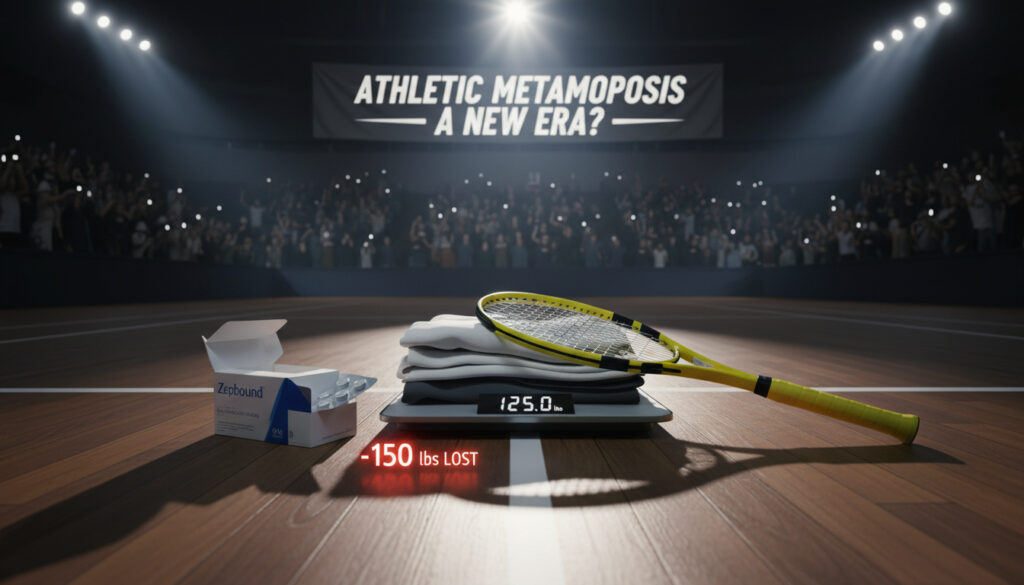
Serena Williams Weight Loss – Zepbound Results and Controversy
Serena Williams has revealed a dramatic transformation, shedding between 31 and 34 pounds through the use of GLP-1 weight-loss medications. The tennis legend’s journey became public in August 2025, when she announced her partnership with telehealth company Ro and shared progress documenting her physical changes.
The 23-time Grand Slam champion began struggling with weight retention following the birth of her second child in 2023. Despite maintaining rigorous exercise routines including up to 30,000 daily steps and intensive training sessions, Williams found herself battling persistent joint pain and a plateau that traditional methods could not break.
Her decision to use Zepbound, a dual-action GLP-1/GIP receptor agonist, marks a significant shift in how high-profile athletes approach post-career health management. While the medication has delivered measurable results, the announcement has sparked renewed debate about pharmaceutical intervention in weight management and the specific role of celebrity endorsements in medical tourism.
What GLP-1 medication did Serena Williams use for weight loss?
Williams specifically uses Zepbound, known generically as tirzepatide. This medication functions as a dual agonist targeting both GLP-1 and GIP receptors, distinguishing it from earlier single-action alternatives like semaglutide.
Clinical trials suggest Zepbound produces more substantial results than its predecessors. Over 72-week periods, participants achieved average body weight reductions of 20.2% (approximately 50.3 pounds) compared to 13.7% (33.1 pounds) for semaglutide users. Williams began her treatment through Ro in January 2025 after an earlier trial with unspecified GLP-1 medications during summer 2024 proved unsustainable.
The medication requires weekly subcutaneous injections and must be paired with lifestyle modifications to maintain muscle mass. Williams has emphasized that her regimen includes protein-rich foods such as beans and continued strength training, rejecting characterizations of the drug as a standalone solution.
Zepbound (tirzepatide)
31-34 pounds
8 months on current protocol
Ro telehealth platform
Key Insights
- Williams switched to Ro in January 2025 after previous GLP-1 attempts
- Zepbound targets two metabolic pathways versus one
- Average Ro users lose 14-20% body weight annually
- The drug requires ongoing use to prevent weight regain
- Williams maintains exercise and dietary discipline alongside medication
- She previously attempted 30,000 daily steps without pharmaceutical aid
- Reports indicate 31 pounds lost within eight months
| Fact | Detail |
|---|---|
| Medication Name | Zepbound (tirzepatide) |
| Weight Loss | 31-34 pounds |
| Start Date | January 2025 (current protocol) |
| Previous Attempt | Summer 2024 (unspecified GLP-1) |
| Mechanism | Dual GLP-1/GIP receptor agonist |
| Trial Results | 20.2% body weight loss vs 13.7% for semaglutide |
| Provider | Ro telehealth |
| Complementary Measures | Strength training, protein-rich diet |
What do Serena Williams weight loss before and after photos reveal?
Visual documentation of Williams’ transformation appears primarily through her Instagram feed and promotional materials released by Ro. These images depict notable changes in her physical composition following the August 2025 announcement.
Instagram and Social Documentation
Williams shared before-and-after progress via Ro-sponsored Instagram posts, showcasing the physical differences achieved through the eight-month protocol. Her active feed continues to display workout routines and meal preparation, emphasizing the combination of pharmaceutical intervention and sustained physical activity.
Physical Markers of Change
The photographs reveal reduced joint inflammation and improved mobility—changes Williams has attributed to the weight reduction. In earlier attempts to manage her weight through exercise alone, she reported persistent knee pain that complicated basic movement and tennis activities. Interview footage with Oprah Winfrey shows her discussing the post-kids struggle and the shift to pharmaceutical assistance.
Campaign visuals distributed by Ro include reference imagery of pen injections and progress comparisons. Interviews with Elle, Women’s Health, and Vogue have featured additional progress photographs documenting the transformation timeline.
What is the controversy around Serena Williams weight loss advert?
The August 2025 partnership announcement positioned Williams as a celebrity patient ambassador for Ro, immediately triggering scrutiny given her husband’s financial involvement with the company. Alexis Ohanian serves as both investor and board member for the telehealth platform, creating potential conflicts of interest that critics have highlighted in social discourse.
Ethical Questions in Athletic Communities
Medical professionals and sports commentators have raised specific concerns regarding GLP-1 use among elite athletes. Debates continue about whether such medications constitute performance enhancement or legitimate health management, particularly regarding weight-class sports and endurance metrics.
Stigma and Disclosure Pressures
Williams has directly addressed accusations that she sought an “easy way out,” noting that seeking pharmaceutical help required significant courage. CBS News coverage emphasizes that she specifically rejected the notion of medication as a shortcut, instead framing the treatment as requiring discipline alongside diet and exercise.
Physicians emphasize that long-term adherence is required to maintain weight loss achieved through GLP-1 medications. Discontinuation typically results in rapid weight regain without sustained lifestyle modifications and ongoing medical supervision.
What role does her husband play in the weight loss journey?
Alexis Ohanian’s position as a Ro board member and investor creates a direct financial connection between Williams’ endorsement and her family’s business interests. This relationship began before the January 2025 partnership, when Williams initially sought access to Zepbound through the platform.
The Ro Partnership Structure
Williams joined Ro’s roster of endorsed figures, which includes Charles Barkley (who reported losing 65 pounds using the service). The arrangement provides her with ongoing medication access while leveraging her public platform for patient advocacy. Ohanian’s dual role as spouse and board member means the couple maintains both personal and financial stakes in the medication’s public perception.
The connection between Williams’ treatment and Ohanian’s investment portfolio represents a convergence of personal health decisions and venture capital interests that has fueled discussion about transparency in celebrity health endorsements.
How did Serena Williams weight loss journey unfold over time?
- : Initial rapid weight loss within two weeks after second child’s birth, followed by plateau despite intensive exercise including 30,000 daily steps; persistent joint pain during tennis activities. — Healthline
- : Began unspecified GLP-1 medication through different provider; later discontinued treatment. — Healthline
- : Switched to Ro telehealth platform for Zepbound (tirzepatide) access, beginning current treatment protocol. — Healthline, Ro
- : Public announcement of 31 pounds lost; became official Ro celebrity patient ambassador. Multiple outlets including Elle, Women’s Health, and Vogue documented the transformation. — Healthline, CBS News
What facts are established versus what remains uncertain?
| Established Information | Information That Remains Unclear |
|---|---|
| Williams lost 31-34 pounds using Zepbound | Specific caloric intake during treatment phases |
| Treatment began January 2025 with Ro | Reasons for discontinuing summer 2024 GLP-1 trial |
| Ohanian is Ro investor and board member | Financial terms of Williams’ Ro partnership |
| Joint pain improved following weight loss | Long-term maintenance protocols post-medication |
| Previous attempt involved 30,000 daily steps | Specific Reddit discussion threads (none documented) |
| Zepbound is more effective than semaglutide in trials | Whether she will continue medication indefinitely |
What broader context surrounds celebrity GLP-1 adoption?
Williams’ disclosure arrives amid shifting cultural attitudes toward pharmaceutical weight management. Where previous generations of celebrities maintained silence regarding medical interventions, contemporary figures have normalized discussions about GLP-1 agonists and similar treatments.
The normalization has prompted debate about “super-responders”—individuals who experience rapid, significant weight loss on low medication doses—versus those with minimal results. Williams’ experience, involving 31 pounds over eight months, places her within expected outcomes rather than extreme response categories. Those exploring dietary modifications alongside medical interventions might consider Deep Fried Mars Bar – Recipe, Calories, Scottish Origins for context on caloric density in specific foods.
Her disclosure follows similar admissions from celebrities including Oprah Winfrey and Kelly Clarkson, forming part of a broader cultural shift toward transparency. This framing attempts to counter stigma while acknowledging the physiological realities that exercise alone could not address her postpartum weight retention and associated joint deterioration.
What have primary sources and Serena Williams said about the transformation?
“I feel really good and healthy. It’s not a shortcut—it requires courage and commitment alongside diet and exercise.”
— Serena Williams, via CBS News
“This was the one opponent she couldn’t defeat through training alone. The weight plateau persisted despite 30,000 daily steps and intensive running.”
— Healthline analysis
“I feel fully alive and lighter, both physically and mentally. The joint pain that plagued my tennis movements has significantly decreased.”
— Serena Williams, Oprah interview
What are the key takeaways from Serena Williams weight loss journey?
Williams’ documented 31-34 pound reduction through Zepbound represents a medically supervised response to postpartum weight retention that resisted conventional exercise protocols. While the transformation has provided relief from joint pain and improved mobility, the associated Ro partnership—and her husband’s investment in the platform—introduces complex ethical considerations regarding celebrity health endorsements. The case illustrates both the efficacy of dual-action GLP-1 medications when combined with lifestyle modifications and the increasing normalization of pharmaceutical intervention in weight management among public figures. Those interested in protein preparation methods might explore Air Fry Chicken Breast – Juicy Times and Temperatures for dietary approaches that complement health interventions.
Frequently Asked Questions
How much weight did Serena Williams lose?
Between 31 and 34 pounds over approximately eight months using Zepbound (tirzepatide).
What specific GLP-1 drug does Serena Williams take?
She uses Zepbound (tirzepatide), a dual GLP-1/GIP receptor agonist obtained through Ro telehealth.
Did Serena Williams use diet and exercise with the medication?
Yes. She maintained high step counts, continued strength training, and emphasized protein-rich foods to preserve muscle mass.
Why is her weight loss advertisement controversial?
The controversy stems from her husband Alexis Ohanian’s role as a Ro investor and board member, raising questions about financial conflicts of interest.
When did Serena Williams start taking weight loss medication?
She briefly tried unspecified GLP-1 medications in summer 2024, then switched to her current Zepbound protocol with Ro in January 2025.
What were her main struggles before using GLP-1 drugs?
Following her second child’s birth in 2023, she experienced weight loss plateaus despite extreme exercise, plus persistent joint pain affecting movement.
Are there before and after photos available?
Yes. Williams shared progress photos through Ro-sponsored Instagram posts and interviews with major publications.
More related posts
 Lil Kim: What Happened? Conviction, Surgery, Biggie
 Bar Stools Ireland: Top Retailers, Prices, and Buying Guide
 Jeffrey Archer: Prison, Bestsellers & Final Novel 2026
 Best Winter Jacket: Warmest Brands, Trends & Buying Guide 2026
 Paul Ritter Cause of Death and Career Highlights
 Kirsten Farage: Age, Nationality, Job, Marriage to Nigel Farage
 Peter Rabbit: Story, Film Backlash, and 50p Coin Value
 Conic Hill Walk: Route, Parking & Full Guide (2025)
