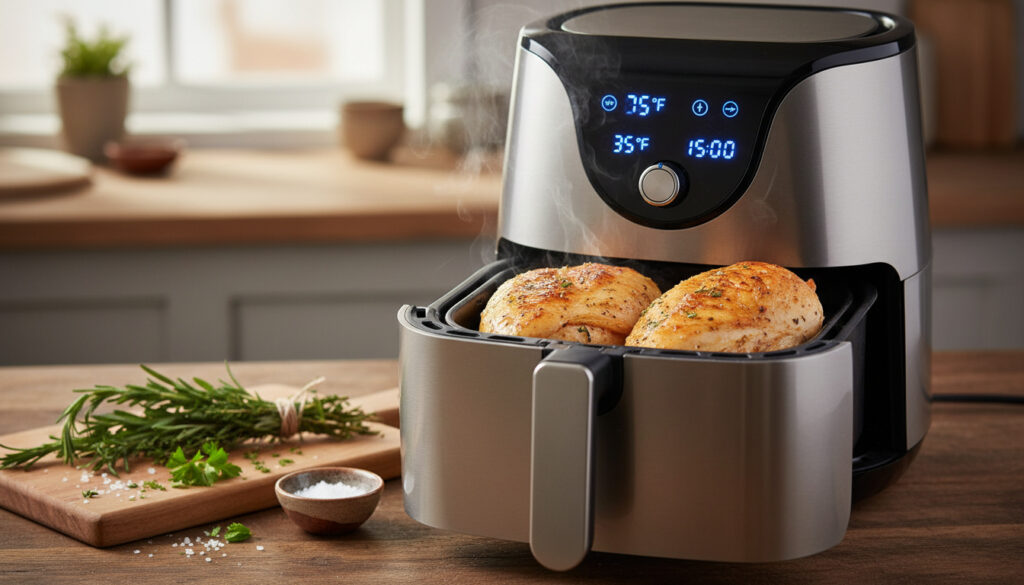
Air Fry Chicken Breast – Juicy Times and Temperatures
Air frying transforms chicken breast from a potentially dry, overcooked protein into a juicy, evenly cooked centerpiece in under 30 minutes. The circulating hot air creates a crisp exterior while maintaining internal moisture, offering a healthier alternative to pan-frying without sacrificing texture.
Mastering the technique requires precise temperature control and timing adjustments based on thickness and whether the meat is fresh or frozen. Unlike traditional ovens, air fryers cook rapidly, making them ideal for weeknight meals but demanding attention to prevent overcooking.
How Long and at What Temperature to Air Fry Chicken Breast?
Fresh breasts cook faster than frozen, typically requiring 15-20 minutes compared to 25-35 minutes for frozen pieces at equivalent temperatures.
Boneless skinless breasts cook most evenly. Bone-in pieces require additional time and careful temperature verification near the bone.
Marinated chicken may cook slightly faster due to surface moisture. Basic seasoned pieces develop a more concentrated crust.
Oil-based seasonings create barrier protection against drying. Plain chicken benefits from basting before cooking.
- Always verify internal temperature reaches 165°F using a meat thermometer, not cooking time alone
- Thicker cuts exceeding 1.5 inches benefit from lower temperatures around 360-380°F to prevent exterior burning
- Basket-style air fryers typically cook faster than oven-style models due to concentrated airflow according to comparative testing
- Coating chicken with oil before seasoning locks in moisture and promotes even browning
- Resting cooked chicken for 2-5 minutes allows internal temperature to rise and juices to redistribute
- Frozen breasts generally require 25-35 minutes total cooking time, flipped halfway through
- Preheating for 3-5 minutes promotes even cooking but remains optional for most models
| Type | Temp (°F) | Time (min) | Internal Temp |
|---|---|---|---|
| Frozen (4oz, 1″ thick) | 380-400 | 12 | 165°F |
| Frozen (6-8oz, 1″ thick) | 380-400 | 13-14 | 165°F |
| Frozen (8oz, 1.5″ thick) | 380-400 | 20-22 | 165°F |
| Frozen (9-10oz, 1.5-2″ thick) | 380-400 | 24-28 | 165°F |
| Frozen (3 breasts, ~3 lbs) | 360-400 | 25-30 | 165°F |
| Boneless fresh (general) | 360-400 | 15-25 | 165°F |
How to Make Air Fryer Chicken Breast Juicy and Tender
Achieving juicy results depends on moisture retention techniques rather than cooking duration alone. The rapid air circulation that makes air fryers efficient can also accelerate moisture loss if proper precautions are ignored.
How to Air Fry Chicken Breast Without Drying It Out
Surface moisture management determines final texture. Patting fresh chicken dry before oiling prevents steaming, while brushing frozen pieces with oil immediately before cooking creates a protective barrier. Avoid overcrowding the basket, as restricted airflow leads to uneven cooking and extended exposure to heat.
How to Make Air Fryer Chicken Breast Juicy
Brushing both sides with olive or vegetable oil mixed with seasonings creates a seal that traps natural juices. A mixture of two tablespoons oil, one teaspoon salt, half to one teaspoon pepper, one teaspoon garlic powder, two teaspoons paprika, and one teaspoon dried oregano provides flavor while maintaining moisture according to tested recipes.
Insert an instant-read thermometer into the thickest portion of the breast, avoiding bone if present. Remove chicken at 160-161°F; carryover cooking during the 2-5 minute rest period will raise the temperature to the safe 165°F mark without overcooking.
Do You Need to Preheat and Flip Chicken Breast in the Air Fryer?
Do You Need to Preheat Air Fryer for Chicken Breast?
Preheating remains optional but recommended for even cooking. A 3-5 minute preheat at 360-400°F establishes consistent temperature before food enters the chamber. Multiple recipe developers note that skipping preheating works when cooking multiple batches, as the appliance retains residual heat between cycles.
Do You Flip Chicken Breast in Air Fryer?
Flipping is essential for uniform doneness. Cook the first side for 10-15 minutes, then turn and brush with remaining seasoning oil before continuing. This rotation ensures both surfaces develop adequate browning and prevents the bottom from remaining undercooked.
How to Air Fry Frozen Chicken Breast
Cooking from frozen eliminates thawing time but requires specific adjustments to ensure food safety and palatability. The Frozen Chicken Breast in Air Fryer method emphasizes single-layer placement without overcrowding, accommodating two to three pieces maximum per batch depending on appliance size.
Temperature settings vary by desired speed. Cooking at 400°F produces faster results, typically 25-30 minutes total, while lower temperatures around 360-380°F extend cooking to 25-35 minutes but reduce the risk of exterior drying on thicker cuts according to culinary testing.
Always verify frozen chicken reaches 165°F internal temperature measured with a calibrated meat thermometer. Visual cues like color or texture prove unreliable for determining doneness in frozen poultry.
When preparing multiple batches, subsequent loads may cook 10-15% faster due to retained heat in the appliance. Reduce initial cooking time by 2-3 minutes and verify temperature to prevent overcooking.
For detailed variations, consult the Frozen Chicken Breast Air Fryer guidelines, which specify that basket-style units typically cook faster than oven-style counterparts.
Step-by-Step Timeline from Freezer to Plate
- Preheat (Optional): Heat empty air fryer to 360-400°F for 3-5 minutes to establish stable temperature source.
- Prepare Seasoning: Combine 2 tablespoons oil, 1 teaspoon salt, ½-1 teaspoon pepper, 1 teaspoon garlic powder, 2 teaspoons paprika, and 1 teaspoon oregano or Italian seasoning.
- Season Frozen Breasts: Brush mixture generously on both sides of frozen chicken, reserving portion for after flipping.
- Initial Cook: Place in single layer (2-3 pieces maximum). Cook first side 10-15 minutes at 380-400°F.
- Flip and Season: Turn chicken, apply remaining seasoning oil, and return to basket.
- Final Cook: Air fry additional 10-15 minutes until internal temperature reaches 165°F.
- Rest: Remove and let stand 2-5 minutes to allow temperature stabilization and juice redistribution.
Established Guidelines vs. Variables
- USDA mandates 165°F internal temperature for all poultry
- Oil application prevents moisture loss and promotes browning
- Flipping halfway ensures even heat distribution
- Resting period allows carryover cooking to complete safely
- Exact cooking minutes vary significantly between air fryer models and sizes
- Preheating necessity depends on specific manufacturer recommendations
- Optimal seasoning combinations remain subjective to taste preferences
- Thickness measurements affect timing more than weight alone
Best Seasonings and Recipe Applications
Seasoning strategies focus on oil-based coatings that withstand high-heat circulation without burning. Paprika provides color and mild smoke, while garlic and onion powders offer concentrated flavor without moisture content that could steam the meat. Italian seasoning blends containing oregano, thyme, and basil complement the neutral protein base without overpowering.
For meal preparation, cooked chicken stores safely in airtight containers for 3-4 days refrigerated or 2-3 months frozen. Reheating at 350°F for 5-10 minutes restores texture without drying. Pairing with roasted vegetables or fresh salads completes the nutritional profile while maintaining the low-fat benefits of air frying compared to traditional frying methods.
Safety Standards and Recipe Attribution
All poultry products, including chicken breasts cooked in air fryers, must reach a safe minimum internal temperature of 165°F as measured with a food thermometer to ensure destruction of harmful bacteria.
USDA Food Safety and Inspection Service
Chicken and poultry require 165°F internal temperature. Color is not a reliable indicator of doneness.
FoodSafety.gov
Key Principles for Air Fryer Chicken Success
Successful air fryer chicken breast relies on temperature verification rather than timing assumptions, with 165°F internal temperature as the non-negotiable safety standard. Whether cooking fresh or frozen, applying oil-based seasonings and flipping halfway through ensures juicy, evenly browned results. For specific frozen preparations, refer to the Frozen Chicken Breast in Air Fryer methodology.
Frequently Asked Questions
What is the safe internal temperature for air fryer chicken breast?
All chicken breast must reach 165°F internal temperature, measured with a meat thermometer in the thickest part, to ensure food safety according to USDA standards.
Can I batch cook chicken breast in the air fryer?
Yes, but cook in single layers without overcrowding (2-3 pieces typically). Subsequent batches cook faster due to residual heat; reduce time by 2-3 minutes.
How should I store air fryer chicken breast for meal prep?
Cool completely, then refrigerate in airtight containers for 3-4 days or freeze for 2-3 months. Reheat at 350°F for 5-10 minutes to maintain moisture.
Do I need to thaw chicken before air frying?
No, you can cook frozen chicken breast directly in the air fryer. Add 10-15 minutes to fresh cooking times and verify 165°F internal temperature.
Why does my air fryer chicken breast dry out?
Overcooking or insufficient oil causes dryness. Use a meat thermometer to prevent overcooking, and always coat with oil before seasoning to seal moisture.
More related posts
 Paul Mescal Movies and TV Shows – Complete Filmography 2024
 Crystal Palace vs Tottenham: Stats, Prediction and Analysis
 Siobhan Fahey 2025: Where Bananarama and Shakespears Sister Star Is Now
 Christian Pulisic: Transfer, Salary, Stats, and Career Facts
 Tom Read Wilson Education – Schools, Family and Posh Roots
 Chris Coghill: Actor, Personal Life, and Career Highlights
 Simon Jordan: Net Worth, Illness, Wife, and Full Biography
 Ernest Hemingway: The Full Story of His Life and Death
