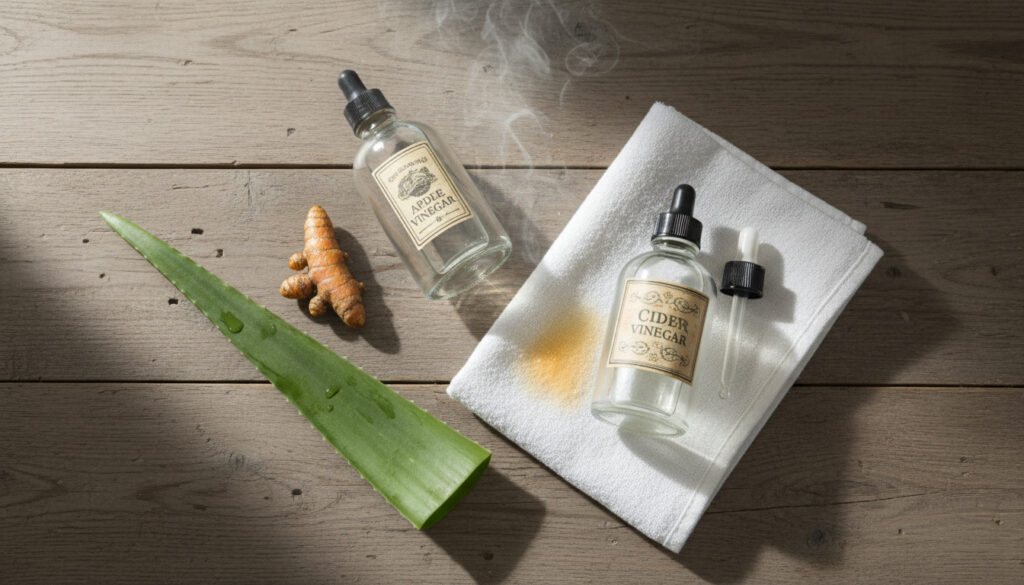
How to Dissolve a Cyst Naturally – Evidence-Based Home Remedies
Most cysts require professional medical removal for reliable treatment, though some home remedies may help manage symptoms and support healing in certain cases. The evidence for home remedies varies significantly by remedy type and cyst variety, with most showing limited scientific support for dissolving or shrinking cysts despite potential benefits for pain and inflammation.
Sebaceous cysts, also called epidermoid cysts, form when hair follicles don’t grow properly, leading to infection of a sebaceous gland and creating a pus pocket. While natural methods cannot guarantee elimination of the cyst wall, they may facilitate drainage of small, non-infected lesions or reduce discomfort during the healing process.
Understanding the distinction between symptom management and structural removal remains essential. Home remedies might ease inflammation or encourage natural drainage, yet they rarely dissolve the fibrous capsule that defines a true cyst. How to Make Puff Pastry requires precise technique, and similarly, cyst management demands careful attention to detail and safety protocols.
How Do You Dissolve a Cyst Naturally?
Advantages
Non-invasive approach with minimal financial cost and no surgical recovery time required.
Limitations
Slow results with unproven efficacy for complete dissolution of cyst structures.
Best Candidates
Small benign cysts that are non-infected and located in accessible skin areas.
Evidence Base
Primarily anecdotal and case-study based, with limited clinical trial support.
Critical Insights for Home Management
- No remedy reliably dissolves cysts completely. There is no strong scientific evidence that any home remedy reliably dissolves or shrinks cysts, according to Healthline.
- Warm compresses aid drainage. Applying warm compresses increases blood flow to the area, helping small, non-infected cysts drain while reducing pain and inflammation.
- Tea tree oil offers limited antimicrobial action. Research demonstrates tea tree oil’s antimicrobial activity is not as strong or effective as synthetic compounds, though it may help sebaceous cysts caused by ingrown hairs.
- Apple cider vinegar lacks clinical validation. While antimicrobial due to acetic acid content, no studies show it reduces or removes cysts.
- Dilution prevents chemical burns. Undiluted essential oils and vinegar may cause discomfort, irritation, or burns to the skin.
- Medical removal remains definitive. The most reliable way to remove a cyst is to have a doctor perform incision and drainage or surgical excision.
| Cyst Type | Common Location | Natural Potential | Primary Risks |
|---|---|---|---|
| Sebaceous (Epidermoid) | Skin, hair follicles | Moderate—may drain naturally | Infection, scarring, recurrence |
| Ovarian (Functional) | Ovaries | Low—dietary support only | Delayed diagnosis, torsion |
| Baker’s (Popliteal) | Behind knee | Low—symptom relief only | Rupture, cartilage damage |
| Ganglion | Wrist, hand, ankle | Low—comfort measures | Recurrence, joint irritation |
| Pilonidal | Tailbone area | Very low | Abscess, sinus tract formation |
| Breast | Breast tissue | Variable—requires monitoring | Misdiagnosis of malignancy |
Can a Cyst Dissolve on Its Own?
Some cysts resolve without intervention, depending on their type, size, and physiological circumstances. Functional ovarian cysts frequently disappear within one to three menstrual cycles as hormonal fluctuations regulate. Similarly, small sebaceous cysts occasionally rupture spontaneously or drain gradually through the skin’s natural exfoliation process.
Factors Influencing Natural Resolution
Size represents the primary determinant—cysts smaller than five centimeters demonstrate higher spontaneous resolution rates. Location matters significantly; superficial skin cysts face less structural pressure than deep tissue or intra-articular formations. The presence of infection dramatically alters outcomes, as bacterial proliferation transforms a simple fluid collection into an abscess requiring medical drainage.
Types of Cysts That May Resolve
Functional medicine approaches for ovarian cysts include dietary modifications, supplementation, and acupuncture, though specific evidence remains limited according to Rupa Health. For sebaceous cysts, a documented naturopathic case study involved successful nonsurgical management of an inflamed epidermoid cyst through topical botanical tinctures and oral herbal capsules containing echinacea, goldenseal, and berberine, combined with saline irrigation. The cyst ruptured naturally without surgery, though such outcomes require consistent monitoring and carry no guarantee of replication.
When Should You See a Doctor for a Cyst?
Professional medical intervention becomes necessary when home remedies fail to provide relief or when the cyst exhibits characteristics suggesting infection or malignancy. The decision between home management and medical intervention should depend on the cyst type, infection status, symptom severity, and personal preference in consultation with a healthcare provider.
Warning Signs Requiring Immediate Evaluation
Increasing pain, swelling, erythema (redness), or drainage indicate infection progression requiring antibiotics or surgical drainage. Rapid growth, hardening, or irregular borders necessitate imaging to rule out neoplastic processes. Fever accompanying a cyst suggests systemic infection. Cysts located near vital structures—eyes, genitals, or major blood vessels—warrant professional assessment regardless of symptoms.
Medical vs. Natural Options
Doctors typically perform incision and drainage for immediate relief, though this method carries recurrence risk since the cyst wall remains intact. Complete excision removes the sac entirely, preventing return but requiring sutures and recovery time. Cleveland Clinic resources emphasize that attempting to squeeze or pop cysts at home forces bacteria deeper into skin tissue, potentially creating abscesses.
Seek immediate medical care if you observe warmth radiating from the cyst, red streaks extending from the center, or foul-smelling drainage. These signs indicate bacterial colonization that home remedies cannot address effectively.
Consistent monitoring and follow-up visits remain important when avoiding oral antibiotics for infected lesions, particularly to ensure proper wound healing after any natural rupture occurs.
The most reliable way to remove a cyst is to have a doctor do it. Medical evaluation provides definitive diagnosis through histopathological examination, distinguishing benign cysts from rare malignant mimics.
What Home Remedies Help Shrink Cysts?
While no home remedy guarantees cyst dissolution, certain applications may reduce inflammation or prevent secondary infection. Evidence quality varies significantly between remedies, with most studies focusing on antimicrobial properties rather than structural removal.
Apple Cider Vinegar
Apple cider vinegar possesses antimicrobial properties due to its acetic acid content, but research confirms no studies showing it reduces or removes cysts. Application requires dilution in equal parts with water, as undiluted acetic acid may cause chemical burns. The solution may be less effective at lower dilutions against some microbes, creating a tension between safety and efficacy.
Aloe Vera and Honey
Aloe vera demonstrates anti-inflammatory and antimicrobial properties in laboratory studies, which may help reduce pain and irritation surrounding cysts. However, studies have not shown aloe vera reliably removes, drains, or reduces the appearance of cysts. Honey shares similar limitations—while possessing osmotic and antibacterial qualities, it cannot penetrate the cyst wall to dissolve the accumulated keratin or sebum within. Both substances serve best as comfort measures rather than curative treatments.
Always dilute tea tree oil before application—mix two to three drops per one ounce of water. Apply the mixture directly to the cyst several times daily with a clean cloth to minimize skin irritation risks.
What Is the Typical Timeline for Natural Cyst Care?
- Initiate warm compress therapy for fifteen minutes, three to four times daily to increase circulation and promote drainage of small sebaceous cysts, according to medical guidance.
- Begin topical applications of diluted antimicrobial agents such as tea tree oil or apple cider vinegar while monitoring for skin reactions or irritation.
- Continue observation for changes in size, consistency, or pain levels. Document any drainage or reduction in elevation above the skin surface.
- Schedule medical consultation if no reduction occurs, if the cyst enlarges, or if any signs of infection develop. Persistent cysts require professional evaluation.
What Does Research Confirm vs. Leave Uncertain?
| Established Evidence | Unverified Claims |
|---|---|
| Warm compresses increase localized blood flow and may facilitate drainage of small, non-infected cysts | Apple cider vinegar dissolves cyst tissue or breaks down keratin walls |
| Tea tree oil exhibits antimicrobial properties against certain bacteria and fungi | Tea tree oil penetrates cyst walls to eliminate the sac structure |
| Aloe vera reduces inflammation and soothes irritated skin surrounding cysts | Castor oil packs dissolve internal cysts such as ovarian or breast cysts |
| Most cysts require surgical excision for permanent removal | Turmeric or honey consistently shrinks cysts through topical application |
| Proper dilution of acids and essential oils prevents chemical burns | Witch hazel causes cysts to dry up and disappear without scarring |
Why Do Cysts Form and What Are Natural Limits?
Cysts develop when epidermal cells proliferate beneath the skin surface, creating a sac that fills with keratin, sebum, or other bodily fluids. This encapsulation creates a physical barrier that topical applications cannot easily penetrate. The fibrous wall maintains structural integrity against enzymatic breakdown, explaining why home remedies rarely achieve complete dissolution comparable to surgical excision.
Natural processes may resolve cysts when the wall weakens or ruptures, allowing the body to absorb the contents gradually. However, this spontaneous resolution depends on individual immune responses and cyst characteristics rather than external applications. Air Fry Chicken Breast recipes emphasize precise temperature control, and similarly, cyst management requires understanding biological limits—external remedies cannot significantly alter deep tissue structures without medical intervention.
What Do Medical Sources Say About Home Treatment?
Most cysts require professional medical removal for reliable treatment, though some home remedies may help manage symptoms and support healing in certain cases.
— Healthline Medical Review
The most reliable way to remove a cyst is to have a doctor do it.
— Clinical Guidelines
Home remedies are generally unlikely to cause harm when properly applied, though they should not replace professional evaluation for persistent or suspicious lesions.
What Should You Remember About Natural Cyst Care?
Home remedies may help reduce inflammation, manage pain, and support natural drainage in some cases—particularly for sebaceous cysts—but they are not a substitute for professional medical evaluation and treatment when needed. While warm compresses and properly diluted antimicrobial applications present minimal risks for superficial cysts, any lesion persisting beyond four weeks, showing signs of infection, or located in sensitive areas requires prompt medical attention to prevent complications and ensure accurate diagnosis.
Common Questions About Cyst Management
Can you squeeze out a cyst?
No. Squeezing forces bacteria deeper into skin tissue, increasing infection risk and potentially creating an abscess that requires surgical drainage.
What helps cysts go away?
Medical excision provides definitive removal. Home remedies like warm compresses may help small cysts drain naturally, though recurrence remains likely without sac removal.
How do you get rid of a sebaceous cyst?
Doctors remove the entire sac through surgical excision to prevent recurrence. Home remedies may manage symptoms but rarely eliminate the cyst wall completely.
Can apple cider vinegar dissolve a cyst?
No studies demonstrate that apple cider vinegar dissolves cysts. While antimicrobial, it only addresses surface bacteria rather than the cyst structure itself.
Is it safe to use tea tree oil on cysts?
Yes, when diluted properly (2-3 drops per ounce of water). Undiluted oil causes chemical burns. Evidence supports antimicrobial effects but not cyst dissolution.
How do I know if my cyst is infected?
Infection signs include increasing redness, warmth, swelling, pain, and yellow or foul-smelling drainage. Fever indicates systemic infection requiring immediate medical care.
Can ovarian cysts be treated naturally?
Functional ovarian cysts often resolve spontaneously within 1-3 menstrual cycles. Dietary changes and acupuncture are discussed in functional medicine, though robust clinical evidence remains limited.
More related posts
 Phoebe Gates: Career, Advocacy, and Inheritance Guide
 Nish Kumar: Biography, Career, and Personal Life Facts
 Donald Glover: Health, Childish Gambino, and Biography Facts
 Michael Franzese: Former Mafia Capo’s Life and Net Worth
 Laurence Fishburne: Why He Didn’t Return as Morpheus
 Peter Rabbit: Story, Film Backlash, and 50p Coin Value
 Freedom Bus Pass vs 60+ Oyster: What’s the Difference
 Emperor Penguins: Size, Habitat, Myths, and Conservation
