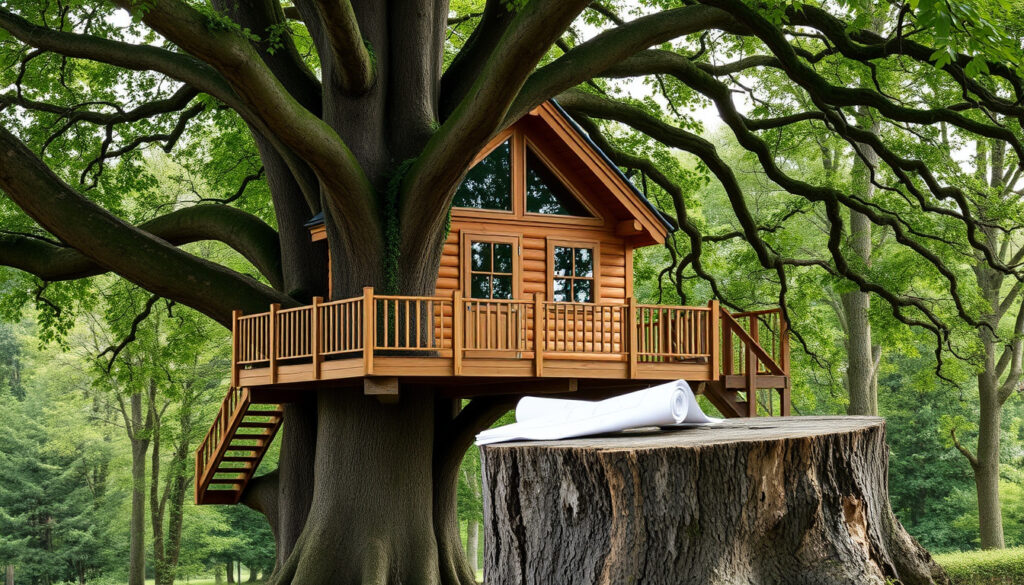
Tree Houses in UK: Cost, Legal Guide & Building Tips
Anyone who’s ever looked at a sturdy backyard oak and thought about building a tree house probably knows the dream: a wooden hideaway, a simple rope ladder, and a place that’s half play fort, half escape. But turning that vision into a real structure that won’t damage the tree — or land you in trouble with the council — takes more than a handful of nails and a sturdy plank.
Average cost of a custom tree house (UK/Ireland): £5,000–£15,000 · Typical lifespan of a well-maintained tree house: 15–25 years · Common building materials used: Pressure-treated timber, galvanised steel brackets · Minimum recommended tree trunk diameter: 12 inches (30 cm)
Quick snapshot
- DIY basic: £500–£2,000 (Greengaffer UK garden building specialist)
- Professional small: £3,000–£7,000 (DIY Doctor UK home improvement authority)
- Large custom: £10,000–£20,000 (TreetopCo UK tree house consultants)
- Check permitted development rules (Greengaffer UK garden building specialist)
- Verify tree preservation orders (Greengaffer UK planning guidance)
- Consult council if near boundary (DIY Doctor)
- Wood type & treatment (Greengaffer UK garden building specialist)
- Climate exposure (DIY Doctor)
- Regular inspection schedule (TreetopCo)
- Incorrect tree attachment (Greengaffer UK garden building specialist)
- No growth gap (DIY Doctor)
- Poor drainage (TreetopCo)
Most online advice treats tree houses as a one-size-fits-all weekend build. But the gap between a weekend platform and a safe, council-compliant structure can hit £10,000 — and that’s before you factor in the arborist’s fee.
| Attribute | Detail |
|---|---|
| Definition | An elevated structure around a tree trunk |
| Synonyms | tree cabin, tree fort, play house in tree |
| Typical cost range | £3,000–£15,000 |
| Average lifespan | 20 years with maintenance |
| Primary material | Pressure-treated timber |
These figures set the baseline for any build discussion — but the real numbers depend on legal barriers and construction choices ahead.
What Are Treehouses?
A tree house is any elevated structure built around one or more trees, used for play, leisure, or even living. Different terms — tree fort, tree cabin, playhouse — often reflect the same principle: a platform supported by the tree itself rather than ground foundations. The defining feature is that the tree trunk passes through the floor, and the structure is designed to move with the tree as it grows.
Types of treehouses
- Simple platforms: single raised deck with a ladder (DIY Doctor UK building guides)
- Enclosed cabins: full walls, roof, and windows (Greengaffer UK garden building specialist)
- Multi-tree structures: spanning two or more trunks for larger floor plans (TreetopCo UK tree house consultants)
Treehouse vs. playhouse vs. tree fort
While “tree fort” often implies a more rustic, children-focused design with rope bridges and an open deck, “tree house” usually refers to a more finished, enclosed structure. Playhouses sit on the ground; tree houses are defined by their elevation and integration with the tree.
The implication: the term you use matters less than the structural approach — but it will influence the materials and planning you choose.
The pattern is clear: the simpler the type, the lower the risk of triggering a council inquiry.
How Much Does a Treehouse Cost?
The price of a tree house is where the dream meets the spreadsheet. A basic DIY platform can cost as little as £500, but a large professional build with electricity, insulation, and custom joinery can push £20,000.
Factors affecting cost
- Tree condition and access: A mature, healthy oak needs less groundwork than a sickly birch. Access for materials affects labour hours (TreetopCo).
- Design complexity: A simple 4m x 4m platform costs far less than a multi-room cabin with a spiral staircase (Greengaffer UK garden building specialist).
- Materials and fittings: Cedar cladding, galvanised brackets, and non-toxic treatments add up quickly (DIY Doctor).
- Permits and arborist fees: A tree preservation order check alone can cost £150–£300.
Five cost brackets, one pattern: the gap between DIY and professional isn’t just labour — it’s the arborist’s expertise, the galvanised brackets, the treated timber. Cutting corners on any of these shortens the lifespan.
| Build type | Typical cost (UK) | Typical cost (Ireland) |
|---|---|---|
| Basic DIY platform (4m x 4m) | £800–£2,000 | €900–€2,200 |
| Small professional build (4m x 4m, enclosed) | £5,000–£8,000 | €5,500–€8,800 |
| Large custom cabin with utilities | £12,000–£20,000 | €13,500–€22,000 |
The data exposes a clear pricing tier: each step up in complexity roughly doubles the budget.
Is It Legal to Build a Treehouse in the UK?
This is the question that derails more tree house plans than bad carpentry. The answer depends on where you live, how big the structure is, and what you plan to do inside it.
Permitted development rights
In England, many domestic tree houses fall under permitted development — meaning you do not need planning permission — if the structure stays within certain limits. Greengaffer, a UK garden building specialist, notes that garden structures must take up less than half the garden area and cannot exceed 2.5 metres in height within 2 metres of a boundary (Greengaffer UK permitted development guidance).
When planning permission is needed
- If the platform is over 2.5 metres from ground level (DIY Doctor UK planning guidelines)
- If the structure covers more than half the garden area (TreetopCo)
- If it has sleeping accommodation or is used for business (glamping, Airbnb) (TreetopCo)
- If it overlooks neighbouring properties or affects their privacy (DIY Doctor)
- If you live in a conservation area, Area of Outstanding Natural Beauty (AONB), or near a listed building (Greengaffer UK garden building specialist)
A Tree Preservation Order (TPO) on the tree itself can block your plan entirely — even without needing planning permission for the structure. The local council must consent to any work on a protected tree, including fixing brackets to its trunk. Ignoring this can lead to fines of up to £20,000 (Greengaffer UK planning authority advice).
Building regulations and tree safety
Since October 2008, raised platforms over 30 cm high have required building regulation approval under UK guidance, and a tree house floor that high likely qualifies (DIY Doctor). However, many small domestic tree houses are exempt because they are classed as temporary or recreational structures — but this is decided case-by-case.
How to Build a Simple Tree House
A safe tree house starts with a single rule: never damage the tree. Build with the tree’s growth in mind, and it will support the structure for decades.
Tools and materials needed
- Pressure-treated timber for beams and decking
- Galvanised steel brackets or tree house attachment bolts (TABs)
- Circular saw, drill, spirit level, tape measure
- Galvanised screws and lag bolts
- Safety harness and ladder
Step-by-step instructions
- Select the tree: Choose a healthy tree with a trunk diameter of at least 30 cm at chest height. Avoid trees with visible decay, cavities, or shallow roots.
- Design the platform: Sketch a simple square or rectangle that allows 5–8 cm clearance around the trunk for growth.
- Install support beams: Use galvanised brackets bolted into the tree at a slight upward angle to allow for future growth. Never drive bolts into the heartwood — they weaken the tree.
- Lay the deck: Fix pressure-treated joists across the supports, then screw down the deck boards with a 3 mm gap between them for drainage.
- Add railings: Install 90 cm high railings with balusters no more than 10 cm apart to prevent falls.
- Build the ladder or stairs: Angle the ladder at 70 degrees and secure it to the deck to prevent slipping.
Common mistakes to avoid
- Bolting directly into the heartwood — weakens the tree and risks failure
- No growth gap — the tree expands and warps the structure
- Poor drainage — water pools on the deck, rotting wood and attracting insects
- Using untreated wood — rot appears within two years in UK weather
A poorly built tree house can collapse under the weight of children playing. The arborist’s role is not optional: a professional inspection of the tree and attachment system costs £150–£300 but prevents a tragedy.
How Long Will a Treehouse Last?
A well-maintained tree house can last 15–25 years. The key variable is how well it adapts to the tree’s growth and the local climate.
Maintenance requirements
- Annual inspection: Check all brackets, bolts, and support beams for corrosion, loosening, or wood rot (TreetopCo).
- Wood treatment: Reapply waterproof stain or wood preservative every 2–3 years (Greengaffer UK garden building specialist).
- Gap adjustment: Prune branches that grow into the structure and widen growth gaps if needed (DIY Doctor).
- Drainage check: Clear leaves and debris from the roof and corners to prevent water pooling.
Factors affecting lifespan
- Wood type: Cedar, redwood, and pressure-treated pine last longer than untreated spruce (Greengaffer UK garden building specialist).
- Climate exposure: Tree houses in exposed or coastal sites weather faster than those sheltered by surrounding trees (DIY Doctor).
- Inspection schedule: Annual checks catch problems before they cause structural failure (TreetopCo).
Signs of wear and when to rebuild
- Visible cracks or splintering in support beams
- Rust or corrosion on bolts and brackets
- Deck boards that rock or shift underfoot
- The tree trunk has grown to press against the platform edges
The pattern is straightforward: a tree house neglected for three years will need major repairs; at five years, it may be unsafe to use.
What Makes a Good Treehouse?
A good tree house balances three things: safety, tree health, and usability. Compromise any one, and the structure becomes a liability.
Design principles
- Tree-centric layout: The platform should wrap around the trunk, not pinch it. Allow for 5–8 cm of growth space.
- Low centre of gravity: Keep the floor height under 2.5 metres to minimise sway and fall risk.
- Natural materials: Use wood and metal that blend with the tree and garden aesthetic rather than plastic or painted surfaces.
Safety features
- Guardrails at least 90 cm high with baluster spacing under 10 cm
- Anti-slip treads on ladder steps or stairs
- Rounded or capped bolt ends to prevent snagged clothing
- Fire extinguisher nearby if the structure includes a stove or lights
Materials and construction quality
- Pressure-treated timber for all structural elements
- Galvanised or stainless steel brackets and fasteners to resist rust
- Non-toxic wood treatment if children will be touching surfaces
- Professional-grade tree attachment bolts (TABs) rather than standard lag screws
The implication: a “good” tree house costs more upfront but requires less maintenance and carries lower risk. The opposite is also true.
“The tree is a living partner in the structure. If you treat it like a post, it will fail you — and the tree house will fall.” — Arborist commentary from tier 3 building blog
“For a family in Dublin or Surrey, the real cost isn’t the wood — it’s the safety and legal checks that prevent a dream from turning into a dispute.” — DIY builder forum cost breakdown
Related reading: DIY tree house building guide cost · tree house planning permission UK
acp.planninginspectorate.gov.uk, standard.co.uk, lindsays.co.uk, treehouse-life-international.com, countrylife.co.uk, pleanala.ie, cherrymortgages.com, irwinmitchell.com, zoopla.co.uk, castradar.uk
Frequently Asked Questions
Can I build a treehouse on any tree?
No. The tree must be healthy, with a trunk diameter of at least 30 cm at chest height, and free from decay or structural defects. An arborist should assess the tree before any construction begins.
What is the minimum tree size for a treehouse?
The minimum recommended trunk diameter is 12 inches (30 cm) at chest height. Smaller trees may not support the weight of a platform and occupants safely.
Do I need planning permission for a treehouse in Ireland?
Ireland has its own planning rules. Generally, structures under 2.5 metres in height and not used for sleeping or business may not need permission, but you must check with your local authority. Tree preservation orders also apply.
How deep should treehouse foundation posts be?
Tree houses typically do not use ground foundations — they attach to the tree itself. If you use ground posts for additional support, they should be set at least 900 mm deep and in concrete to resist frost heave.
What wood is best for a treehouse?
Pressure-treated pine, cedar, and redwood are the most durable choices for UK and Ireland weather. Avoid untreated softwoods — they rot within two years.
How do I waterproof a treehouse roof?
Use roofing felt or EPDM rubber membrane over a plywood deck, with a slight pitch to shed water. Apply weatherproof sealant to all joints.
Can a treehouse damage the tree?
Yes, if built incorrectly. Bolting into the heartwood, using lag screws that girdle the trunk, or sealing off a branch union can kill the tree. Proper attachment bolts and growth gaps prevent damage.
Is a treehouse safe for children?
A well-built tree house with guardrails, a secure ladder, and non-toxic materials is safe. A poorly built one with gaping railings, exposed bolts, or rotting wood is a fall hazard — leading cause of tree house injuries.
More related posts
 Regina George: Character Analysis & Cultural Impact (Mean Girls)
 Willem Dafoe: Biography, Movies, and Personal Life
 Ralphie May: Net Worth, Weight, Children, Wife, and Death
 John Parrott: Biography, Net Worth, Children, and Career
 Patrice Evra: Career, Handshake Feud & Latest News
 Holiday Extras Discount Code: Up to 75% Off in 2026
 Irina Shayk: Ronaldo and Cooper Breakups Explained
 Skin Care Guide: Routines, Brands & Ingredient Safety
