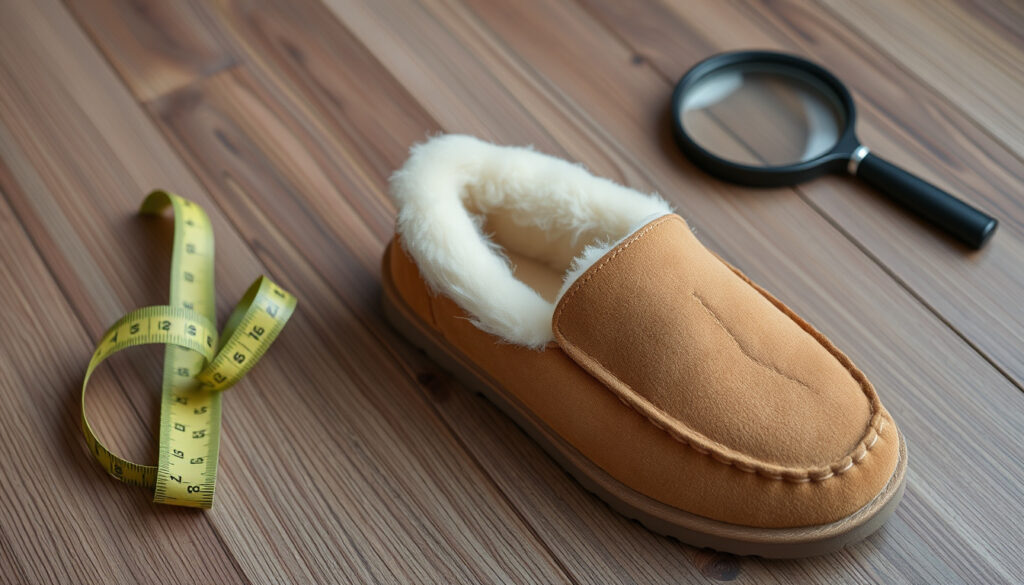
UGG Slippers: Worth It, Sizing, and How to Spot Fakes
Few purchases deliver the instant comfort of a good pair of slippers, and that is the quiet reason UGG’s sheepskin styles keep landing in carts season after season. UGG’s official size guidance says the slippers generally run true to size but vary by style (UGG official size guide), which is the first clue that these are not one-size-fits-all house shoes — and why the premium price raises harder questions about foot health and counterfeits that this pre-purchase audit answers with sourced facts.
Founded: 1978 ·
Parent company: Deckers Brands ·
Common materials: Sheepskin and suede ·
Sister brand: Koolaburra by UGG
Quick snapshot
- UGG says its slippers generally run true to size, but fit varies by style (UGG official size guide).
- The sheepskin lining is designed to feel snug at first and conform with wear (UGG official fit guide).
- Sheepskin, suede, twinface, knit, leather, and nubuck all appear in the official women’s slipper range (UGG official women’s slipper category).
- Which style is “comfiest” depends on foot width and instep height, not just length (UGG official fit guide).
- Durability reports for the Scuffette II are mixed, with some owners describing material separation (Amazon customer review summary).
- Sizing feedback is divided between true-to-size and small (Amazon customer review summary).
- Whether the premium-materials claim translates into long-term durability — that line is a brand statement, not independent testing (UGG official men’s slipper category).
- UGG’s slipper category is still a core part of the official storefront today — a 2020s continuation of a brand founded in 1978 (UGG official women’s slipper category).
- Measure both feet and use the longer measurement before ordering (UGG official fit guide).
- Choose indoor-only or light-outdoor based on how you’ll wear them (UGG official men’s slipper category).
- Buy from official UGG or authorized retailers — the first rule of fake avoidance (UGG official women’s slipper category).
Seven rows capture the essentials — one pattern: UGG slippers are a materials-led product, and the materials explain the price, the care routine, and the counterfeits.
| Fact | Detail |
|---|---|
| Founded | 1978 |
| Owned by | Deckers Brands |
| Common materials | Sheepskin and suede (UGG official women’s slipper category) |
| Fit guidance | Generally true to size; varies by style (UGG official size guide) |
| Care routine | Brush suede or sheepskin; apply protector; use cleaner and conditioner (UGG official women’s slipper category) |
| Outdoor use | Some styles described as suitable for light outdoor use (UGG official men’s slipper category) |
| Styles referenced most | Tasman (Whooga size guide) and Scuffette II (Amazon customer review summary) |
Why are UGGs so expensive?
The short answer is materials. UGG’s official women’s slipper category lists sheepskin, suede, twinface, knit, leather, and nubuck among the uppers in its range (UGG official women’s slipper category) — and genuine sheepskin costs more than the synthetic fleece in a discount slipper.
The longer answer is brand control. UGG is a trademarked brand owned by Deckers Brands, not a generic word for sheepskin boots, and that trademark is enforced through official retail and authorized partners.
What is the difference between Ugg Australia and UGG?
- UGG: a trademarked sheepskin footwear brand owned by Deckers Brands.
- “Ugg Australia”: how many shoppers describe the original Australian-style sheepskin boot; the official label is the UGG® trademark.
- Koolaburra by UGG: Deckers’ lower-priced sister brand, sold under the same UGG family umbrella.
The distinction matters because “ugg” works as both a brand and a category word. A product labeled “ugg-style” or “ugg-inspired” is not a UGG product, no matter how similar it looks.
What is the sister brand of uggs?
- Koolaburra by UGG is the sister brand — a lower-priced line inside the Deckers portfolio.
- It exists so buyers can get the UGG-family look at a friendlier price point.
What are fake uggs called?
- Fakes and knockoffs are the common labels for counterfeit UGGs.
- On resale and discount sites, they also appear as “replicas” or “inspired” styles — polite ways of saying they are not genuine.
How to spot fake uggs?
- Buy from official UGG or authorized retailers. This removes most of the risk before the box is even opened.
- Check the label and logo. The UGG® trademark appears on the heel label and the packaging.
- Check the stitching. Genuine pairs have clean, even stitching on the suede upper.
- Inspect the box. Official packaging carries the UGG® branding and style details.
- Be suspicious of steep discounts. A deeply discounted “UGG” slipper is likely a fake that costs more in the long run.
The same sheepskin-and-suede bill of materials that justifies UGG’s price also makes fakes profitable. A convincing counterfeit sells for a fraction of the retail price, and the only reliable defense is the retailer, not the logo.
The pattern: you are paying for real materials and brand control, not magic. That makes the price fair when the pair is genuine — and completely wasted when it is not.
Are the Ugg slippers worth it?
Value depends on the job. For indoor lounging, the comfort case is strong; for all-day support, these are the wrong tool.
What owners like
- Scuffette II customer feedback on Amazon emphasizes warmth, softness, and coziness (Amazon customer review summary).
- The sheepskin lining molds to the foot over time, exactly as UGG’s fit guidance describes (UGG official fit guide).
- Slip-on designs make them the easiest footwear decision of the day.
What critics and podiatrists flag
- Durability is the weak spot in Amazon’s Scuffette II feedback, with some owners reporting material separation (Amazon customer review summary).
- The same feedback is divided on sizing: true-to-size for some, small for others (Amazon customer review summary).
- Foot-health professionals generally treat UGGs as lounging slippers, not supportive walking shoes; the flat, flexible sole offers cushioning but limited arch support.
So is it worth it? If you want plush comfort for coffee, reading, and short trips around the house, yes — that is what the product is built to do. If you need something for hours on your feet, you are asking a lounging slipper to do a walking shoe’s job.
Owners who buy UGGs for cozy downtime are usually satisfied; owners who want all-day support are buying the wrong category. Match the slipper to the job, and the price starts to make sense.
The trade-off: you trade arch support and durability for immediate, sheepskin-level comfort. That is a fair deal for an indoor lounging slipper and the wrong deal for a daily walking shoe.
Do I size up or down in Ugg slippers?
Start with the official rule: UGG says its slippers generally run true to size, but sizing varies by style (UGG official size guide). Then apply the sheepskin rule: the lining is designed to fit snug at first and conform with wear (UGG official fit guide).
Why shouldn’t you wear socks with UGGs?
- Because the lining starts snug, a sock adds bulk that can make the fit tighter than intended.
- Socks also reduce the moisture-wicking benefit of sheepskin, which is the material’s quiet selling point.
Buy snug, not tight. A slipper that starts loose will only get looser as the sheepskin packs down; one that hurts at the store will not magically stop hurting.
How sheepskin stretches with wear
- UGG’s measurement rules: measure both feet and use the longer number; measure standing; measure in the afternoon, when feet are at their largest (UGG official fit guide).
- Sheepskin packs down and loosens over time, so a slipper that starts loose is a sizing mistake.
- Whooga, an independent sheepskin footwear specialist, says UGG slippers generally break in faster than UGG boots and recommends sizing up when you are between sizes (Whooga size guide).
- Slip-on fit also depends on foot width and instep height, not just foot length (UGG official fit guide).
The implication: sizing UGG slippers is about predicting how sheepskin will change, not how the shoe fits on day one. When in doubt, measure both feet and follow the style-specific chart.
What do podiatrists think of UGGs?
There is no single podiatrist verdict on UGGs; advice changes with a person’s arches, foot structure, and how long the slippers stay on. The consistent thread in foot-health conversations is that UGGs are lifestyle slippers, not supportive walking shoes.
Arch support and all-day wear
- The flat, flexible sole is the main concern for people with plantar fasciitis or low arches.
- UGG’s own claim for its Sugarcane EVA outsole is cushioning and durability — not structural arch support (UGG official women’s slipper category).
- For long days of standing or walking, a contoured or removable footbed is the safer recommendation.
When UGGs may be fine
- For short indoor wear — coffee, reading, quick kitchen trips — UGGs are generally considered fine.
- For people without existing foot pain, the plush lining and soft sole are genuinely comfortable.
- If you already know you need support, plan for an insole or a support-first alternative instead of expecting sheepskin to fix foot mechanics.
The slipper that feels heavenly for twenty minutes can feel very different at hour six. If you have low arches or plantar fasciitis, plan for support before you buy, not after.
Why this matters: for healthy feet and short wear, UGGs are a treat; for painful arches and long days, they are a gamble. Know which group you are in before you pay.
Which UGG slippers are the comfiest?
“Comfiest” is personal, because a slip-on fits more than your foot length — width and instep height do heavy lifting (UGG official fit guide). Still, the lineup breaks into three comfort personalities.
UGG Slippers Tasman
- Tasman is the open-back style that appears across men’s, women’s, and kids’ ranges.
- Whooga’s size guidance describes Tasman as roomier than closed-back styles such as Ansley (Whooga size guide).
- It is the natural pick for an indoor-outdoor sole and an easy slip-on shape.
UGG Slippers Platform
- Platform styles add height while keeping a sheepskin-lined interior.
- You trade a little “barefoot” feel for a chunkier silhouette.
- They are the style to consider when the classic low profile feels too flat.
UGG slippers men, women, ladies, and black styles
- Men’s and women’s ranges share the same material family: sheepskin, suede, knit, and leather uppers (UGG official women’s slipper category).
- Black and neutral colorways anchor the classic lineup.
- Scuffette II reviews on Amazon sum up the crowd-pleaser pattern: warmth and softness praised, durability the weak spot (Amazon customer review summary).
So which do you pick? Tasman when you want room, a scuff when you want snug, a platform when you want height. The comfort constant is the sheepskin lining — the silhouette just changes the fit.
The pattern: the lining does the comfort work; the style decides the fit. Choose the shape that matches your foot, and the “comfiest” question answers itself.
What slippers are better than uggs?
“Better” depends on the job. For all-day support, several alternatives beat UGGs; for instant plush comfort, UGGs are still the benchmark.
Support-first alternatives
- Slippers with contoured or removable footbeds offer more arch support than UGG’s flat sole.
- They are the better call for plantar fasciitis, low arches, or long days on hard floors.
- The usual trade-off: you give up some of that first-step plushness.
Budget-friendly alternatives
- Machine-washable, water-resistant, or lower-priced options exist across the slipper market.
- Koolaburra by UGG is the brand-family route to a lower price point.
- What drops at a lower price is usually material quality and finish — the reason real sheepskin feels different.
The comparison table below lines up the four buying routes side by side.
The trade-off: plush comfort and arch support rarely live in the same slipper. Decide which one your feet need on a typical day, and the brand decision almost makes itself.
Are people still wearing uggs in 2026?
Yes — but the brand you see in 2026 is a much bigger family than the tall boot that defined the 2000s.
UGG’s expanded product lines
- The range now spans slippers, slides, sandals, and sneakers, with slippers still a core seasonal category at major retailers.
- Tasman and platform silhouettes keep the brand visible in new shapes.
- Slippers are no longer the afterthought of the boot — they are now a primary reason people enter the brand.
2026 trend signals
- Trend forecasts are forecasts, not facts — nobody can guarantee which styles the feeds will favor.
- What is measurable: UGG keeps releasing new silhouettes, and retailers keep listing slippers as a core cold-weather category.
- The durable pattern is product consistency: the same sheepskin comfort, repackaged in new shapes.
Why this matters: if you are buying for yourself rather than for resale, the 2026 trend question barely matters — the plush comfort people loved in the 2000s is still the core product. Wear them because they work for you; the trend has a way of following comfort.
UGG slippers vs the alternatives: the comparison
Four buying routes, one pattern: the more support you need, the further your money should move from the classic sheepskin slipper aisle.
| Option | What it is | Where it wins | Watch out for |
|---|---|---|---|
| UGG Tasman | Open-back, sheepskin-lined slip-on | Plush comfort, roomier fit, indoor-outdoor options | Premium price, needs care, light support |
| UGG Scuffette II | Closed-back scuff with snugger fit | Warmth and softness praised in reviews (Amazon customer review summary) | Mixed durability reports and divided sizing feedback (Amazon customer review summary) |
| Koolaburra by UGG | Deckers’ lower-priced sister brand | UGG-family look at a lower price | Expect a lower material spec at the lower price |
| Support-first alternatives | Contoured or removable footbeds | Arch support for all-day wear | Less plush than sheepskin-lined models |
The pattern: plush comfort and arch support rarely live in the same slipper. Decide which one your feet need most days, and the brand decision almost makes itself.
UGG slipper materials and outsoles at a glance
Seven material facts, one pattern: the softness is real, and so is the upkeep. UGG’s official category pages (UGG official women’s slipper category, UGG official men’s slipper category) list these details:
| Component | What UGG lists |
|---|---|
| Common uppers | Sheepskin, suede, twinface, knit, leather, nubuck |
| Outsole lineup | Rubber, Treadlite, Sugarcane EVA |
| Sugarcane EVA’s stated job | Cushioning and durability (brand claim) |
| Lining behavior | Snug at first; compresses and conforms with wear |
| Indoor-outdoor use | Some styles described as suitable for light outdoor use |
| Moisture protection | Selected styles use moisture-repellent treatments |
| Care routine | Brush to lift nap, apply protector, use cleaner and conditioner |
The implication: materials explain almost everything — the price, the break-in, the care ritual, and why fakes are so hard to spot from across the room.
The upsides and downsides at a glance
Upsides
- Genuine plush comfort from sheepskin and suede (UGG official women’s slipper category)
- Official size guidance that is specific, not generic (UGG official size guide)
- Indoor-outdoor styles for light outdoor use (UGG official men’s slipper category)
- Clear care routine: brush, protect, condition
- Style range that covers roomy, snug, and platform fits
Downsides
- Premium price — the premium only makes sense when the pair is genuine
- Flat, flexible sole with limited arch support
- Mixed durability reports on some styles (Amazon customer review summary)
- Not waterproof; suede and sheepskin need protection
- Counterfeit market makes unauthorized discounts risky
The trade-off: you cannot have maximum plushness and maximum support in one slipper; choose the priority that matches your day.
How to buy UGG slippers with confidence
- Measure both feet, standing, in the afternoon. Use the longer measurement when you check the chart (UGG official fit guide).
- Decide where the slippers will live. Indoor-only or light-outdoor use changes which outsole you need (UGG official men’s slipper category).
- Match the silhouette to your foot. Open-back styles like Tasman fit roomier; closed scuffs fit snugger (Whooga size guide).
- Buy from official UGG or an authorized retailer. This one step removes most of the counterfeit risk.
- Run the 30-second authenticity check. Label, logo, stitching, box — and a price that is not suspiciously low.
- Set up the care routine before first wear. Brush, protect, and keep cleaner and conditioner close by (UGG official women’s slipper category).
Why this matters: every step is cheap except the last one — skipping the care routine is how a premium slipper becomes a short-lived regret.
UGG slippers timeline
Three dates carry the story: a California founding, a global acquisition, and a slipper category that keeps growing.
- — Brian Smith founds UGG in California.
- — Deckers Brands acquires UGG and begins global expansion.
- — UGG continues to sell slippers as a core category, including Tasman and platform styles.
The pattern: the brand has survived every trend cycle by returning to the same sheepskin comfort in a new silhouette.
What’s confirmed vs what’s unclear
The honest split: several facts are solid, while comfort, durability, and trend questions stay partly open.
Confirmed facts
- UGG is owned by Deckers Brands, and Koolaburra by UGG is its lower-priced sister brand.
- Many UGG slippers use sheepskin and suede, and UGG says fit varies by style (UGG official size guide).
- Counterfeit UGGs exist and are commonly called fakes or knockoffs.
What’s unclear
- Which style is objectively the comfiest — comfort depends on foot width, arch, and instep height (UGG official fit guide).
- What podiatrists universally recommend — advice changes with arches and activity level.
- Whether UGGs stay fashionable through 2026 — a trend forecast, not a settled fact.
- How durable each style is over multiple seasons — most feedback is customer-reported, not lab-tested (Amazon customer review summary).
The pattern: the confident claims are about materials and ownership; the open questions are about comfort, durability, and trends.
What the sources say
Three voices matter in a pre-purchase audit: the brand’s own fit guidance, an independent specialist, and the people who already paid.
UGG’s official fit guide describes the plush sheepskin lining as snug at first, then compressing and conforming with wear.
— UGG official fit guide (UGG official fit guide)
Whooga’s size guidance says UGG slippers generally break in faster than UGG boots, and recommends sizing up when you are between sizes.
— Whooga size guide (Whooga size guide)
Amazon’s review summary for the Scuffette II highlights warmth, softness, and coziness, while durability reports are mixed and some owners describe material separation.
— Amazon customer review summary (Amazon customer review summary)
The takeaway
UGG slippers deliver exactly what they promise: plush, sheepskin-level comfort for indoor life — at a premium that only makes sense when the pair is genuine. The failures happen when buyers expect walking-shoe support, skip the care routine, or chase a discount that turns out to be a fake. For anyone shopping in the UK in 2026, the pre-purchase checklist is clear: measure both feet, match the silhouette to your foot and your floors, and buy only from official UGG or an authorized retailer — or the “bargain” becomes the most expensive part of the purchase.
Related reading
- Vivienne Westwood Buying Guide: Worth, Price, and Ownership
- Jeans Maternity: Best Styles, When to Start & How to Choose
The pattern: a buying guide only pays off when a shopper pairs it with a second reference point — one for fit, one for value.
Frequently asked questions
How should I clean UGG slippers?
UGG recommends brushing suede or sheepskin to lift the nap and remove dirt, applying a protector made for those materials, and using a cleaner and conditioner for deeper cleaning (UGG official women’s slipper category).
Can I wear UGG slippers outside?
Some styles are described as indoor-outdoor and are suitable for light outdoor use; others are indoor-only. Check the outsole and the product description first (UGG official men’s slipper category).
Are UGG slippers waterproof?
No. Suede and sheepskin are water-sensitive, and UGG recommends protecting them. Only selected styles carry moisture-repellent treatments.
How long do UGG slippers usually last?
There is no official lifespan. Customer feedback shows durability varies by style and wear, with some Scuffette II owners reporting material separation; with rotation and care, many owners get years of indoor use (Amazon customer review summary).
Should I use a protective spray on UGG slippers?
Yes. UGG recommends using a protector on suede or sheepskin and reapplying after cleaning. Protection is cheaper than replacement.
What should I do if my UGG slippers get wet?
Let them dry naturally away from direct heat, brush the suede to lift the nap, and reapply protector before the next wear. Avoid heat drying, which can stiffen sheepskin.
More related posts
 Biggie and Tupac Rivalry: Who Died First? Facts Unraveled
 Ana de Armas: Biography, Relationships, Movies & Net Worth
 Narinder Kaur: Biography, Husband, Big Brother Fame, and More
 Dougie Poynter: McFly Bassist to Sober Father and Author
 Elif Shafak Books: Biography, FAQs, and Reading Guide
 Bobbi Althoff: Husband, Kids, Net Worth, and Why She’s Famous
 Riyad Mahrez: Salary, Net Worth, Age, Career & Personal Life
 Chris Bumstead: 6-Time Mr. Olympia Champion, Retired at 29
