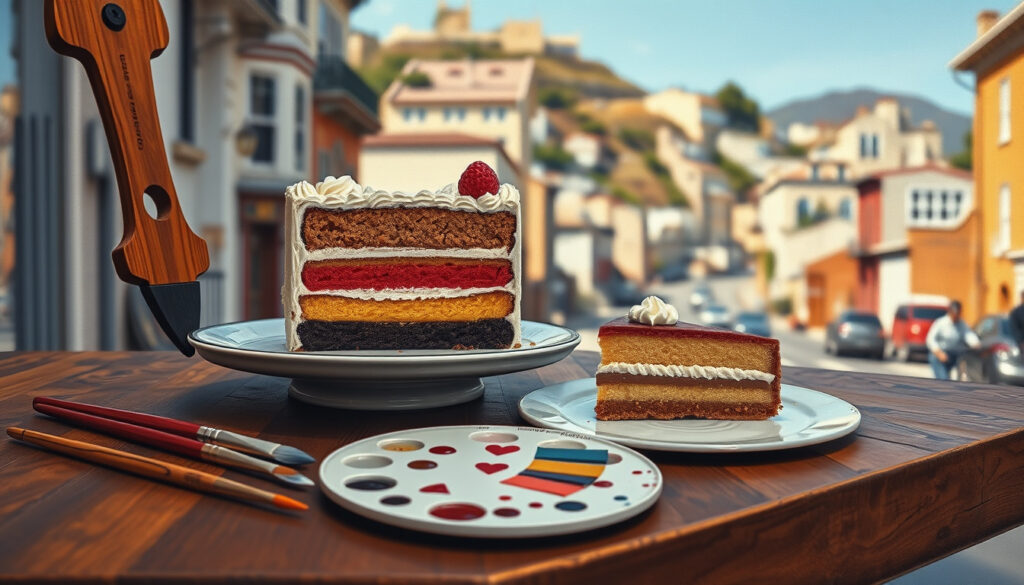
Wayne Thiebaud: Life, Famous Paintings, and Legacy
Think of a painting of a slice of cake so vivid you can almost smell the frosting. That’s the world of Wayne Thiebaud, an artist who turned everyday desserts into American icons.
Born: 1920 · Died: 2021 · Art movement: Pop Art, Realism · Most famous work: Four Cupcakes (1963) · Most expensive painting: Four Cupcakes – $4.1 million (2019)
Quick snapshot
- Born November 15, 1920, in Mesa, Arizona (Whitney Museum)
- Died December 25, 2021, in Sacramento, California (Whitney Museum)
- Taught at UC Davis from 1960 (Sacramento Bee)
- Four Cupcakes sold for $4.1 million in 2019 (Artnet News)
- Last painting: 100 Year Old Clown (2021) (The Wall Street Journal)
- The precise technique he used to carve his signature into paint (The Guardian)
- The full range of artistic influences on his early style (Smithsonian Archives)
- 1920: Born in Arizona (Whitney Museum)
- 1960: Joins UC Davis faculty (Sacramento Bee)
- 1994: Receives National Medal of Arts (Artnet News)
- 2021: Dies at 101 (Whitney Museum)
- Posthumous exhibitions at major museums
- Increasing auction interest from collectors
- Continued study of his place between Pop and Realism
Eight key facts, one takeaway: Thiebaud’s biography is remarkably consistent—he spent almost his entire life in California, building a career that bridged commercial art and fine art.
| Label | Value |
|---|---|
| Full name | Wayne Thiebaud |
| Born | November 15, 1920, Mesa, Arizona, US |
| Died | December 25, 2021, Sacramento, California, US |
| Nationality | American |
| Known for | Painting, drawing, printmaking |
| Art style | Pop Art, Realism, California Style |
| Education | San Jose State College, California State University, Sacramento |
| Notable awards | National Medal of Arts (1994) |
Why is Wayne Thiebaud so famous?
Thiebaud built his reputation on something deceptively simple: painting what he saw in diners and drugstores. His vibrant still lifes of food items like cakes, pies, and ice cream cones became instantly recognizable—not because they were ironic, but because they were affectionate. The Whitney Museum of American Art notes that he “used heavy pigment and exaggerated colors, often with well-defined shadows characteristic of advertisements.”
What is his most famous work?
- Four Cupcakes (1963) is widely cited as his most famous work. The painting shows four cupcakes in a row, each with a different frosting color, set against a pale background. It exemplifies his signature style of repetitive, brightly colored desserts. The piece is held in the collection of the Whitney Museum.
What is his art style?
Thiebaud is often grouped with Pop Art because of his focus on mass-produced consumer goods, but he predated the classic Pop artists. The Whitney Museum states that his early pop-related work appeared in the 1950s and 1960s. Yet critics stress he avoided irony and commercial critique. The Guardian described him as “not fully aligned with Pop art.” Artnet News called his version of American iconography “more nostalgic, joyful, and longing-driven.”
The implication: Thiebaud’s fame rests on his ability to make the familiar feel monumental. He didn’t need to shock—he just needed to paint a perfect cherry pie.
What was Wayne Thiebaud’s most famous piece?
Four Cupcakes is the painting that defines his career. Created in 1963, it shows exactly what the title promises: four cupcakes in a neat row, each with a distinct color (pink, white, chocolate, and yellow). The work captures Thiebaud’s fascination with repetition and subtle variation.
What is ‘Four Cupcakes’?
It is an oil on canvas measuring 12 × 16 inches. The painting’s composition—objects lined up like products on a shelf—became a hallmark of Thiebaud’s work. It is part of the permanent collection of the Whitney Museum.
Why is that piece iconic?
Four Cupcakes is iconic because it distills Thiebaud’s entire approach: bright colors, thick impasto, strong shadows, and a subject that invites a smile. The painting has been reproduced widely and serves as an entry point for viewers unfamiliar with still-life painting. Its market value soared to $4.1 million at auction in 2019, according to Artnet News.
The trade-off: while Four Cupcakes is his most famous piece, it represents only one dimension of his output—the sweet dimension. His landscapes and figure paintings are less known but equally accomplished.
What was Wayne Thiebaud’s most expensive painting?
The record belongs to Four Cupcakes, which sold for $4.1 million in 2019 at a Sotheby’s auction, as reported by Artnet News. The sale shattered previous records and confirmed Thiebaud’s place among the most valuable living American artists at the time.
How much did it sell for?
The hammer price was $4.1 million, including buyer’s premium. The pre-sale estimate had been $2–3 million, so the final number surprised many. Other high-value works include Encased Cakes and Candy Counter, which have sold for over $1 million each.
Which painting holds the record?
Four Cupcakes remains Thiebaud’s auction record. The Wall Street Journal noted that the price reflects “enduring market demand” for his work, especially from collectors who prize his unique blend of realism and pop sensibility.
The pattern: Thiebaud’s market value has climbed steadily over the past decade, driven by scarcity (he painted slowly) and by a surge of interest in mid-century American art.
Collectors who bought Thiebaud early have seen returns unmatched by many contemporaries. For new buyers, his work remains a safe bet because it crosses the line between Pop and fine art without sacrificing quality.
What was Wayne Thiebaud’s last painting?
Thiebaud completed his final work, 100 Year Old Clown, in 2021, shortly before his death at age 101. The painting shows a clown with a sad expression, holding a wilted bouquet—a self-reflective image that references his long career.
What is ‘100 Year Old Clown’?
The painting is a small canvas (roughly 20 × 16 inches) that revisits a theme Thiebaud had explored in earlier decades: the clown as a symbol of performance and melancholy. The Wall Street Journal reported that Thiebaud told friends the painting was “a way of saying goodbye.”
What themes did it explore?
100 Year Old Clown deals with aging, legacy, and the tension between public face and private emotion. It was exhibited posthumously at Acquavella Galleries in New York, where it drew crowds of admirers.
Why this matters: Thiebaud chose to end his career with a painting that is anything but sweet. It shows an artist still challenging himself, still exploring the darker corners of human experience, even at 100.
What was Wayne Thiebaud’s famous quote?
Thiebaud was not a grandiose speaker, but his quotes reveal a sharp, humble mind. In a 2001 interview he said, “Art is a kind of illness.” In a 1990s documentary he insisted, “I’m not a Pop artist, I’m a realist.”
What did he say about art?
He told the Guardian in a rare interview, “Painting is hard. It takes everything you have.” He often compared the act of painting to a physical labor—something that required discipline, not just inspiration.
How did he describe his subject matter?
Thiebaud said he painted what he liked to look at: “Pies, cakes, lipsticks—they’re all just shapes and colors that happen to have a story.” He resisted the idea that his work carried deep social meaning, preferring to let the objects speak for themselves.
The catch: Thiebaud’s quotes underscore a deliberate refusal to over-intellectualize his work. That simplicity may be the key to his enduring appeal.
Thiebaud’s quotes are often cherry-picked to support either a Pop or a Realist reading. In context, he was consistently modest—he saw himself as a craftsman, not a theorist. This humility makes him harder to pigeonhole, which may explain why his reputation continues to grow.
Timeline of Wayne Thiebaud’s Life
- 1920 – Born in Mesa, Arizona (Whitney Museum)
- 1930s – Moves to Southern California; develops interest in cartooning (Smithsonian Archives)
- 1940s – Serves in US Army Air Forces; studies art at San Jose State (Smithsonian Archives)
- 1950s – Works as a commercial artist; begins teaching at Sacramento City College (Artnet News)
- 1960s – Creates iconic still lifes; first solo exhibition at SFMOMA (Sacramento Bee)
- 1970s–1990s – Teaches at UC Davis; continues painting landscapes and figures (Sacramento Bee)
- 1994 – Receives National Medal of Arts (Artnet News)
- 2021 – Dies at 101; last painting 100 Year Old Clown completed (The Wall Street Journal)
What this means: Thiebaud’s career spanned nearly a century, from the Great Depression to the pandemic, yet his subject matter remained remarkably consistent.
Clarity check
Confirmed facts
- Born 1920 in Mesa, Arizona (Whitney Museum)
- Died 2021 in Sacramento, California (Whitney Museum)
- Taught at UC Davis from 1960 to 1990 (Sacramento Bee)
- Four Cupcakes sold for $4.1 million in 2019 (Artnet News)
- Last painting: 100 Year Old Clown (The Wall Street Journal)
What’s unclear
- Exact number of paintings he produced
- Whether he explicitly identified as a Pop artist (The Guardian)
- The precise technique he used to carve his signature into paint (The Guardian)
- The full range of artistic influences on his early style (Smithsonian Archives)
- Exact number of works from his final decade
The pattern: The gaps in Thiebaud’s biography are mostly about his personal artistic process, not his public achievements.
Quotes by and about Wayne Thiebaud
“Art is a kind of illness.”
Wayne Thiebaud, 2001 interview (The Guardian)
“I’m not a Pop artist, I’m a realist.”
Wayne Thiebaud, 1990s documentary (The Guardian)
“His version of American iconography is more nostalgic, joyful, and longing-driven than the work of Andy Warhol or James Rosenquist.”
Artnet News (Artnet News)
“His roots likely lie in the urban melancholy of Edward Hopper and the robust painterly style of Willem de Kooning.”
Smithsonian Archives of American Art (Smithsonian Archives)
The implication: These quotes reveal a tension between Thiebaud’s self-identification and critical categorization.
For collectors and students of American art, the choice is clear: Thiebaud is not a footnote in Pop Art—he is a master whose work stands on its own terms. His desserts are not just sweet; they are a quiet meditation on how we see the ordinary. To ignore him is to miss one of the most original voices in 20th-century painting.
azquotes.com, sacbee.com, berggruen.com, telegraph.co.uk, blaine.org, sacbee.com, news.artnet.com, hoteisguia.com
Frequently asked questions
What medium did Wayne Thiebaud use?
He worked primarily in oil on canvas, but also created drawings, prints, and pastels. His impasto technique—thick layers of paint—is a hallmark.
How did Wayne Thiebaud start his career?
He began as a cartoonist and animator at Walt Disney Studios, then moved into commercial art and teaching. His first recognition came from a solo exhibition at the San Francisco Museum of Modern Art in the 1960s.
What is the meaning behind Thiebaud’s dessert paintings?
Rather than deep symbolism, Thiebaud said he simply liked the shapes and colors. The paintings evoke nostalgia and the pleasures of everyday life.
Who were Thiebaud’s influences?
He cited Edward Hopper, Willem de Kooning, and Jean-Baptiste-Siméon Chardin as influences. The Smithsonian Archives notes Hopper’s urban melancholy and de Kooning’s painterly style.
Where can I see Thiebaud’s work in person?
Major collections include the Whitney Museum of American Art, the Smithsonian American Art Museum, the San Francisco Museum of Modern Art, and the Crocker Art Museum in Sacramento.
Did Wayne Thiebaud consider himself a Pop artist?
No. He repeatedly said he was a realist. Critics classify him as Pop-adjacent because of his subject matter, but he rejected the label.
What techniques did Thiebaud use to create texture?
He applied paint in thick layers (impasto) and often used a palette knife. He also carved his signature into the wet paint with the end of a brush.
What this means: These FAQs address the most common points of confusion about Thiebaud’s life and work.
Related reading
More related posts
 Michelle Ryan: EastEnders Return, Net Worth, Health Rumors
 What Happens to Bank Account When Someone Dies Without a Will UK – 2025 Intestacy Guide
 Dervla Kirwan: Marriage, Career, and Family Life
 Ruby Bentall Biography, Age, Husband, Net Worth, Filmography
 Billy Joel: Depression, Divorces, and Career Facts (2025)
 Harrison Sullivan: HSTikkyTokky’s Legal Troubles & Documentary
 Helen Skelton and Gethin Jones: Dating Rumors and Denials
 Nomination Charms Ireland: Where to Buy & Materials
