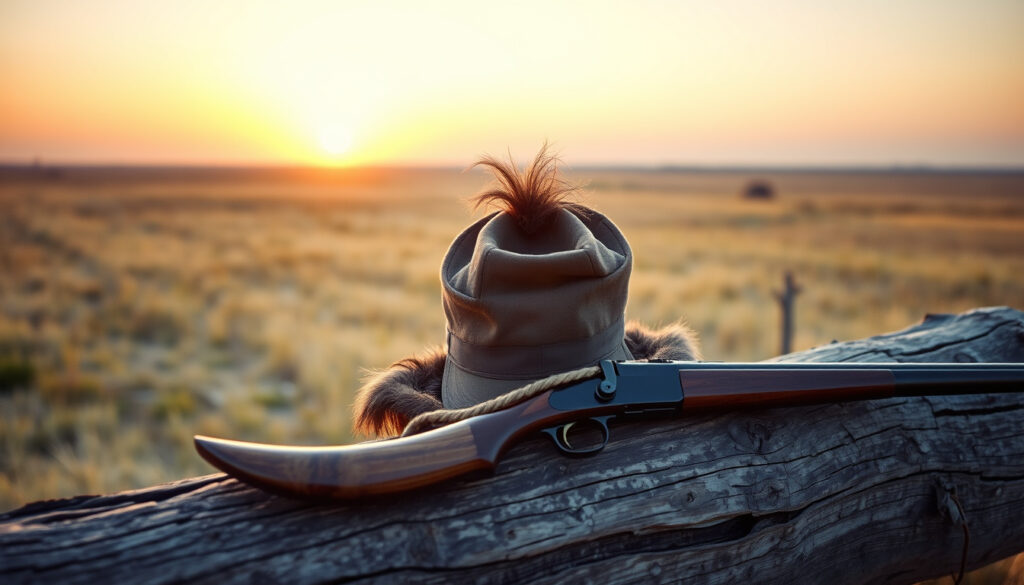
Davy Crockett: Frontier Legend and Alamo Martyr – Biography
Few American figures have been reinvented as many times as Davy Crockett. A Tennessee frontiersman who served in Congress and died at the Alamo, he became a folk hero while alive and an even bigger one after death – the gap between real David Crockett and legend is one of the most revealing stories in American history.
Born: August 17, 1786, eastern Tennessee ·
Died: March 6, 1836, San Antonio, Texas ·
Known for: Frontiersman, U.S. Congressman, Alamo defender ·
Bears killed (reported): 105 in one season ·
Military service: Tennessee militia, Creek War
Quick snapshot
- Born in Greene County, Tennessee, on August 17, 1786 (Texas State Historical Association)
- Served three terms in the U.S. House of Representatives (Library of Congress)
- Died at the Battle of the Alamo on March 6, 1836 (Texas State Historical Association)
- Owned at least two slaves (Texas State Historical Association)
- Exact manner of his death — fought to the end or executed after surrender?
- His last words at the Alamo (the famous quote was said before leaving Tennessee)
- Total number of bears he killed (various accounts differ)
- Whether he was a de facto third commander at the Alamo (disputed)
- 1786 – Born in Tennessee (Texas State Historical Association)
- 1827–1835 – Three terms in Congress (Library of Congress)
- February 1836 – Arrives at the Alamo (The Alamo)
- March 6, 1836 – Dies at the Alamo (Texas State Historical Association)
- 1954–1955 – Disney series sparks national craze (Grunge)
- Ongoing historical research into the de la Peña account of his surrender
- Modern Alamo preservation and interpretation debates
- Descendant tracking by the David Crockett Family Association
Seven key facts about Davy Crockett, one pattern: the line between documented biography and legend blurs early.
| Label | Value |
|---|---|
| Full Name | David Crockett |
| Born | August 17, 1786, eastern Tennessee |
| Died | March 6, 1836, San Antonio, Texas |
| Occupation | Frontiersman, militia officer, politician |
| Known For | Bear hunting, U.S. Congress, Alamo martyr |
| Spouse(s) | Polly Finley (1806–1815), Elizabeth Patton (1815–1836) |
| Children | At least three: John Wesley, William, Margaret |
What was Davy Crockett most famous for?
His role as a frontiersman and bear hunter
- Crockett reportedly killed 105 bears in a single hunting season, though the exact number varies by account (Texas State Historical Association).
- He spun his own hunting stories into a national reputation as a sharpshooter and storyteller (Texas State Historical Association).
The implication: The bear-hunting image was not just a personal badge — it became a political identity that helped him win votes across Tennessee.
His political career as a U.S. Congressman
- Crockett served three terms in the U.S. House of Representatives (1827–1831, 1833–1835) (Library of Congress).
- He broke with President Andrew Jackson over land policy and the Indian Removal Act, a split that cost him politically (Texas State Historical Association).
The pattern: Crockett’s independence in Congress made him a folk hero to some, but it also left him vulnerable at the ballot box. He lost his re-election bid in 1835.
His death at the Alamo as a martyr
- His death on March 6, 1836, transformed him into a national martyr (Texas State Historical Association).
- The 1950s Disney television series Davy Crockett, King of the Wild Frontier amplified his legend into a pop-culture phenomenon (Grunge).
The Disney show turned a regional folk hero into a national icon, but it also cemented a version of Crockett’s death — the heroic last stand — that historians now question.
The catch: The martyrdom image is accurate, but the details of his final moments remain bitterly disputed.
Why was Davy Crockett at the Alamo?
His journey to Texas
- After losing his congressional seat, Crockett left Tennessee for Texas in November 1835 (Texas State Historical Association).
- He reportedly told a crowd, “You may all go to hell, and I will go to Texas” — a remark that later became his most famous quote (History Extra).
Joining the Texian forces
- Crockett arrived in San Antonio de Béxar in February 1836 with a few friends and a nephew (The Alamo).
- He reportedly vowed to serve as a “high private” — not as a commander (The Alamo).
- He fought alongside James Bowie and William Travis, but the popular notion that he was a de facto third commander is disputed (Grunge).
The siege of the Alamo
- The Alamo was under siege from February 23 to March 6, 1836 (World History Encyclopedia).
- All defenders were killed on March 6, 1836, when Mexican forces stormed the mission (Texas State Historical Association).
Crockett went to Texas seeking a fresh start — instead he found a death that would make him immortal. But the exact circumstances of that death remain the most contested detail of his entire story.
What were Davy Crockett’s last words?
Disputed accounts of his final moments
- The only certainty is that Crockett died at the Alamo on March 6, 1836 (Grunge).
- One account, attributed to Mexican officer José Enrique de la Peña, claims Crockett was captured and executed after the battle rather than killed on the walls (World History Encyclopedia).
- The de la Peña memoirs were first published in 1955 and translated into English in 1975 (History Extra).
The famous “You may all go to hell” quote
- The quote “You may all go to hell, and I will go to Texas” was said before he left Tennessee, not at the Alamo (History Extra).
- It was reported in a newspaper at the time and has been repeated ever since (World History Encyclopedia).
Alternative versions and historical evidence
- The rumor that Crockett surrendered was circulating as early as March or April 1836 (World History Encyclopedia).
- The Dolson letter, published in a Detroit newspaper in September 1836, also says Crockett surrendered (Texas Monthly).
- The most-repeated version — that he made a heroic last stand, killing many enemies before dying — has been reinforced by Hollywood portrayals (History Extra).
The debate over his final moments continues to fuel historical inquiry.
Was David Crockett against slavery?
Crockett’s voting record in Congress
- Crockett voted against the abolition of slavery in the District of Columbia (Texas State Historical Association).
- He was a Jacksonian Democrat for most of his career, a party that supported slavery at the time.
His personal views and slave ownership
- Crockett owned at least two slaves (Texas State Historical Association).
- There is no known record of him speaking out against the institution of slavery.
Modern historical interpretations
- Some modern portrayals incorrectly depict Crockett as an abolitionist, likely due to confusion with his folk-hero image (Grunge).
- Historians note that Crockett’s views on race were typical of a white Tennessee frontiersman of his era — not a reformer.
The trade-off: Crockett’s legend as a “man of the people” sometimes gets conflated with views he never held. The documented record shows he was a slaveholder who voted against abolition.
Are there any descendants of Davy Crockett still alive?
Crockett’s children and grandchildren
- Crockett had at least three children: John Wesley, William, and Margaret (Texas State Historical Association).
- His wife Polly Finley died in 1815; he later married Elizabeth Patton, who had children from a previous marriage.
Known living descendants today
- Yes, there are known living descendants. A great-great-grandson named David Crockett was active in the family association until his death.
- Descendants are tracked by the David Crockett Family Association, which maintains genealogical records.
Efforts to verify lineage
- The association organizes reunions and publishes a newsletter to connect descendants.
- DNA testing has been used to confirm some lineages, but the association relies primarily on paper trails.
Why this matters: Living descendants keep the personal connection to Crockett alive, but the family line is not as widely publicized as the legend.
Who owns the Alamo today?
The Alamo as a historic site
- The Alamo is owned by the State of Texas (The Alamo).
- It is operated by the Texas General Land Office.
- The site includes the church and the Long Barrack, which are part of the official Alamo complex.
Management by the Daughters of the Republic of Texas
- From 1905 to 2015, the Daughters of the Republic of Texas managed the site (The Alamo).
- In 2015, the Texas General Land Office took over management after a dispute over preservation and financial transparency.
Modern governance and funding
- The Alamo is now part of a major revitalization project, with state funding and private donations.
- Interpretation of the site’s history, including Crockett’s role, remains a subject of public debate.
The pattern: The Alamo’s ownership has shifted from a private religious mission to state control, reflecting evolving ideas about heritage and public memory.
Timeline of Davy Crockett’s life and legacy
- August 17, 1786 – David Crockett born in Greene County, Tennessee (Texas State Historical Association)
- 1813–1814 – Served in the Tennessee militia during the Creek War (Texas State Historical Association)
- 1821–1824 – Served in the Tennessee state legislature (Texas State Historical Association)
- 1827–1831 – First two terms in the U.S. House of Representatives (Library of Congress)
- 1833–1835 – Third term in Congress (Library of Congress)
- November 1835 – Lost re-election; left Tennessee for Texas (Texas State Historical Association)
- February 1836 – Arrived at San Antonio de Béxar and joined the Alamo garrison (The Alamo)
- March 6, 1836 – Killed during the final assault of the Battle of the Alamo (Texas State Historical Association)
- 1954–1955 – Disney television series Davy Crockett, King of the Wild Frontier aired, sparking a national craze (Grunge)
The pattern: Crockett’s real life spanned 50 years, but his posthumous fame — driven by a TV show — has lasted longer and shaped public memory more than anything he did in office.
Confirmed facts vs. what’s unclear
Confirmed facts
- Davy Crockett was born in Tennessee and died at the Alamo (Texas State Historical Association)
- He served three terms in the U.S. House (Library of Congress)
- He owned slaves (Texas State Historical Association)
- He arrived at the Alamo in February 1836 (The Alamo)
What’s unclear
- The exact manner of his death (whether he fought to the end or was executed after surrender) (World History Encyclopedia)
- His last words (the famous quote was said before leaving Tennessee, not at the Alamo) (History Extra)
- The total number of bears he killed (various accounts) (Texas State Historical Association)
These categories highlight where historical consensus ends and speculation begins.
Quotes from and about Davy Crockett
“You may all go to hell, and I will go to Texas.”
Attributed to Davy Crockett, 1835, before leaving for Texas (History Extra)
“I leave the truth to be told by others.”
Attributed to Davy Crockett, from a campaign stump speech (Texas State Historical Association)
In his autobiography, Crockett boasted of his bear-hunting prowess, claiming he “shaved a bear’s whiskers off with a butcher knife” (Texas State Historical Association).
The common thread: Crockett’s own words show a man who leaned into his own legend — he was a skilled storyteller long before Hollywood got hold of his story.
Summary
The real David Crockett was a capable frontiersman, an independent-minded congressman, and a slaveholder who died at the Alamo. The legend — a fearless bear hunter who swung his rifle at the enemy in a last stand — is the version that won the culture war. For anyone trying to understand American mythology, the choice is clear: choose the documented facts, or choose the story that sells. The two are not the same, and the gap between them tells us more about ourselves than about Crockett.
youtube.com, dailymail.co.uk, facebook.com, smithsonianmag.com, americanantiquarian.org, actueelnetwerk.nl
Historians continue to examine the debate over his death at the Alamo, with some arguing he was executed after surrendering rather than dying in battle.
Frequently asked questions
How did Davy Crockett die?
He died at the Battle of the Alamo on March 6, 1836. The exact circumstances — whether he was killed in battle or executed after surrendering — are disputed (Texas State Historical Association).
What was Davy Crockett’s most famous quote?
“You may all go to hell, and I will go to Texas.” He reportedly said it before leaving Tennessee for Texas in 1835 (History Extra).
Who was the most famous person killed at the Alamo?
Davy Crockett is the most famous defender of the Alamo, alongside James Bowie and William Travis (The Alamo).
When was Davy Crockett born?
August 17, 1786, in Greene County, Tennessee (Texas State Historical Association).
How many children did Davy Crockett have?
At least three with his first wife Polly Finley: John Wesley, William, and Margaret. He also helped raise stepchildren from his second marriage to Elizabeth Patton (Texas State Historical Association).
Did Davy Crockett have a nickname?
Yes, he was known as “Davy” and later called “King of the Wild Frontier” after the 1950s Disney series (Grunge).
What is the “Davy Crockett nuke”?
The M-28 or M-29 Davy Crockett was a tactical nuclear recoilless gun developed by the U.S. Army during the Cold War, named after the frontiersman. It was a light, man-portable nuclear weapon system (Texas State Historical Association).
How tall was Davy Crockett?
Historical accounts vary, but he was described as about 6 feet tall, which was above average for the era (Texas State Historical Association).
More related posts
 Ryan Coogler: Irish Influence, Denzel Apology, Debt to Success
 Martha Stewart: Biography, Net Worth, Conviction, Personal Life
 Ladies Jeans Ireland: Where to Buy & Choose the Fit
 Petr Cech: Premier League Legend Turned Ice Hockey Goaltender
 Arnold Schwarzenegger Net Worth 2026: $850M-$1.2B Estimates
 Hayley Williams: Diagnosis, Divorce, and Key Facts
 Mark Hill: Celebrity Hairdresser Behind Popular Hair Tools
 Nike Tech Fleece: What Makes It Special
