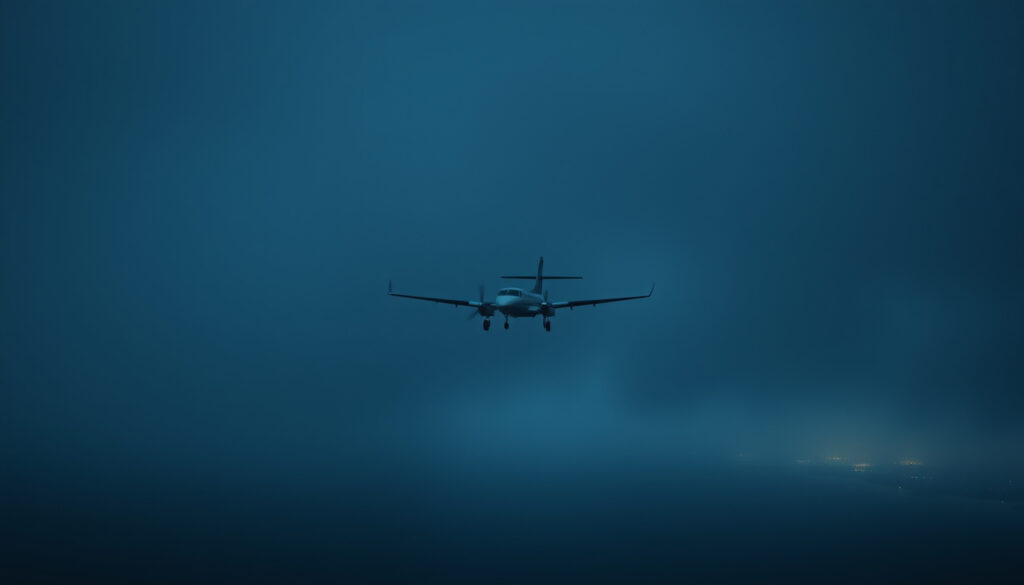
JFK Jr. Plane Crash: What Happened and Unanswered Questions
For over two decades, the crash that killed John F. Kennedy Jr., his wife Carolyn, and her sister Lauren has remained a haunting tragedy—a short flight that ended in the dark Atlantic. When the three took off from Essex County Airport on July 16, 1999, they were heading for a family wedding on Martha’s Vineyard, a routine hop that became anything but.
Date of crash: July 16, 1999 · Location: Atlantic Ocean, off Martha’s Vineyard · Fatalities: 3 (all aboard) · Aircraft: Piper PA-34-200
Key biographical facts about John F. Kennedy Jr.:
| Attribute | Detail |
|---|---|
| Full Name | John Fitzgerald Kennedy Jr. |
| Born | November 25, 1960 |
| Died | July 16, 1999 |
| Occupation | Lawyer, magazine publisher |
| Spouse | Carolyn Bessette (1996–1999) |
| Children | None |
| Cause of Death | Plane crash |
The key facts are established: on July 16, 1999, Kennedy was piloting a Piper Saratoga with his wife and sister-in-law aboard. The plane crashed into the Atlantic Ocean off the coast of Martha’s Vineyard, killing all three. While the public’s memory often focuses on the tragedy’s iconic figures—the son of a president and his glamorous wife in the world of fashion—the investigation revealed a pilot whose inexperience with instrument flying, combined with challenging night conditions, proved fatal.
Fact Check Snapshot
- The Washington Post: Investigators reported no sign of pre-impact airframe failure. The plane had not broken up in the air; the fuselage was largely intact on impact.
- ABC News: No evidence of an in-flight breakup or fire was found in early wreckage analysis. The force of impact with the water was the cause of death for all three.
- The plane entered a spiraling descent, and whether he was conscious or aware in the final moments is unknown. No distress call was made. (portable GPS)
- The investigation found no cockpit voice recorder, but the pilot did have a portable GPS unit in the cockpit, which was not a required piece of equipment for the flight.
- According to the autopsy report, all three victims sustained “catastrophic” and “unsurvivable” head injuries; no drugs or alcohol were found in the pilot’s system.
How Did a Short Flight Become a Fatal One? The Timeline
To understand what happened, it helps to piece the flight together minute by minute, as the NTSB did. Here’s what we know from the official timeline:
- 6:38 PM: The Piper Saratoga departs Essex County Airport (New Jersey), with Kennedy at the controls. He was not instrument-rated, meaning he was not certified to fly through clouds or fog relying solely on instruments.
- 8:38 PM: The plane departs the Martha’s Vineyard area, heading toward the airport. The pilot was in contact with air traffic control, but the flight was operating under visual flight rules (VFR) in dark, hazy conditions.
- 8:41 PM: The plane is in a slight right turn, descending. The flight’s last radio communication occurs.
- 9:41 PM: The aircraft disappears from radar. No distress signal was ever received.
The official NTSB report states that the plane crashed during a turn, its descent rate increasing dramatically — over 4,000 feet per minute — before impacting the water. The wreckage was found days later, and the cockpit voice recorder that was recovered from the aircraft did not record because it was not a required piece of equipment, and the plane itself was not equipped with one.
There was a known factor: the pilot, John F. Kennedy Jr., had not flown for a period before the crash and was not current on his instrument rating. This means he was permitted to fly on clear days, but when darkness and haze settled in, he was legally unable to continue using visual navigation cues. The plane was not equipped with an autopilot, and it’s believed that the disorientation of flying over dark water without a visible horizon was the primary cause of the pilot’s loss of control.
One thing that has been definitively eliminated as a cause: there is no evidence of a mechanical failure or an explosion aboard the aircraft. The flight recorders and wreckage in the months immediately following the crash were scrutinized. The NTSB concluded that the probable cause of the accident was “the pilot’s failure to maintain control of the airplane during a descent over water at night, which resulted in a loss of control and subsequent crash.” The board listed “haze and the dark night” as contributing factors.
Though John F. Kennedy Jr. was riding as both pilot and celebrity, this accident belongs to a well-worn category of aviation tragedies: a VFR-only pilot who gets himself into instrument meteorological conditions (IMC) and loses control. The official record is clear—the aircraft’s systems were not at fault.
According to Wikipedia, the members of the doomed flight were John F. Kennedy Jr., his wife Carolyn Bessette-Kennedy, and her sister Lauren Bessette. All three were killed in the crash; their remains were recovered from the wreckage.
Cause of Death and the Investigation
Given the nature of the crash, there was a lot of guesswork in the immediate aftermath about whether the pilot had suffered a medical emergency or if there was a mechanical issue. The evidence, however, paints a clear picture of a spatial disorientation event. Here is what the investigation found, drawn from official reports and credible press:
- Cause of death: All three passengers died from blunt-force trauma. According to the Encyclopaedia Britannica, their injuries were “catastrophic” and “unsurvivable”, effectively instantaneous.
- No in-flight fire: The wreckage did not show signs of a pre-impact fire or in-flight explosion. The fuselage was found relatively intact, though heavily damaged by the impact.
- No mechanical failure: An examination of the airframe and engine in the days after the crash revealed no evidence of a pre-existing mechanical defect. The engine was producing power at the moment of impact.
Not having a CVR (cockpit voice recorder) has fueled endless speculation. But the NTSB was able to reconstruct the aircraft’s attitude and flight path from radar data. The plane was seen to enter a slight left turn and then a right turn, which is classic “graveyard spiral” behavior—a loss of control that happens when a pilot gets spatially disoriented and unknowingly banks the plane into a steepening dive.
Analysis from the NTSB and the Washington Post show a clear sequence: a plane in working order being flown by a pilot who was not current on his instrument skills, in conditions that made visual reference impossible. The board explicitly listed the lack of instrument proficiency as the direct cause, not any failure of the aircraft itself.
— NTSB Factual Report
The visual condition was severe. The “haze” and “dark night” combination, as reported by the NTSB, scuttles any notion that the pilot could see the water below to maintain his horizon. There was no moonlight and the lighting on the horizon—the lights of Martha’s Vineyard—might have blended with the stars and shore lights, creating a false horizon, known as “spatial disorientation.”
Did JFK Jr. know the plane was crashing?
The NTSB report states that JFK Jr. likely became disoriented due to lack of visual references at night over water. The plane entered a spiraling descent, and whether he was conscious or aware in the final moments is unknown. No distress call was made. The pattern of the descent suggests he may not have realized the severity until impact.
What If He Had Survived? The ‘What Ifs’ and ‘Why Nots’
It’s human nature to search for alternate endings. Many of the most common questions revolve around alternative scenarios or the final moments.
What was John F. Kennedy Jr.’s net worth at the time of his death?
This figure is often cited but rarely sourced with precision. His net worth at the time of his death has been loosely estimated by several outlets to be in the range of $50 million to $100 million. His primary source of income was his 40% stake in the magazine George and his share of the Kennedy family trusts. However, there was no independently audited public figure; it remains an estimate based on his quarterly earnings and real estate holdings in New York City.
Why didn’t he use the autopilot?
He was flying a Piper Saratoga, a high-performance single-engine aircraft that, at that time, was certified for day and night visual flight rules (VFR) flight into non-towered airports. The aircraft was not equipped with an autopilot, and there is no evidence that one was required for the type of flight he was undertaking. This detail comes directly from the AirSafe.com archive discussing the NTSB report.
Was he a good pilot?
He had a pilot’s license and was known to be a talented and careful aviator in good conditions. The problem was the weather, not the flying. He did not have an instrument rating, meaning he could legally only fly when the visibility was 3 miles or more. On the night of the crash, he was clear of clouds when he took off from New Jersey, but a band of haze and a lack of moon created a dark, featureless horizon over the water.
What were JFK Jr.’s last words?
His last recorded words were reportedly to his wife Carolyn Bessette and her sister Lauren Bessette. According to accounts from those who saw them at the airport, he said affectionate parting remarks such as “I love you guys.” There is no cockpit voice recording because the Piper Saratoga was not equipped with one, so the exact words are unconfirmed.
Why this matters: The “what if” questions often miss the fundamental point. This was not a case of a reckless celebrity joyride; it was a predictable accident in which a pilot with a high skill level but a low certification level encountered weather outside his experience envelope and his legal limits. The margin for error in a single-engine plane at night over water is razor-thin.
— Editorial Analysis
Did he have a premonition of danger?
This type of answer stems from tabloid lore and has no basis in official record. What we know from the flight plan and the weather briefing is that he was expecting a smooth, clear evening. He filed a VFR flight plan, but it wasn’t activated, and he was navigating visually, not by instruments.
Confirmed Facts vs. Unconfirmed Rumors
In the age of digital speculation, it’s worth drawing a hard line between what is documented and what is conjecture.
- The NTSB determined probable cause to be the pilot failing to maintain control during a night descent over water.
- The NTSB listed haze and dark night as contributing factors, not mechanical issues.
- The Washington Post reported experts found no in-flight problem with the aircraft.
- All three victims died from blunt force trauma in a crash that was not survivable.
- That there was a bomb or missile attack. There is no evidence of a fire or explosion; the NTSB’s documentation indicates no explosive residue.
- That the plane was being flown by a co-pilot or someone else. The official record and seating arrangement have John F. Kennedy Jr. as the sole pilot in command and sole pilot on board.
- That he was suffering from a sudden medical condition, like a stroke. Toxicology and autopsy found no such condition, beyond the impact injuries.
This clear-cut separation of fact from fiction matters for those who want the accurate historical record. In terms of public knowledge, the official story has remained remarkably stable for over two decades, with no major revisions or competing theories accepted by credible authorities.
The Luxuries of Legacy: Where Was the Kennedy Family?
There is a persistent, understandable curiosity about the family dynamic and the tragedy’s aftermath. The crash occurred en route to a cousin’s wedding, making the event not just a national tragedy but a personal one for a very public family.
Spouse: Carolyn Bessette-Kennedy was his wife. Their marriage was a media magnet, and her untimely death alongside him is a major part of the story’s poignancy.
No children: This detail is often cited as one of the reasons the tragedy felt so final—there was no next generation of the “Camelot” family to carry his name forward in the direct line.
Did JFK Jr. truly love Carolyn Bessette?
The couple married in a private ceremony in Cumberland Island, Georgia, on September 21, 1996. Biographers such as Christopher Andersen described a deep bond, but also noted public and private tensions. Carolyn was frequently photographed with JFK Jr. at events, indicating a visible partnership. The love story remains a key part of the narrative.
What did Madonna say about JFK Jr.?
Madonna reportedly called JFK Jr. “the most beautiful man I ever met” in a 1999 interview with W magazine. She also described him as “very charming, very smart.” The comment added to the mystique surrounding the young Kennedy.
The broader point here is not just about who was on the plane, but the unresolved question of what JFK Jr.’s political future held. Because he died relatively young and in the act of building his media career, there is a “what if” that is far more potent than any conspiracy. He was the archetypal first son who traded a law degree for a magazine publisher role, and he was rumored to be planning a run for New York governor or senate seat imminently.
Closing Summary and Editorial Verdict
The John F. Kennedy Jr. crash is a closed case in the annals of aviation, but a perpetually open loop in the American psyche. The plane went down because a pilot with a dated flight review and no instrument rating lost control in the dark, hazy conditions. He made a fatal error in judgment by flying into a night sky he was not qualified to handle. The recorded facts do not support any of the broader conspiracies; they support the simple, terrible physics of a graveyard spiral.
Burial at Sea and Remains
The cremated remains of JFK Jr., Carolyn Bessette, and Lauren Bessette were scattered at sea off the coast of Martha’s Vineyard. The decision was made by the Kennedy family, citing JFK Jr.’s love for the ocean and the desire for a private ceremony. The U.S. Navy performed the burial-at-sea ceremony on July 22, 1999. The bodies were recovered from the ocean floor by Navy divers and identified through dental records and personal effects; all remains were cremated after autopsies.
What remains is a sobering lesson in the limits of human skill when faced with the uncontrolled environment of the natural world, and the final, irreversible finality of a moment that placed JFK Jr., Carolyn, and Lauren in the water within minutes of each other—a fact that changed the course of the Kennedy dynasty forever.
Related reading: George W. Bush: Biography, Presidency, and Key Events · Caroline Flack Death: Charges, Inquest, and Tributes
scribd.com, ntsb.gov, britannica.com, aopa.org, aviatordb.com, fedlaws.org, en.wikipedia.org, scribd.com, abcnews.go.com, airsafe.com
Frequently Asked Questions
Was John F. Kennedy Jr. alone in the plane when it crashed?
No. He was flying with his wife Carolyn Bessette-Kennedy and his sister-in-law Lauren Bessette. All three were killed in the crash.
Was John F. Kennedy Jr. an experienced pilot?
He was a licensed pilot who had been flying for over a year and had accumulated about 173 hours of flight time, but he was not rated for instrument flight, which proved fatal in the conditions.
What was the cause of the fire, if any?
There was no in-flight fire. The NTSB’s report explicitly found no evidence of a fire or explosion before the plane hit the water.
Did John F. Kennedy Jr. have any children?
No. He and Carolyn had no children together, and she was his only spouse at the time of his death.
Why did the plane crash if the weather was calm?
The weather was calm, but it was a dark night with haze over the ocean. These are exactly the conditions that lead to spatial disorientation for a pilot without an instrument rating. He lost his visual reference with the horizon, a condition called “graveyard spiral.”
Was there a distress call sent out before the crash?
No. There was no distress call. Air traffic control lost contact with the plane, and it simply disappeared from radar. The first sign of an issue was the aircraft’s failure to arrive at the destination.
How old was JFK Jr. when he died?
He was 38 years old. He was born on November 25, 1960, and died on July 16, 1999.
What type of plane crashed?
The aircraft was a Piper PA-32R-301 Saratoga, a high-performance single-engine plane.
More related posts
 Coffee Tables: Wood, Glass & Round for Irish Homes
 Eric Morecambe: Wife, Last Words, Real Name & Legacy
 Law & Order: SVU Seasons, Streaming & 2026 Updates
 Taylor Kitsch: Biography, Career, and Personal Life Facts
 Adil Ray: Relationship, Children, Biography, and Personal Life
 Miranda Richardson: Biography, Marital Status & Famous Roles
 Deep Fried Mars Bar – Recipe, Calories, Scottish Origins
 Paul Whitehouse: Health, Career, Family & Friendship
