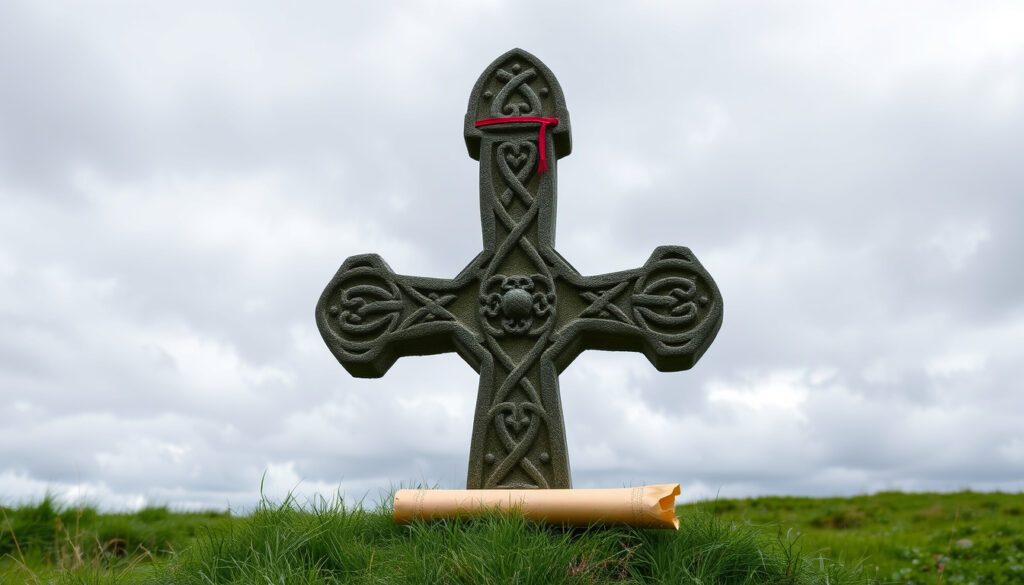
St. Patrick: Biography, Facts, and Why He Was Never Canonized
Every March 17, the world turns green in honor of a man who lived 1,500 years ago — but most of what people think they know about St. Patrick is a mix of legend, myth, and well-meaning storytelling. The real Patrick was a former slave who became a bishop, wrote two surviving documents, and never actually drove snakes out of Ireland.
Born: c. 387 AD (Roman Britain) ·
Died: 17 March 461 AD (Saul, Ireland) ·
Feast Day: 17 March ·
Patron Saint Of: Ireland ·
Known As: Apostle of Ireland ·
Canonization Status: Never formally canonized (pre‑congregation saint by acclamation)
Quick snapshot
- St. Patrick was a 5th‑century Romano‑British missionary and bishop (Britannica).
- He wrote the Confessio and the Letter to Coroticus (New Advent).
- He died on 17 March 461 AD (Catholic Answers).
- His feast day is 17 March (Catholic Online).
- Exact birth year and place are debated — estimates range from 385 to 390 AD (New Advent).
- Whether he actually used a shamrock to explain the Trinity is uncertain (IrishCentral).
- The story of driving snakes from Ireland is considered a metaphor or myth (Irish Folklore).
- Whether he met St. Brigid is unlikely but not historically provable (Saint Patrick Catholic Church).
- c. 387 AD: Born in Roman Britain (Catholic Online).
- c. 403 AD: Captured by Irish pirates at age 16 (St Patrick’s Leicester School).
- c. 409 AD: Escaped slavery and returned to Britain (Saint Patrick Catholic Church).
- c. 432 AD: Returned to Ireland as a missionary (Irish Folklore).
- 17 March 461 AD: Died at Saul, County Down (Catholic Answers).
- St. Patrick’s Day is celebrated annually on 17 March (Britannica).
- Patrick remains recognized as a saint by acclamation in the Catholic Church (IrishCentral).
- His writings continue to be studied by historians (New Advent).
- Ongoing debate about his relationship with St. Brigid (St Patrick’s Leicester School).
Six key facts about St. Patrick, drawn from the most authoritative sources available:
| Label | Value |
|---|---|
| Full Name | Saint Patrick (Latin: Patricius; Irish: Pádraig) |
| Born | c. 387 AD (Roman Britain) |
| Died | 17 March 461 AD (Saul, County Down, Ireland) |
| Feast Day | 17 March |
| Patron Saint Of | Ireland |
| Known For | Apostle of Ireland, shamrock Trinity explanation (tradition), driving out snakes (myth) |
St. Patrick is one of the most recognized saints in the world, yet the historical record is thin — two short documents and a few references in later annals. That gap is what allowed legends to flourish.
What was Saint Patrick known for?
Patrick is remembered as the 5th‑century missionary who brought Christianity to Ireland. According to Britannica’s authoritative entry, he is the “national apostle of Ireland” and likely contributed to the Christianization of the Picts and Anglo‑Saxons as well. His two surviving works — the autobiographical Confessio and the Letter to Coroticus — are the only direct windows into his life.
What did St Patrick do?
- He was captured by Irish raiders at age 16 and enslaved for six years (Britannica).
- After escaping, he studied for the priesthood in Britain and was ordained a bishop (Catholic Answers).
- He returned to Ireland around 432 AD and spent decades establishing churches, monasteries, and schools (St Patrick’s Leicester School).
- Tradition says he used the three‑leafed shamrock to explain the Holy Trinity, though no contemporary source confirms this (IrishCentral).
When was St Patrick born and died?
The most commonly cited dates place his birth around 387 AD in Roman Britain and his death on 17 March 461 AD at Saul, County Down. But even the year of his death is disputed — the New Advent Catholic Encyclopedia notes that medieval sources also give 493 AD. The exact location of his birth also remains uncertain, though some accounts place it near Dumbarton in modern Scotland (Catholic Answers).
How did St Patrick die?
According to tradition, Patrick died peacefully at Saul, the site of his first church in Ireland, on 17 March. The Catholic Answers guide states that his death date is why his feast day is celebrated on 17 March. No evidence points to violent or unusual circumstances.
The implication: the historical Patrick is more elusive than the legend, and his own words remain the best guide.
Why is St. Patrick no longer a saint?
This question reflects a widespread misunderstanding. The Catholic Church has never removed St. Patrick from sainthood. The confusion arises because Patrick was never formally canonized through the modern process that began in the 12th century. IrishCentral explains that early Irish saints were proclaimed by popular acclamation — a practice called “cultus” — and later popes simply accepted that status. The Saint Patrick Catholic Church in Washington D.C. confirms that no pope has ever formally canonized Patrick, yet he remains a saint in the Catholic Church and other Christian denominations.
Why was St. Patrick never actually canonized?
The formal canonization process — with papal investigation, miracles, and decrees — did not exist in the 5th century. IrishCentral notes that for the first thousand years of Christianity, saints were recognized by local devotion and the approval of the local bishop. Patrick was venerated from the moment of his death, and that veneration was never challenged. The phrase “no longer a saint” is misleading: he is still listed in the Roman Martyrology, the official catalogue of saints.
A man whose feast day is a global holiday — and whose name is on thousands of churches — has never received a papal canonization decree. That makes him a saint by acclamation, not by paperwork.
The catch: even without a formal decree, Patrick’s place in sainthood remains unchallenged.
Did St. Brigid know St. Patrick?
St. Brigid of Kildare (c. 451–525) and St. Patrick are two of Ireland’s three patron saints, along with St. Columba. But the idea that they knew each other personally is almost certainly a medieval invention. Brigid was born after Patrick’s death — she was about 10 years old when Patrick died in 461 — making a meeting impossible. Britannica notes that no contemporaneous source connects them. Later legends, however, wove them together, including a story that Brigid served as Patrick’s caregiver in old age — a tale with no historical basis.
Is St. Brigid buried with St. Patrick?
Down Cathedral in Downpatrick, Northern Ireland, claims to be the burial site of St. Patrick. A granite slab marks the grave. But the claim that St. Brigid is also buried there is unconfirmed. Britannica states that Brigid’s remains are disputed — some say they were moved to Downpatrick, others claim they are at Kildare or even in Portugal. The triple burial of Patrick, Brigid, and Columba at Downpatrick is a tradition, not a verified fact.
The pattern: when historical gaps exist, medieval storytellers often filled them with pious connections.
Why is St. Patrick’s Day celebrated?
St. Patrick’s Day, 17 March, began as a religious feast day in the Catholic Church commemorating the death of St. Patrick. Over centuries, it evolved into a global celebration of Irish culture, driven largely by the Irish diaspora. Britannica notes that the day is marked by parades, wearing green, displaying shamrocks, and attending church services. The secular elements — leprechauns, green beer, and massive parades — are largely 20th‑century additions, especially in the United States.
How is St. Patrick’s Day observed worldwide?
- Ireland: national holiday with parades in Dublin and other cities, religious services, and family gatherings.
- United States: major parades in New York, Boston, Chicago (where the river is dyed green), and many other cities.
- Canada, Australia, and the UK: significant celebrations, especially in cities with large Irish‑descended populations.
- Japan and Argentina: surprising but growing St. Patrick’s Day events, often organized by local Irish communities (Britannica).
The global reach of St. Patrick’s Day makes Patrick the most visible Irish figure in the world — but the holiday’s secularization has also obscured the historical man behind the myth.
The trade‑off: universal celebration often dilutes the original religious intent, leaving Patrick as a cultural symbol rather than a historical figure.
What are 10 facts about St. Patrick?
Based on the most reliable sources, here are ten verified facts about St. Patrick:
- Born in Roman Britain around 387 AD (Catholic Online).
- Captured by Irish pirates at age 16 and enslaved for six years (Britannica).
- Escaped and returned to Britain, then studied to become a priest (Catholic Answers).
- Returned to Ireland as a missionary around 432 AD (Irish Folklore).
- Used the shamrock to explain the Trinity (tradition, not historically confirmed) (IrishCentral).
- Driving snakes out of Ireland is a myth — Ireland had no post‑glacial snakes (Irish Folklore).
- Wrote the Confessio, an autobiographical account of his life (New Advent).
- Established churches, monasteries, and schools across Ireland (St Patrick’s Leicester School).
- Died on 17 March 461 AD at Saul, County Down (Catholic Answers).
- Feast day is 17 March; he is patron saint of Ireland (Britannica).
The consequence: what is verifiable about Patrick is modest but solid, while the myths have been amplified by centuries of tradition.
Who is Ireland’s most celebrated saint?
St. Patrick is without question the most internationally recognized saint of Ireland. His feast day is a global phenomenon. But within Ireland, St. Brigid and St. Columba hold deep local devotion. Britannica notes that Brigid, associated with spring and fertility, is especially revered in the west and midlands of Ireland. The question of “most celebrated” is subjective: Patrick has the global reach, but Brigid often wins in local popularity polls. The three are officially co‑patron saints of Ireland, a status confirmed by Pope Paul VI in 1962.
Who are the other patron saints of Ireland?
- St. Brigid (c. 451–525) — patron of Kildare, known for her generosity and association with healing.
- St. Columba (c. 521–597) — missionary to Scotland, founder of Iona Abbey.
Britannica confirms that all three are listed as principal patrons of Ireland.
Patrick’s global fame comes at a cost: the historical man is often buried under layers of mythology. Brigid and Columba, by contrast, have retained more of their original character because they have not been subjected to the same level of commercialized myth‑making.
The pattern: the less commercialized a saint remains, the more sharply their historical outlines are preserved.
Confirmed facts
- St. Patrick existed as a historical person in the 5th century (Britannica).
- He was a bishop and missionary in Ireland (New Advent).
- He wrote the Confessio, an autobiographical account (Catholic Answers).
- He died on 17 March 461 AD (Catholic Online).
- His feast day is 17 March and he is patron saint of Ireland (IrishCentral).
What’s unclear
- Exact birth year and place are debated (Saint Patrick Catholic Church).
- Whether he actually used a shamrock to explain the Trinity is uncertain (Irish Folklore).
- The story of driving snakes from Ireland is considered a metaphor or myth (St Patrick’s Leicester School).
- Whether he had a personal meeting with St. Brigid is unlikely but not historically provable (Britannica).
- Details of his early life rely largely on his own writings (New Advent).
“I, Patrick, a sinner, the most rustic and least of all the faithful, and despised in the eyes of many.”
— St. Patrick, from his Confessio (as quoted by Britannica)
“St. Patrick, patron saint and national apostle of Ireland, is credited with bringing Christianity to Ireland.”
— Britannica
The gap between the humble slave‑turned‑bishop and the global icon of a secular holiday is vast. For the millions who celebrate St. Patrick’s Day each year, the man himself is often little more than a backdrop to parades and green beer. But the historical Patrick — the missionary who wrote about his own sins and struggles, who never sought formal canonization because the process did not exist — deserves a more grounded place in memory. For those who want to understand the real Patrick, the Confessio remains the best place to start. For the rest of the world, the challenge is to separate the myth from the man, and to appreciate both for what they are: a 5th‑century slave who changed a nation, and a 21st‑century holiday that speaks to the global reach of that story.
news.leavitt.com, mycatholic.life, en.wikipedia.org, historynewsnetwork.org, nzheadline.nz
Frequently asked questions
Is St. Patrick a Catholic saint?
Yes, St. Patrick is recognized as a saint in the Catholic Church, the Orthodox Church, and many Anglican and Lutheran denominations. He was never formally canonized by a pope, but his sainthood is accepted by acclamation (IrishCentral).
Was St. Patrick really Irish?
No, Patrick was born in Roman Britain. He was captured by Irish raiders and taken to Ireland as a slave, but he was not Irish by birth (Britannica).
Why is the shamrock associated with St. Patrick?
Tradition holds that Patrick used the three‑leafed shamrock to explain the Holy Trinity to the Irish. The first written record of this association appears in the 17th century, so it cannot be confirmed as a historical fact (Britannica).
What is St. Patrick’s Day?
St. Patrick’s Day, 17 March, is the feast day of St. Patrick. It began as a religious observance in the Catholic Church and has become a worldwide celebration of Irish culture, marked by parades, wearing green, and displaying shamrocks (Britannica).
Where is St. Patrick buried?
Tradition holds that St. Patrick is buried at Down Cathedral in Downpatrick, Northern Ireland. A granite slab marks the grave. The site is a popular pilgrimage destination (Britannica).
Did St. Patrick really drive snakes out of Ireland?
No. Ireland never had snakes after the last Ice Age. The story is a metaphor, likely representing Patrick’s role in driving out pagan beliefs (Irish Folklore).
What is the Confession of St. Patrick?
The Confessio is an autobiographical work written by St. Patrick in Latin. It describes his life, his faith, and his missionary work. It is one of only two surviving documents from his hand (Britannica).
When did St. Patrick become a saint?
St. Patrick was recognized as a saint almost immediately after his death through popular acclamation. The modern process of canonization did not exist at that time, so there is no official date of canonization (IrishCentral).
More related posts
 Mark Twain: Biography, Famous Quotes, and Criticisms
 Rishi Sunak: Career, Resignation, and Net Worth
 Is A3 Bigger Than A4? Paper Size Comparison Guide
 Jeffrey Dean Morgan: Actor Biography, Age, Wife, and Kids
 Mark Bonnar: Biography, Career, and Personal Life
 Dawood Ibrahim: verified facts, sources, and uncertainties
 Welcome to the Jungle – Meaning, Lyrics and Origins
 Mark Williams: 3-Time Snooker Champ, Actor & NBA Star
