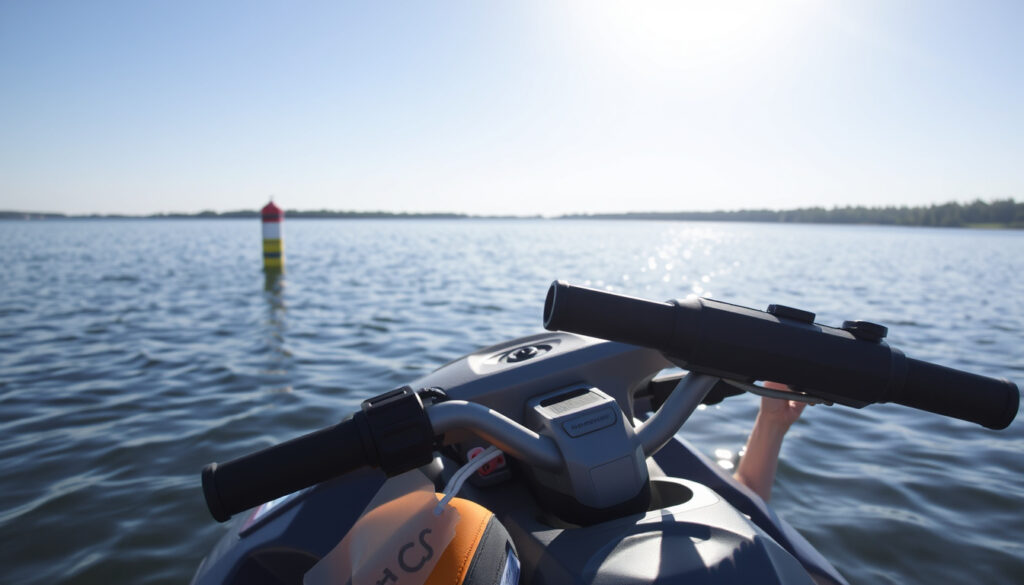
Jet Ski Guide: Cost, Legality, Safety & Classification
There’s a reason jet skis have such a hold on us. The combination of speed, spray, and summer memories is hard to beat. But whether you’re eyeing a purchase or just curious about hiring one, there’s more to the story than throttle and salt water. This guide walks through the real costs, legal requirements in Ireland, safety basics, and the surprisingly tangled question of what to call the thing.
New jet ski price range: $5,000 – $20,000 · Typical top speed: 60–70 mph · Engine hours considered high: 500 hours · Seating capacity: 1–3 people · Weight: 400–600 lbs
Quick snapshot
- Jet Ski is a Kawasaki brand name (Wikipedia (online encyclopedia))
- In Ireland, you must be 16+ to operate a jet ski (Citizens Information (Irish public service guide))
- Lifejackets are mandatory for all jet ski riders in Ireland (An Garda Síochána (Irish police force))
- Typical top speed is under 100 mph (BoatSafe (boating safety resource))
- Exact number of jet skis registered in Ireland
- Average engine lifespan across all makes and models
- How consistently local authorities enforce permit requirements
- Whether all coastal areas enforce the 300-metre foreshore restriction
- Kawasaki introduced the first Jet Ski in 1972 (Kawasaki (manufacturer))
- Ireland’s 1992 regulations allow local authorities to designate unsuitable areas (Irish Statute Book (law database))
- Electric jet skis gaining traction (e.g., Taiga Orca) (Taiga Motors (manufacturer))
- Stricter emissions and noise regulations expected in EU waters (Taiga Motors (manufacturer))
Six key specs, one takeaway: jet skis are compact but powerful machines designed for short bursts of fun, not long-haul cruising.
| Fact | Details |
|---|---|
| Brand origin | Kawasaki |
| Average speed | 60–70 mph |
| Seating | 1–3 |
| Engine type | Inboard engine |
| Price range | $5,000 – $20,000 |
| Registration required | Yes (in most jurisdictions) |
Is it jet ski or jetski?
If you’ve ever typed “jetski” into a search bar, you’re not alone. The word is so common that many people assume it’s the generic term. But the real story is more about trademark law than spelling.
What are jet skis called now?
- Jet Ski is a registered trademark of Kawasaki, used for their line of personal watercraft (Wikipedia (online encyclopedia)).
- The spelling “jetski” is a common misspelling or alternative spelling, but no official brand uses it.
- The official industry category is “Personal Watercraft” (PWC), which covers all brands including Sea-Doo, Yamaha, and Kawasaki (Wikipedia (online encyclopedia)).
The pattern: the brand name became the generic term, same as with “Hoover” or “Xerox.” For legal documents and regulations, the correct term is “personal watercraft” or “fast power craft” as used in Irish law (Irish Statute Book (law database)).
How much is a jet ski?
New jet ski prices range from $5,000 for a basic model to $20,000 for a high-performance one. That’s the sticker price, but owning a jet ski involves more than just the purchase.
Hidden costs of owning a jet ski
- Registration and licensing: In Ireland, you must register your pleasure craft and may need a local permit. Louth County Council charges a €15 annual licence fee and requires two passport photographs (Louth County Council (local authority)).
- Insurance: Required by law in most jurisdictions. Costs vary widely by rider age, experience, and location.
- Storage: A trailer or marina berth can cost from a few hundred to several thousand euro per year.
- Maintenance: Annual servicing, winterisation, and repairs add up. Engine hours over 500 are considered heavy use and may signal costly repairs.
- Fuel: A jet ski can consume 10–20 gallons per hour at full throttle. At €1.50 per litre, a day’s riding can cost €100+.
How much would a jet ski cost (used vs new)
Used jet skis can be found for $2,000–$10,000 depending on age, hours, and condition. A 10-year-old model with 300 hours might sell for $4,000–$6,000. The trade-off: older machines may lack modern safety features and require more maintenance.
The €15 permit fee from Louth County Council is a bargain, but hidden costs like storage and insurance often catch first-time buyers off guard. Budget at least 30% of the purchase price for the first year of ownership.
What this means: the upfront price is only half the story. The real cost of ownership depends heavily on where you store it, how often you ride, and whether you diy maintenance.
Are jet skis illegal in Ireland?
Jet skis are legal in Ireland, but they come with a thicket of rules that vary by county and waterway. The short answer: you can ride, but you need to follow the law.
Are jet skis allowed on Lake Garda?
- In Ireland, you must be 16 or over to operate a jet ski, and a lifejacket is mandatory at all times (Citizens Information (Irish public service guide)).
- Local authorities can designate waters as unsuitable for jet skis. Under the 1992 regulations, no one may operate a jet ski in a designated unsuitable area (Irish Statute Book (law database)).
- Fingal County Council requires a permit for any watercraft on lakes or waterways (Fingal County Council (local authority)).
- On coastal areas, PWCs must stay at least 300 metres from the foreshore except at designated launch sites (Afloat (Irish boating news)).
- Many inland lakes, including Corrib and Mask, prohibit PWCs entirely (Afloat (Irish boating news)).
- Lake Garda in Italy has a complete ban on jet skis, enforced by local authorities.
The implication: the rules are not uniform. What’s allowed in Louth may be banned in Galway. Always check local bye-laws before you ride.
Can I jet ski if I can’t swim?
It is possible to ride a jet ski without being able to swim, but it is high-risk. The key safety measure is a properly fitted lifejacket, which is mandatory in Ireland for all jet ski riders.
Jet Ski Safety: What to Know to Prevent Injury
- Anyone using a jet ski in Ireland must wear a lifejacket at all times (Government of Ireland (Department of Transport)).
- Persons under 16 must wear a lifejacket on all pleasure craft in Ireland (Citizens Information (Irish public service guide)).
- The Code of Practice for the Safe Operation of Recreational Craft states that all persons on board craft under 7 metres must wear a personal flotation device on open craft while underway (An Garda Síochána (Irish police force)).
- No person under 16 may be in command of a fast power craft capable of 17 knots or more (An Garda Síochána).
- Operators must not consume alcohol or drugs (Citizens Information).
- Waterways Ireland’s 2021 safety notice emphasised using a kill cord and avoiding swimmers and other water users (Government of Ireland (Department of Transport)).
A non-swimmer on a jet ski is entirely dependent on the lifejacket and the kill cord. If the engine cuts out and the rider falls off, seconds count. Taking a safety course is strongly recommended.
The trade-off: riding without swimming ability is allowed, but the margin for error is small. The Irish regulations are designed to keep everyone safe, but they don’t override common sense.
Is a Jet Ski Considered a Boat?
Legally, yes. In the United States, the Coast Guard classifies a jet ski as a “Class A” boat, requiring registration and safety equipment. In Ireland, the same logic applies: any pleasure craft, including jet skis, must be registered and comply with the Code of Practice.
Can a jet ski go 200 mph?
- No. The typical top speed of a consumer jet ski is 60–70 mph. High-performance models can reach 80–90 mph, but 200 mph is impossible for a production model (BoatSafe (boating safety resource)).
- Speed records exist for modified jet skis, but those are not street-legal or publicly available.
Is 500 hours a lot on a jet ski?
- Yes, 500 hours is considered high for a jet ski engine. Many manufacturers recommend major service after 100–200 hours. A machine with 500 hours likely needs careful inspection before purchase (Wikipedia (online encyclopedia)).
- Engine lifespan varies by brand, maintenance, and usage. Two-stroke engines typically wear faster than four-strokes.
The pattern: the legal classification is clear, but performance expectations are often inflated. 500 hours is a real threshold that separates lightly used from heavily used.
Pros and Cons of Owning a Jet Ski
Upsides
- Unmatched fun and freedom on the water
- Easier to tow and store than a boat
- Lower entry price than most powerboats
- Can be used for fishing, touring, or towing a wakeboard
Downsides
- High ongoing costs (insurance, storage, fuel, maintenance)
- Limited range and passenger capacity
- Weather-dependent and restricted by local bye-laws
- Requires safety gear and training
Clarity check
Confirmed facts
- Jet Ski is a Kawasaki brand name.
- In Ireland, you must be 16+ to operate a jet ski.
- Lifejackets are mandatory for all jet ski riders in Ireland.
- Typical top speed is under 100 mph.
What’s unclear
- Exact number of jet skis registered in Ireland.
- Average engine lifespan across all makes and models.
- How consistently local authorities enforce permit requirements.
- Whether all coastal areas enforce the 300-metre foreshore restriction.
“Jet Ski is a brand of personal watercraft produced by Kawasaki.”
– Wikipedia
“All persons on board craft under 7 metres must wear a personal flotation device or lifejacket on open craft while underway.”
– An Garda Síochána, Code of Practice for the Safe Operation of Recreational Craft
For Irish buyers, the choice is clear: understand the rules, budget for the extras, and treat the water with respect. The alternative is a fine, a crash, or a ruined day.
Frequently asked questions
What is the difference between a jet ski and a personal watercraft?
Jet Ski is a brand name owned by Kawasaki. Personal watercraft (PWC) is the generic term for all sit-down, handlebar-steered watercraft. All Jet Skis are PWCs, but not all PWCs are Jet Skis.
How fast can a jet ski go?
Most consumer models top out at 60–70 mph. High-performance models can reach 80–90 mph. No production model goes 200 mph.
Do I need a license to drive a jet ski?
In Ireland, no specific license is required, but you must be 16 or over. You must register the craft and follow local bye-laws. Some countries require a boat license.
How much does jet ski insurance cost?
Costs vary widely, typically €200–€600 per year depending on the rider’s age, experience, and the value of the craft. It’s mandatory in most jurisdictions.
What is the best jet ski for beginners?
Models like the Yamaha VX, Sea-Doo Spark, and Kawasaki STX are popular for beginners due to their stability, manageable power, and lower price.
How long do jet skis last?
With proper maintenance, a jet ski engine can last 300–500 hours. The hull and trailer can last much longer. Regular servicing every 50–100 hours is key.
Can you take a jet ski in the ocean?
Yes, but it’s riskier due to waves, currents, and saltwater corrosion. Always check weather conditions, wear a lifejacket, and stay within sight of shore.
How much does it cost to store a jet ski?
Trailer storage costs €100–€300 per year. Marina berths can be €500–€2,000 per year. Many owners store in a garage or driveway to save money.
More related posts
 Melissa Fumero: Age, Kids, Husband & What She’s Doing Now
 1 Pound to TL Exchange Rate: Live GBP/TRY 60.67 TRY
 Mark Heap Biography: Spaced, Green Wing, and Benidorm Roles
 Gillian McKeith: What Happened to the TV Nutritionist
 Adil Ray: Relationship, Children, Biography, and Personal Life
 Jackson Pollock: His Drip Paintings and Turbulent Life
 Steve Buscemi: 9/11 Firefighter, Actor, and His Famous Smile
