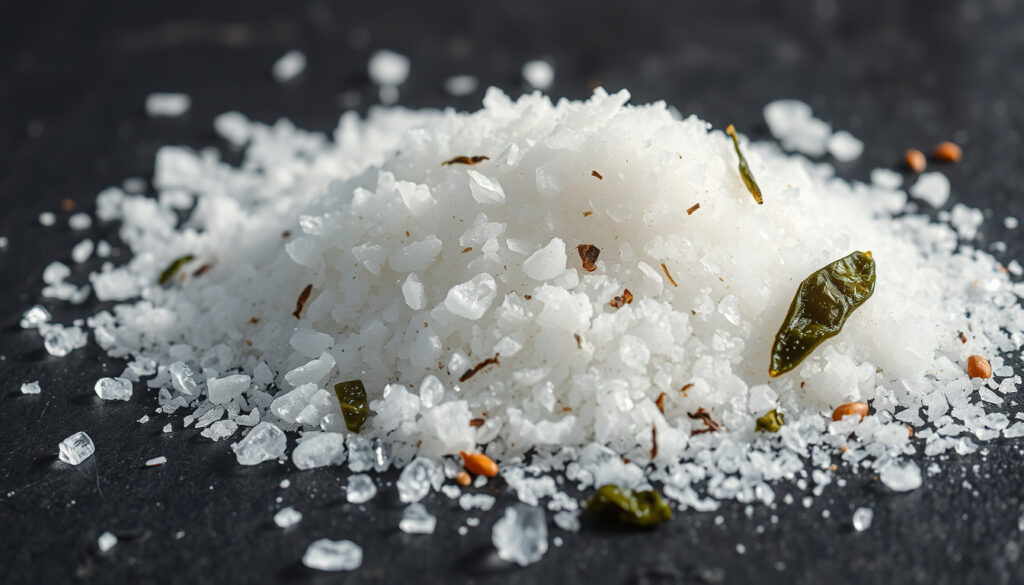
Sea Salts: Benefits, Types, and Health Considerations
Picking the right salt for your kitchen feels like a small decision, but marketing hype often surrounds sea salt — which is made by evaporating seawater and contains trace minerals like magnesium and calcium — setting it apart from heavily processed table salt. This guide cuts through the noise to compare Celtic, Himalayan, and Irish sea salt so you can decide what works for your health and cooking.
Trace minerals in sea salt: Up to 84 ·
Sodium reduction in Celtic sea salt vs table salt: 33% less ·
Global sea salt market size (2024): $1.8 billion ·
Magnesium content in Celtic sea salt: 0.3% by weight ·
Recommended daily sodium limit (WHO): < 2,000 mg
Quick snapshot
- Sea salt is produced by evaporation of seawater Acibadem International (medical overview)
- Celtic sea salt is hand-harvested in Brittany using traditional methods Hanover Health (comparison source)
- Excess sodium intake is linked to hypertension Healthline (editorial review board)
- Whether Celtic sea salt is significantly healthier than Himalayan salt for most people Healthy American Bites (comparison blog)
- The exact mineral content of some small-batch Irish sea salts due to limited testing (Healthy American Bites (comparison blog))
- Long-term effects of daily sea salt water consumption (Healthy American Bites (comparison blog))
- Global sea salt market estimated at $1.8 billion in 2024, with artisanal varieties growing fast
- Demand for hand-harvested Irish sea salts from Keel Bay and Dingle is rising among chefs and health-conscious buyers Achill Island Sea Salt (brand site)
The table below summarizes the fundamental composition of sea salt.
| Label | Value |
|---|---|
| Production method | Solar evaporation of seawater |
| Main component | Sodium chloride (NaCl) ~85-95% |
| Common trace minerals | Magnesium, calcium, potassium, iron, zinc |
| Sodium content per teaspoon | ~2,300 mg (varies by brand) |
| Iodine content | Typically absent unless iodized |
What are sea salts good for?
Health benefits of sea salt
- Sea salt contains trace minerals like magnesium, calcium, and potassium Healthline (editorial review board).
- Some sources suggest it may support hydration and electrolyte balance, though this is tied to sodium content rather than unique minerals Acibadem International (medical overview).
- Sea salt baths are commonly described as soothing dry skin and eczema-like irritation WebMD (health reference).
The trace mineral amounts in sea salt are generally too small to make a meaningful nutritional difference Healthline (editorial review board). The real benefit comes from the lack of additives and anti-caking agents, not from mineral levels.
Uses in cooking and cosmetics
- In the kitchen, sea salt adds a crunchy texture and a clean briny flavor that table salt lacks.
- For skin care, sea salt with higher magnesium content helps reduce roughness and improve hydration when used in baths WebMD (health reference). For a full skin care routine guide, see Skin Care Guide: Routines, Brands & Ingredient Safety.
The implication: Sea salt is a versatile cooking ingredient and a gentle exfoliant, but its health claims are often overstated. The main advantage is sensory — texture and taste — not nutritional superiority.
Which sea salt is healthiest?
Celtic sea salt
- Marketed as containing more moisture and being lower in sodium by volume than Himalayan salt Hanover Health (comparison source).
- Reportedly about 83% sodium compared to Himalayan’s 97%, with the difference attributed to water content Hanover Health (comparison source).
- One comparison suggests it contains roughly double the potassium and triple the magnesium of Himalayan salt Healthy American Bites (comparison blog).
The lower sodium content is real but comes from moisture, not from less sodium by weight. The mineral differences are small enough that you’d need to eat unhealthy amounts of salt to get meaningful amounts of magnesium or potassium.
Himalayan pink salt
- Mined from ancient sea beds in the Punjab region, typically 97% sodium chloride.
- Contains trace iron oxide that gives it a pink color Healthy American Bites (comparison blog).
Irish sea salt
- Hand-harvested from wild Atlantic waters, often from Keel Bay (Achill Island) or Dingle, using traditional methods without additives Achill Island Sea Salt (brand site).
- Mineral-rich due to the pristine harvesting area, though exact mineral profiles are not widely published.
Hawaiian sea salt
- Black lava salt (blended with activated charcoal) and red alaea salt (with volcanic clay) are popular finishing salts.
- Their mineral content varies significantly and is not typically analyzed for nutritional claims.
Five varieties, one pattern: sodium content is the dominant factor, and trace minerals are too diluted to affect daily intake. The real differentiator is texture, moisture, and flavor — not health.
This comparison table highlights how the main varieties stack up against each other.
| Variety | Source | Approx. sodium content | Key minerals | Best for |
|---|---|---|---|---|
| Celtic (grey) | Brittany, France | 83% (by weight, moist) | Magnesium, potassium (higher than Himalayan) | Everyday cooking, finishing dishes |
| Himalayan pink | Punjab, Pakistan | 97% | Iron, trace minerals | Table salt, grinder |
| Irish Atlantic | Keel Bay, Dingle | ~95% (varies) | Magnesium, calcium, potassium | Gourmet finishing, flakes |
| Hawaiian (black lava) | Hawaii | ~95% | Activated charcoal, clay | Visual presentation |
The trade-off: If you want the lowest sodium per teaspoon, Celtic sea salt wins because of its moisture content. But by weight, all sea salts are roughly 85-97% sodium chloride — none is a “low-sodium” food.
Upsides
- Celtic sea salt provides more moisture and a soft, briny crunch.
- Himalayan salt adds a visual pop of color and is widely available.
- Irish sea salt is hand-harvested with no additives, appealing to artisan food lovers.
- All sea salts contain trace minerals absent from table salt.
Downsides
- None are low-sodium; excess intake raises blood pressure.
- Mineral content is too low to contribute meaningfully to daily requirements.
- Some varieties (especially Irish) are expensive and hard to find.
- Non-iodized sea salt lacks iodine, which is essential for thyroid health.
The pattern across varieties is consistent: sodium content dominates, and trace minerals are too diluted to affect daily intake. The choice between them is sensory, not nutritional.
What is another name for sea salt?
Common names: sea salt, bay salt, solar salt
- Sea salt is also called bay salt or solar salt, referring to the method of production (evaporation of seawater by sunlight).
- In chemistry, sea salt is sodium chloride (NaCl), just like table salt.
- Unrefined sea salt retains trace minerals, while refined salt has been stripped of them.
The pattern: The name tells you about the production method, not the nutritional content. All sea salts are primarily NaCl.
Who should not take sea salt?
People with high blood pressure
- Salt sensitivity can raise blood pressure; sea salt does not reduce this risk.
- The WHO recommends less than 2,000 mg of sodium per day for adults.
Kidney disease patients
- Excess sodium worsens kidney function; those with chronic kidney disease should limit all salt intake.
Those on low-sodium diets
- Sea salt has the same sodium content as table salt by weight, so it is not a substitute for low-sodium diets.
- Iodine deficiency is a risk if using non-iodized sea salt exclusively WebMD (health reference).
For anyone with hypertension or kidney disease, the advice is the same: treat all salt, including sea salt, as a source of sodium. The mineral content does not offset the danger of excess sodium.
The implication: The “health halo” around sea salt can be misleading. The same sodium limits apply, and iodine deficiency is a real concern for those who switch exclusively to non-iodized sea salt.
What is Irish sea salt?
Achill Island Sea Salt
- Hand-harvested from Keel Bay on the west coast of Ireland, using traditional methods Achill Island Sea Salt (brand site).
- Mineral-rich due to the pristine Atlantic waters and no additives.
West of Dingle Sea Salt
- Another small-batch producer from the Dingle Peninsula, harvested by hand and sun-dried.
Celtic Sea Salt (Brittany vs Irish)
- Both use similar traditional methods, but Irish sea salt comes from the Atlantic rather than the coast of France.
- Irish sea salt is typically flakier and lighter in color than the grey Celtic salt from Brittany.
The pattern: Irish sea salt is a niche artisan product, not a mass-market commodity. Its appeal lies in traceability, sustainability, and the story of the place — not in a measurable health advantage.
Sea salt is produced by the evaporation of seawater, and it is the most common type of salt used in cooking.
Sea salt should be used in moderation because it does not provide specific health benefits over other salts.
— Healthline (editorial review board)
Our salt is hand-harvested from the pristine waters of Keel Bay, using the same methods that have been used for generations.
— Achill Island Sea Salt (brand)
For the average cook, the choice between Celtic and Himalayan salt comes down to texture and mineral content, but the health difference is marginal. Anyone with hypertension or kidney disease should treat all salts the same: use sparingly, or seek medical advice. For the artisan food lover, Irish sea salt offers a compelling story and a clean, flaky finish — but it comes at a premium. The decision is clear: if you want the lowest sodium per teaspoon, choose Celtic for its moisture. If you want visual appeal, Himalayan pink wins. And if you want terroir, Irish sea salt delivers.
draxe.com, netmeds.com, sterlingmedicalcenter.org, medium.com, ecotraders.com.au, jerseyseasalt.je, bonaireseasalt.com, acibademinternational.com, ledarmagasinet.se
For a deeper dive into the mineral profiles and safety considerations, refer to this complete guide to sea salts from a UK-based health resource.
Frequently asked questions
Can I drink sea salt every day?
Drinking sea salt water daily is not recommended for most people. The sodium content can raise blood pressure, and the trace minerals are too low to offer benefits. People with hypertension or kidney disease should avoid it.
What is the unhealthiest salt?
All salts are unhealthy in excess because they contain sodium. Table salt with added iodine is healthier for thyroid function, while non-iodized sea salt can lead to iodine deficiency. No single salt is “unhealthiest” — the dose matters.
Which is better, Himalayan or Celtic sea salt?
Celtic sea salt is lower in sodium by volume due to moisture, and it contains slightly more magnesium and potassium. Himalayan salt has a pink color from iron oxide. Neither is significantly healthier; the choice depends on texture and taste preference.
What are the three names of salt?
Common names include sea salt, table salt, and rock salt. Chemically, all are sodium chloride (NaCl). Sea salt is also called bay salt or solar salt.
How should I store sea salt?
Store sea salt in an airtight container in a cool, dry place. Moisture can cause clumping, especially in Celtic sea salt. Avoid storing near heat sources.
Does sea salt contain iodine?
Natural sea salt contains very little iodine unless it is iodized. Most table salt is iodized, but many sea salt brands are not. Check the label if you rely on salt for iodine.
Is sea salt good for skin?
Sea salt baths can soothe dry skin and eczema. The magnesium content may help improve skin barrier function. However, it should not be used on broken skin or ingested for skin benefits.
More related posts
 AFC Bournemouth vs Liverpool F.C. Standings: H2H & Results
 Laila Rouass: Biography, Age, Ethnicity, and More
 Wayne Thiebaud: Life, Famous Paintings, and Legacy
 Tate McRae: Age, Ethnicity, Diagnosis, and Relationship Facts
 Ty Burrell: What Happened After Modern Family
 Mawaan Rizwan: Biography, Career, and Personal Life
 Nancy Wheeler: Character Guide, Relationships, and Actor Facts
 Ukraine National Football Team – 2026 World Cup Play-Off Squad
