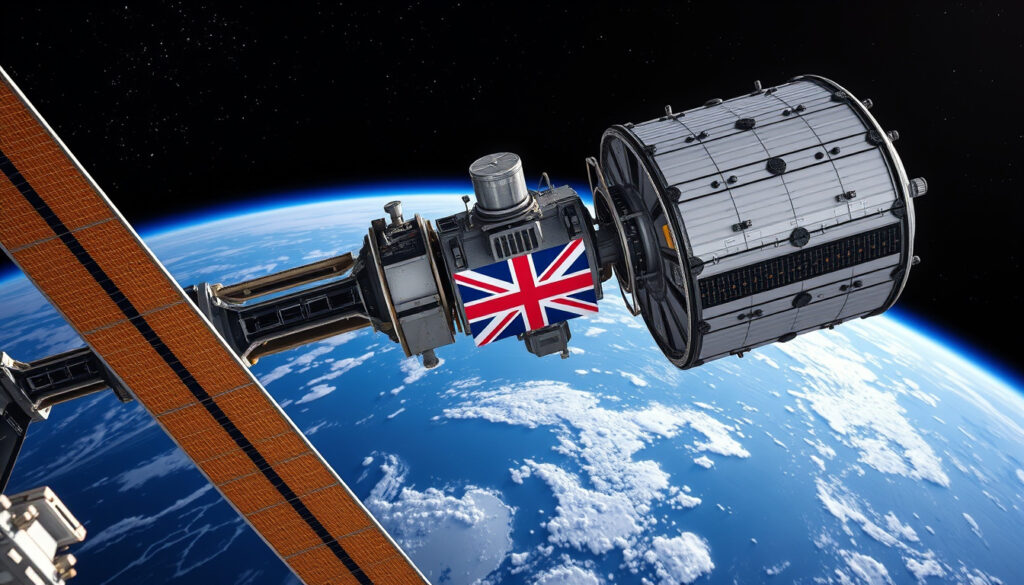
Tim Peake: From Military Pilot to First British ESA Astronaut on the ISS
When the name Tim Peake comes up, most people picture a man floating 400 kilometres above the Earth, running the London Marathon on a treadmill. But the full story of Britain’s most famous astronaut starts long before that Soyuz rocket lit up the Kazakh sky — and it continues after his retirement. The fuller picture covers a military flying career, a decade at the European Space Agency, two spacewalks, and a second chapter as an author and advocate. The timeline below pulls together the verified facts, the key numbers, and the moments that defined his journey — from Chichester to the International Space Station and beyond.
Quick Facts
- Born: 7 April 1972 (Chichester, England)
- Space Agency: European Space Agency (ESA)
- Selection: 2009 (ESA Group 4)
- Retired: 2023
- First British ESA astronaut on ISS: 15 December 2015
- Spacewalks: 1 (4 hours 43 minutes)
- Mission: Soyuz TMA-19M (Expedition 46/47)
- Degree: BSc (Hons) in Flight Dynamics and Evaluation, University of Portsmouth
- Military: Army Air Corps – helicopter pilot and test pilot
- Current occupation: Author, speaker, STEM advocate
- Government role: Non-Executive Director at the Department for Science, Innovation and Technology (April 2023 – January 2024)
Early Life and Education
Timothy Nigel Peake was born on 7 April 1972 in Chichester, England, and grew up in West Sussex. He attended Chichester High School before pursuing a degree in Flight Dynamics and Evaluation at the University of Portsmouth, graduating with a BSc (Hons).
His interest in aviation developed early, leading him to obtain his private pilot’s licence while still a student. That combination of academic theory and practical flying would define his entire career, from helicopter cockpits to the International Space Station.
Military Service
His military service started after university, when he joined the Army Air Corps. He became a helicopter pilot and later a test pilot, gaining the disciplined decision-making skills that would prove essential in spaceflight.
ESA Selection and Training
In 2009, Peake was selected as one of six new astronaut candidates from over 8,000 applicants, joining ESA’s Group 4. His training spanned years and covered everything from Russian language to spacecraft systems.
Peake spent years mastering Russian, learning the Soyuz spacecraft systems, practising spacewalk techniques in neutral buoyancy pools, and studying the complex operations of the International Space Station. The training was rigorous and unrelenting, designed to prepare astronauts for every conceivable scenario.
That preparation paid off when he was assigned to a long-duration mission aboard the ISS. The assignment carried a notable milestone for the UK — Peake would become the first British astronaut to fly for ESA, and the first to visit the space station under the European flag.
The Principia Mission
Peake’s mission, named Principia after Isaac Newton’s famous work, launched on 15 December 2015 aboard a Soyuz spacecraft from Baikonur, Kazakhstan. He arrived at the ISS the following day, beginning a 186-day mission that would make him a household name.
During his time on the station, Peake ran the London Marathon on a treadmill while orbiting, took part in radio calls with schools, and helped with experiments that ranged from fluid physics to human physiology. He also took part in a spacewalk on 15 January 2016, spending 4 hours and 43 minutes performing repairs and maintenance on the station’s power systems.
That spacewalk made him only the second British person to walk in space, after Helen Sharman’s 1991 mission, though Sharman’s flight was to the Mir station rather than the ISS. Peake’s mission also included docking with the ISS, undocking, and the safe return to Earth.
Life After ESA
After returning to Earth in June 2016, Peake remained an active ESA astronaut for several years. He took on ambassadorial roles and continued to promote space science and exploration across the UK and Europe.
Peake retired from the European Space Agency in 2023, but his public role did not end. He has since focused on writing, public speaking, and STEM advocacy, and served as Non-Executive Director at the Department for Science, Innovation and Technology from April 2023 to January 2024. His work with European Space Agency exemplifies how his expertise continues to shape UK space policy.
What People Often Get Wrong
Because Peake is so often in the public eye, misconceptions have built up around his biography. Some sources claim he performed multiple spacewalks, but the record shows just one. Others confuse him with Helen Sharman, who became the first Briton in space in 1991.
His career details, by contrast, are well documented by ESA and the UK government, and those records confirm his single spacewalk, his 186-day mission, and his 2023 retirement. These facts are verifiable and consistent.
en.wikipedia.org, britannica.com, bbc.co.uk, esa.int, gov.uk, bbc.com, schoolsobservatory.org, esa.int, assets.publishing.service.gov.uk, esa.int, bbc.com
Frequently Asked Questions
When was Tim Peake born?
He was born on 7 April 1972 in Chichester, England.
How many spacewalks did Tim Peake do?
Tim Peake performed one spacewalk during his Principia mission, lasting 4 hours and 43 minutes.
Was Tim Peake the first British person in space?
No, Helen Sharman was the first Briton in space in 1991. Peake was the first British ESA astronaut to visit the ISS.
When did Tim Peake retire from ESA?
He retired from the European Space Agency in 2023.
What does Tim Peake do today?
He is an author, public speaker, and STEM advocate, and he served as Non-Executive Director at the Department for Science, Innovation and Technology until January 2024.
What was Tim Peake’s full name?
His full name is Timothy Nigel Peake.
Key Facts Summary
| Attribute | Detail |
|---|---|
| Born | 7 April 1972 (Chichester, England) |
| Full Name | Timothy Nigel Peake |
| Military Service | Army Air Corps – helicopter and test pilot |
| ESA Selection | 2009 (ESA Group 4) |
| Mission | Soyuz TMA-19M (Expedition 46/47), 2015–2016 |
| Spacewalks | 1 (4 hours 43 minutes) |
| Retirement | 2023 |
186 days in space · 1 spacewalk · 250+ experiments during Principia
More related posts
 St. Vincent: Biography, Relationships, and Music Career
 Kola Bokinni: Biography, Ethnicity, Ted Lasso Role & Family
 Eric Clapton Health: Disease, Wheelchair & Family Tragedy
 Samara Weaving Biography: Husband, Children & Career
 Ugly Betty: Cancellation, Finale, Spin-Off Explained
 Zach Bryan: Biography, Marriages, Sobriety, and Political Views
 Stefon Diggs: NFL Career, Net Worth & Personal Life Rumors
