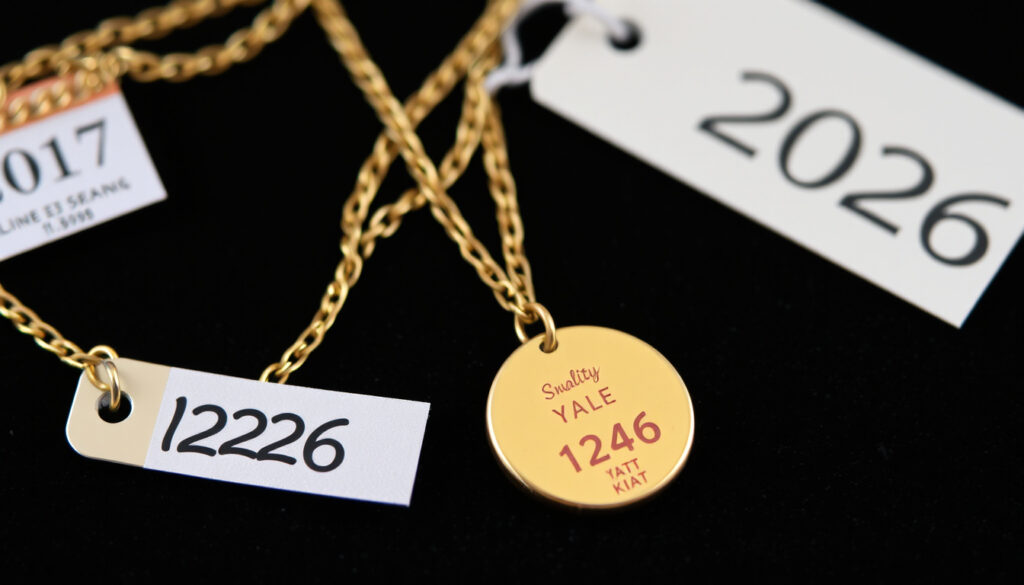
Gold Necklace Buying Guide 2026: Costs, Karats & Trends in Ireland
A gold necklace can feel like a minefield of karats, hallmarks, and pricing jargon, but the basics are simpler than most shoppers think. Whether you’re hunting for a sturdy everyday chain in Dublin or a gift piece with proper Irish hallmarking, this guide lays out what you’ll actually pay, which karat holds up best, and where to buy with confidence in 2026.
Average cost of a 9ct gold chain in Ireland: €50–€150 for a simple chain ·
Most durable karat for daily wear: 14k or 18k (9ct is also common in Ireland) ·
Gold purity measurement: Karats: 24k is pure, 9ct = 37.5% gold ·
Top trending style in 2026: Chunky curb chains and personalised pendants
Quick snapshot
- 9ct gold (37.5% pure) is the most sold karat in Ireland (Martin Gear Jewellers, Irish jewellery retailers)
- 24k gold is rarely used in jewellery because it is too soft (Martin Gear Jewellers) (Martin Gear Jewellers, Irish jewellery retailers)
- Irish hallmarks include a harp mark for Dublin (Martin Gear Jewellers) (Martin Gear Jewellers, Irish jewellery retailers)
- Whether gold prices will rise or fall in 2026
- Exact market share of chunky chains vs. delicate styles in 2026
- 2023: Rise of personalised name necklaces on social media (Southern Review)
- 2024: Chunky curb chains gain popularity for both men and women (Southern Review)
- 2026 forecast: Personalised pendants and mixed-metal chains expected to dominate (Southern Review)
- Irish shoppers should expect hallmark checks (375, 585, 750 marks) near the clasp (Revenue, Irish tax authority)
- VAT at 23% applies on jewellery in Ireland (Revenue, Irish tax authority)
Here are the key facts about gold necklaces at a glance.
| Label | Value |
|---|---|
| Purest gold | 24 karat (99.9% gold) |
| Most common in Ireland | 9ct (37.5% gold) (Martin Gear Jewellers) |
| Average price per gram (9ct) | €40–€80 depending on design (PolicyLine, Irish buying guide) |
| Hypoallergenic | Yes, pure gold is hypoallergenic |
| 2026 trend prediction | Chunky chains and layered necklaces (Southern Review, trend analysis) |
How much should a real gold necklace cost?
Price comes down to three things: the weight of the gold (measured in grams), its karat purity, and whether there’s craftsmanship or a brand mark-up. In Ireland, a simple 9ct chain in a standard 45cm length typically runs between €150 and €400 (PolicyLine, Irish jewellery pricing guide). For 14ct, expect €300–€700 for the same length (PolicyLine).
What factors influence the price of a gold necklace?
- Weight: the heavier the chain, the more gold — and more cost.
- Karat: higher purity (18ct vs 9ct) means a higher percentage of gold (Martin Gear Jewellers, hallmarking specialists).
- Craftsmanship: hand-made chains or intricate links cost more than machine-made.
- Brand: designer names (e.g. from Keanes or Dylan Oaks) add a premium.
Average price range for 9ct, 14ct, and 18ct gold necklaces in Ireland
Four common karats, one clear pattern: cost rises with purity, but 14ct often hits the sweet spot for value.
| Karat | Gold content | Price per gram (approximate) | Typical necklace cost (45cm chain) |
|---|---|---|---|
| 9ct (375) | 37.5% | €40–€80 | €150–€400 |
| 14ct (585) | 58.5% | €70–€120 | €300–€700 |
| 18ct (750) | 75% | €100–€180 | €400–€900 |
| 22ct (916) | 91.6% | €130–€250 | €500+ |
The trade-off: 9ct is budget-friendly and tough, but has less of that rich yellow glow. 18ct looks premium but costs nearly twice as much per gram.
What gold necklaces are trending?
If you’ve noticed thicker, bolder gold chains around Dublin and Cork, you’re not imagining it. Chunky curb and rolo chains are the defining look of 2025–2026, especially for men (Southern Review, jewellery trend analysis). For women, layered chains—wearing two or three different lengths at once—remain a staple, often mixing a thin chain with a personalised pendant.
What is the current necklace trend?
- Chunky curb chains for both men and women (Southern Review).
- Personalised name and initial pendants, still strong from 2023.
- Claddagh and Celtic designs hold steady demand in Ireland year-round.
What are the most popular necklaces in 2026?
Forecasts point to vintage-inspired designs—think herringbone and Figaro patterns from the 1990s making a comeback—and mixed-metal chains that combine yellow gold with white or rose tones (Southern Review, 2026 trend predictions). The biggest shift: buyers are choosing heavier, more substantial pieces rather than delicate, fine chains.
What is the necklace everyone is wearing?
On Instagram and in Irish high street stores, the most visible style is a chunky curb chain, often 4–8mm wide, worn solo or with a small pendant. Men favour wider, shorter lengths (50–55cm), while women lean toward 40–45cm with a personalised disc or letter (Southern Review, style snapshot).
Irish buyers gravitating toward chunky curb chains face a durability trade-off: wider links catch less on clothing than fine chains, but the heavier weight means a higher upfront cost. For under €300, a solid 9ct curb chain offers both trend alignment and daily-wear toughness.
The pattern: chunky chains command the 2026 market, but personalised pendants and Claddagh motifs keep Irish buyers returning to heritage designs.
Where can I buy a legit gold necklace?
In Ireland, the safest bet is a retailer that displays Assay Office hallmarks—the harp mark for Dublin is a dead giveaway of official testing (Martin Gear Jewellers, hallmarking experts). Trusted names include Keanes on Capel Street (Dublin), Gear Jewellers in Galway, OR Jewellery, Dylan Oaks, and Kilkenny Design. All carry solid gold pieces with proper documentation.
Is the gold at TJ Maxx real?
Yes, TJ Maxx does sell real gold—but it’s often lower karat (9ct or 10ct) or gold vermeil (a gold layer over silver) (Southern Review, buying tips). Check the stamp inside the clasp. If you see “375” or “585,” it’s solid gold. “GP” (gold plated) means only a surface layer of gold.
Trusted Irish retailers for gold necklaces
- Keanes — Dublin’s long-standing jewellery store with a wide 9ct and 18ct range.
- Gear Jewellers — Galway-based, known for hallmarked gold and detailed care guides (Martin Gear Jewellers).
- OR Jewellery — Online-first Irish retailer with solid gold chains and pendants.
- Dylan Oaks — Cork and Dublin stores, strong on trendy chains for men and women.
- Kilkenny Design — focuses on Irish-made and designer gold jewellery.
Online vs in-store buying tips
- Always ask for a receipt showing the carat weight and hallmark number.
- Online, demand a clear photo of the hallmark stamp near the clasp (Martin Gear Jewellers, hallmark guide).
- Avoid unverified third-party marketplaces—stick to retailers with a physical Irish address or clear returns policy.
Irish law requires all gold sold above a threshold to be hallmarked by the Dublin Assay Office. If a seller can’t show a sponsor’s mark and a harp stamp, walk away. Even trusted online marketplaces like Etsy are full of unmarked imports. (Irish Statute Book, legal hallmarking requirements)
What karat gold is best for a necklace?
Nine-carat (37.5% gold) is the everyday workhorse in Ireland—affordable, durable, and widely available (Martin Gear Jewellers, Irish jewellery retailers). But if you want a deeper colour and higher resale value, 14ct (58.5% gold) or 18ct (75%) are worth the extra cost. The key trade-off: higher karat = softer metal (Martin Gear Jewellers, karat comparison).
9ct vs 14ct vs 18ct vs 24k: which is best?
Four karats, one pattern: up to 18ct, the gold maintains enough alloy strength for daily chain wear. At 22ct and above, the gold becomes too soft for clasps and links.
| Karat | Gold % | Colour | Durability for daily wear | Best for |
|---|---|---|---|---|
| 9ct (375) | 37.5% | Pale yellow | High | Everyday chains, men’s curb necklaces |
| 14ct (585) | 58.5% | Rich yellow | High | Balance of durability and colour |
| 18ct (750) | 75% | Deep yellow | Medium-high | Fine jewellery, special occasion pieces |
| 24k (999) | 99.9% | Intense yellow | Low (too soft) | Investment bars, not necklace chains |
The catch: 9ct is strongest but has the palest colour; 18ct has that unmistakable gold glow but can bend under pressure. For most Irish buyers, 14ct is the sweet spot—it is 58.5% gold, durable enough for daily wear, and sits at a price point that feels premium without overreaching.
Best karat for everyday wear
- 9ct: Cheapest, hardest, most common in Ireland. Ideal for a first gold chain or active lifestyles.
- 14ct: Slightly more expensive but visibly richer colour. The go-to for a chain you’ll never take off.
- 18ct: Softer but fine if you aren’t rough with it. Better for pendants that sit against the chest than for rough chain wear.
Can you wear a gold necklace every day?
Yes—gold is hypoallergenic and doesn’t tarnish the way silver does. A 9ct or 14ct chain can handle daily wear for years if treated with basic care (SilverPhoenix, gold care guide). The main risk is physical damage: bending, scratching, or snagging on clothing.
How to care for a gold necklace worn daily
- Remove it before swimming (chlorine weakens gold alloys), heavy cleaning, or exercise.
- Store chain flat or hung separately to avoid knots and scratches—don’t toss it in a drawer with keys or coins.
- Clean with warm water, mild soap, and a soft cloth every few weeks.
Which gold necklaces are most durable?
- Curb chains: flat, interlocking links resist bending better than rope or cable chains.
- 9ct or 14ct withstands daily tugging far better than 18ct or 22ct.
- Avoid very fine chains (under 1.5mm width) if you plan to wear the necklace 24/7.
The implication: a 9ct curb chain at 3–4mm width is the most durable everyday necklace you can buy in Ireland. It won’t snap, won’t tarnish, and won’t cause skin reactions.
Gold necklace timeline: from name pendants to chunky chains (2023–2026)
- 2023
- Rise of personalised name necklaces on social media — Instagram and TikTok drive demand for custom gold letters (Southern Review, trend timeline).
- 2024
- Chunky curb chains gain popularity for both men and women — styles shift from dainty to bold.
- 2025
- Layering two to three gold chains becomes a mainstream trend — women often mix a thin chain, a choker, and a longer pendant chain.
- 2026 (forecast)
- Personalised pendants, mixed-metal chains, and vintage-inspired design expected to dominate (Southern Review, 2026 forecast).
Irish buyers chasing 2026 trends should note that vintage-inspired designs (herringbone, Figaro) often have delicate links that aren’t as durable as curb chains. The trade-off: style points vs. long-term wearability. Choose based on how often you’ll actually wear the piece.
Gold necklace facts: what’s confirmed and what’s still unclear
Confirmed facts
- 24k gold is too soft for everyday jewelry (Martin Gear Jewellers).
- 9ct gold is the most widely sold karat in Ireland (Martin Gear Jewellers).
- Irish hallmarks include a harp mark (Dublin Assay Office) and fineness numbers like 375, 585, 750 (Irish Statute Book, hallmarking regulations).
What’s still unclear
- Whether gold prices will rise or fall in 2026 — market analysts disagree (PolicyLine, pricing uncertainty).
- Exact market share of chunky chains vs. delicate styles in 2026 — industry data limited.
- Whether gold necklaces need to be removed during strenuous activity — some care guides recommend it, but not all agree (SilverPhoenix, gold care guide).
Expert perspectives on gold necklace buying in Ireland
“9 karat gold is the most common gold purity in Ireland. It’s 37.5% pure gold and 62.5% other alloy metals, making it durable enough for daily wear.”
— Jewellery specialist, Martin Gear Jewellers (Galway, Ireland)
“Chunky curb chains and personalised pendants are the defining looks of 2026. Irish buyers are spending more on heavier, statement pieces rather than disposable fashion chains.”
— Industry analyst, Southern Review (jewellery trend analysis)
For Irish shoppers, the choice between a €200 9ct chain and a €500 18ct piece comes down to one question: is this a daily workhorse or a statement piece? A 9ct curb chain from a hallmarked retailer like Keanes or Gear Jewellers will outlast trend cycles—and it won’t break the bank.
rubyta.com, southernwatch.net, preciousmetalprices.com, silverphoenix.ie, eur-lex.europa.eu, assay.ie, irishstatutebook.ie, pressframe.nl
Frequently asked questions
What does 9ct gold mean?
9ct gold means the metal is 37.5% pure gold, with the rest made up of alloy metals like copper or silver. In Ireland, the hallmark stamp for 9ct is “375” (Martin Gear Jewellers).
Is gold plated necklace considered real gold?
No. Gold plated jewellery has a thin layer of gold over a base metal (often brass or silver). It is not solid gold and will wear off over time. Look for “375,” “585,” or “750” stamps to confirm solid gold (Southern Review, buying advice).
How can I tell if a gold necklace is real at home?
Check the inside of the clasp or the chain’s last link for a hallmark number: 375 (9ct), 585 (14ct), or 750 (18ct). Also look for a maker’s mark and a harp stamp for Dublin assays. If you see no stamp, it’s likely plated (Martin Gear Jewellers, hallmark guide).
What is the difference between gold filled and solid gold?
Gold filled is a thick layer of gold bonded mechanically to a base metal—typically 5% gold by weight. Solid gold is gold alloy all the way through. Solid gold can be reshaped and re-sold; gold filled cannot. In Irish jewellery, solid gold is hallmarked; gold filled is not (SilverPhoenix, karat guide).
How often should I clean my gold necklace?
For daily wear, clean it every 2–3 weeks using warm water, a drop of mild dish soap, and a soft toothbrush. Avoid ultrasonic cleaners for chains with delicate links (SilverPhoenix, care advice).
What gold necklace length is best for me?
For women, 40–45cm (choker to collar length) is standard. For men, 50–55cm sits at the collarbone or just below. Chunky curb chains look best at 50cm for most builds (Southern Review, sizing guide).
Can I shower with a gold necklace?
Technically yes—gold doesn’t rust—but soaps, shampoos, and chlorine can dull the alloy over time. It’s better to remove it before showering to preserve the finish (SilverPhoenix, gold care).
Do gold necklaces tarnish?
Pure gold does not tarnish. However, 9ct and 14ct gold contain non-gold alloys (copper, silver) that may oxidise slightly over years. This is usually a dulling rather than tarnishing. A quick clean restores the shine (SilverPhoenix, tarnish explanation).
For Irish shoppers in 2026, the decision is straightforward: a hallmarked 9ct curb chain from a trusted retailer like Keanes or Gear Jewellers gives you durability and trend alignment for under €300. If colour and resale matter more, 14ct offers a superior look at about €400–€700. Either way, always verify the hallmark near the clasp—or you risk paying solid-gold prices for a plated piece.
More related posts
 Siobhan Finneran: Partner, Net Worth, Roles & Biography
 Riccardo Calafiori: Age, Club, Career, and Personal Life
 Chat AI: Best Free Platforms, How They Work, and Limitations
 Freddie Starr’s Downfall, Death, and Funeral: A Biography
 Adil Ray: Relationship, Children, Biography, and Personal Life
 Jacob Fortune-Lloyd: Background, Star Wars Role, Queen’s Gambit
 Marisa Tomei Biography: Age, Ethnicity, and Personal Life
 Stacy Keach: Biography, Career, and Questions Answered
