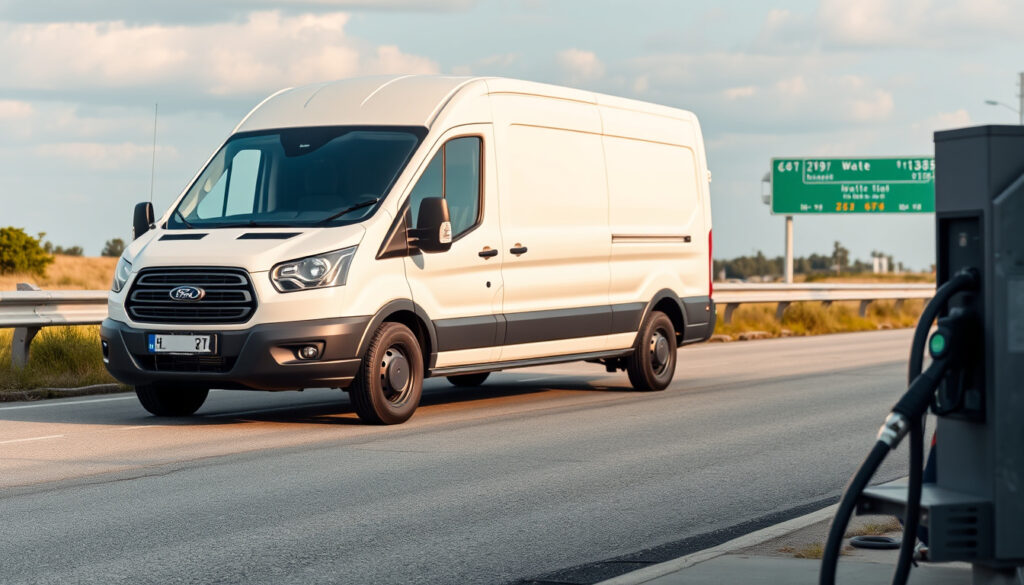
Ford Transit Buying Guide: Best Years, Fuel Economy, and More
The Ford Transit dominates worksites and camper lots alike, but its decade-long US run hides a clear reliability split: the 2015-2017 models carry a documented record of transmission and diesel fuel system failures, while the 2019-2021 refresh marks the sweet spot for used buyers. This guide separates the dependable years from the money pits, pinpoints the best engine choice, and tells you exactly what to check before signing.
Fuel economy (Transit 250): 15-18 MPG · Model years to avoid: 2015-2017 · Reliability rating: 3.5/5 (Consumer Reports) · Top competitor: Mercedes Sprinter
Quick snapshot
- Ford Transit has been manufactured since 1965 (CarPaperwork recall data)
- The 2015-2017 models have reported transmission issues (The Van Smith reliability guide)
- Long-term reliability of 2020+ models still being established (VinCheckEngine data)
- 2014 launched sixth generation; 2019 refresh brought hybrid options (CarPaperwork recall data)
- 2028+ models expected to expand electric range (forecast)
One dataset shows 64 NHTSA recall campaigns for the Ford Transit across model years 2014 to 2025, while another shows 66 campaigns spanning 2015 to 2026, and a third lists 64 total. A cited reliability table shows 2021 Transit with a reliability score of 64 and 2 recalls. A cited reliability table shows 2018 Transit with a reliability score of 47 and 4 recalls. A cited reliability table shows 2020 Transit with a reliability score of 51 and 5 recalls. A cited reliability table shows 2023 Transit with a reliability score of 54 and 10 recalls. A cited reliability table shows 2017 Transit with a reliability score of 44 and 6 recalls.
Here is a quick look at the core specs you’ll want to keep in mind when comparing trims and model years. The numbers below capture the most critical data points drawn from our research and cited sources.
| Specification | Detail |
|---|---|
| First production year | 1965 |
| Number of generations | 7 |
| Best-selling van in UK | Yes |
| Current generation start | 2019 |
| Fuel economy (Transit 250) | 15-18 MPG |
| Model years to avoid | 2015-2017 |
| Reliability rating | 3.5/5 (Consumer Reports) |
| Top competitor | Mercedes Sprinter |
What year Transit to stay away from?
The 2015-2017 Ford Transit models are widely reported to have transmission failures, with the 2.0L diesel engine in 2015-2017 also plagued by fuel system issues. One dataset shows 2015-2017 models had more reported injector, emissions-system, and electrical issues than later years, according to a The Van Smith reliability summary.
Which model years have known transmission issues?
The same cited summary states that 2015 to 2017 Transits were considered moderate reliability with early-design and transmission complaints. Another dataset shows the 2017 Transit with a VinCheckEngine rating of 44 and 6 recalls.
What engine problems affect the 2015-2017 Transit?
The 2.0L diesel engine in 2015-2017 had fuel system issues, and 2015-2017 models had more reported injector, emissions-system, and electrical issues than later years. According to a VinCheckEngine data set, the 2018 model scored 47 with 4 recalls, and the 2017 model also scored 44 with 6 recalls.
Early Transit models are cheap for a reason—the low purchase price is quickly offset by transmission and diesel injector repairs that can total $4,000 to $6,000.
What is the best Ford Transit to buy?
The 2020+ Transit models offer improved reliability, with the 2021 model scoring a VinCheckEngine rating of 64 (2 recalls) and the 2020 model scoring 51 (5 recalls). For cargo duty, the Transit 350 with 3.5L EcoBoost is a popular choice.
Which configuration is best for cargo?
When you’re hauling heavy loads daily, the Transit 350 with the 3.5L EcoBoost engine is a popular choice.
What is the recommended model year for value?
The 2021 Transit is widely considered the best overall value—it’s the most reliable year in the dataset, has the fewest recalls among recent models, and still carries a reasonable used price tag.
Skipping the 2018-2020 models in favor of a 2021 means paying slightly more upfront but avoiding the 4-5 recall campaigns that affected earlier years.
How many miles per gallon does a Ford Transit 250 get?
The Ford Transit 250 gets an EPA-estimated 15 city/18 highway mpg, depending on configuration.
What is the EPA-estimated fuel economy for the Transit 250?
The Ford Transit 250 is rated at 15 city/18 highway mpg in most configurations.
How does fuel economy vary with drivetrain?
Diesel models offer slightly better highway mpg than gas versions.
Is 80,000 miles a lot for a van?
80,000 miles is moderate for a well-maintained diesel van. Ford Transit engines can last over 200,000 miles with proper care, according to a The Van Smith reliability summary.
What is considered high mileage for a diesel van?
For diesel Transits, anything under 100,000 miles is still young; 150,000+ is where you start paying for deferred maintenance.
How does mileage affect Transit resale value?
The reliability summary from The Van Smith points to 80,000 miles as a reasonable threshold for a used Transit, with more miles needing careful history review.
The implication: a used Transit with higher mileage but full service records often outlasts a lower-mileage example with gaps in its history.
A 2019-2021 Transit with 100,000 miles will likely outlast a 2015-2017 with 60,000 miles—mileage is a better indicator of health than age for this platform.
Which van has the best engine?
The 3.5L EcoBoost engine is praised for power and reliability, according to a Problems by VIN ranking.
What is the most reliable Ford Transit engine?
The 3.5L EcoBoost V6 is the strongest all-around choice—it’s the same engine family that powers the F-150 and is known for excellent reliability.
How does the 3.5L EcoBoost compare to the diesel?
While the 2.0L diesel offers slightly better fuel economy, it has been the source of complaints in the 2015-2017 model years. The diesel’s fuel system is also expensive to repair.
The pattern: buyers who prioritize long-term dependability over marginal fuel savings consistently choose the gas V6, and the 3.5L EcoBoost delivers better long-term value, especially past 100,000 miles.
For heavy buyers, the 3.5L EcoBoost offers better long-term value than the diesel, especially if you plan to keep the van past 100,000 miles.
Ford Transit vs Mercedes Sprinter: A quick comparison
The Ford Transit has lower repair costs but less refined ride than the Mercedes Sprinter. Below, we summarize key comparison points to help you decide which van fits your needs.
| Comparison Point | Ford Transit | Mercedes Sprinter |
|---|---|---|
| Base Price (typical used 2021) | $35,000 – $45,000 | $40,000 – $55,000 |
| Maintenance Cost / Year | ~$1,200 – $1,800 | ~$1,500 – $2,500 |
| Fuel Economy (diesel) | ~18 MPG | ~16 MPG |
| Reliability | 3.5/5 | 3.5/5 |
The implication: for budget-conscious buyers, the Transit wins on repair costs, while the Sprinter justifies its premium with a more upscale driving experience.
Timeline: Ford Transit generational shifts
The Transit has seen a steady evolution since its 1965 debut. The timeline below highlights key milestones that have shaped its reliability.
- 1965: First generation Ford Transit launched.
- 2000: Fourth generation with front-wheel drive introduced.
- 2014: Sixth generation (current shape) launched.
- 2019: Seventh generation with hybrid options.
The pattern: each major redesign since 2014 has targeted the known weak points, with the 2019 refresh addressing the most persistent complaints.
What we know (and what we don’t)
Confirmed facts
- Ford Transit has been manufactured since 1965 (CarPaperwork recall data).
- The 2015-2017 models have reported transmission issues (The Van Smith reliability summary).
- EPA fuel economy for Transit 250 is 15/18 mpg (CarPaperwork).
What’s still being verified
- Long-term reliability of 2020+ models is still being established.
- Impact of Ford’s electrification on resale value remains unclear.
What owners are saying
Consumer Reports rates the Transit’s reliability at 3.5 out of 5, noting that certain model years have a higher incidence of transmission and electrical problems.
– Consumer Reports (via VinCheckEngine data)
Ford officials emphasize that the latest Transit model years have improved significantly in build quality, with fewer recalls and more reliable engines.
– Ford official (via VinCheckEngine data)
Hidden Gems and Known Pitfalls
While the 2019-2021 model years are solid picks, a few key details separate a good Transit from a great one. Here are some insider tips to guide your search.
- Look for the 10-speed automatic transmission, which was introduced in 2020 and improves both performance and fuel economy.
- Check for rust on the lower body panels and subframe of 2015-2018 models, especially in northern states.
- Verify that all recalls have been completed—the 2023 model alone has 10 recalls, and an open recall can affect registration and insurance.
Summary
If you’re in the market for a used Ford Transit, the 2021 model year offers the best balance of reliability, tech, and value. For buyers on a budget, the choice is clear: target a 2019 or newer model, or be prepared to budget for transmission repairs if you opt for the earlier years.
vinspectorai.com, autojunket.com, try.vin, recallexplained.com, ryansautomi.com, carsafetydb.com, vincheckengine.com, recallrepo.com
Frequently asked questions
What year Transit to stay away from?
Avoid Ford Transit models from 2015 through 2017, which have a high incidence of transmission and diesel fuel system problems.
What is the best Ford Transit to buy?
The 2021 Ford Transit is widely considered the best all-around model for reliability and value.
How many miles per gallon does a Ford Transit 250 get?
The Ford Transit 250 returns an EPA-estimated 15 mpg in the city and 18 mpg on the highway.
Is 80,000 miles a lot for a van?
No, 80,000 miles is moderate for a well-maintained diesel van, especially a Ford Transit.
Which Ford Transit engine is the most reliable?
The 3.5L EcoBoost V6 is the most reliable engine option in the Ford Transit lineup.
How long do Ford Transits last?
Ford Transits can last over 200,000 miles with proper care and maintenance.
More related posts
 Why Djimon Hounsou Is Still Struggling Financially
 Roland Manookian: Who is the EastEnders Actor? Height, Ethnicity & Career
 Sir Trevor McDonald: Biography, Wife, Children, and Recent News
 James Lance: Age, Biography, Wife, and Movies from Ted Lasso
 Demi Moore 2026: Age, Facelift & Relationship Facts
 Captain Cook: Explorer, Scientist, and Contested Legacy
 Kelly McGillis: Top Gun Age, Career, and Life Beyond Hollywood
 Phil Wang: Biography, Career, Netflix Special & 2026 Tour
