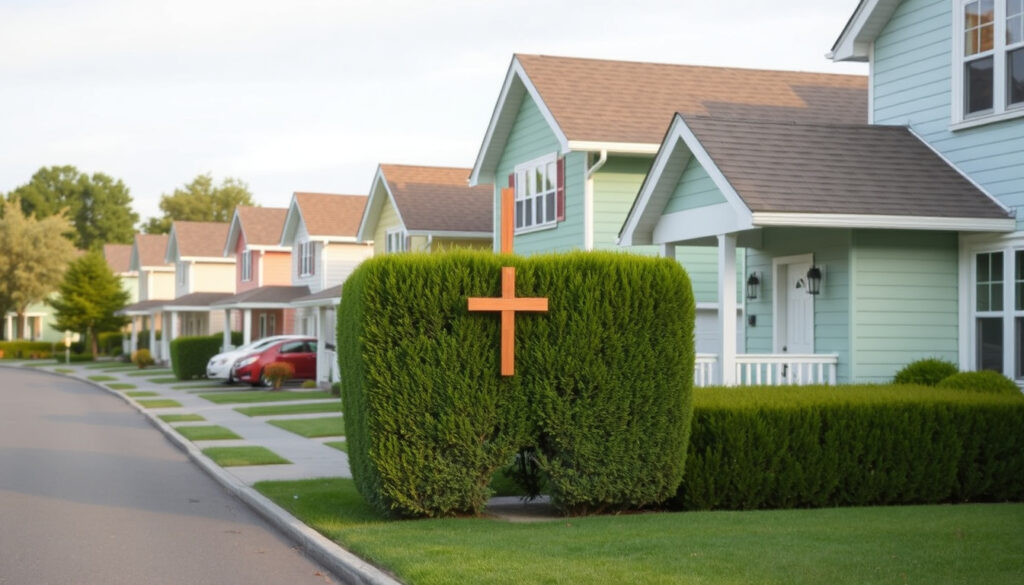
Ned Flanders: Catchphrases, Religion, and Character Analysis
There’s a reason Ned Flanders has been a character we love to roll our eyes at for over 30 years — he’s the impossibly nice neighbor everyone recognizes, voiced by Harry Shearer since 1989. This piece traces his real-life inspiration, his trademark speech, and the fan theories that keep people debating his personality.
First appearance: 1989, The Simpsons season 1 ·
Voiced by: Harry Shearer ·
Full name: Nedward Flanders Jr. ·
Religion: Christianity (devout) ·
Catchphrase: Okily Dokily
Quick snapshot
- Whether the character is based on a specific real person — no official confirmation exists (Wikipedia) (Simpsons Wiki)
- Whether the autism interpretation was intentional (Wikipedia) (Simpsons Wiki)
- Ned’s exact age is never stated canonically (Simpsons Wiki)
- First appears in 1989 (Wikipedia)
- Wife Maude dies in 2000 episode “Alone Again, Natura-Diddily” (Wikipedia)
- Flood episode “Hurricane Neddy” (2001) reveals traumatic childhood (Simpsons Wiki)
- Character continues to appear in ongoing Simpsons seasons (Wikipedia)
- Fan theories about his psychology remain a topic of discussion (Simpsons Wiki)
The following table provides a quick reference to Ned Flanders’ key details.
| Label | Value |
|---|---|
| Full name | Nedward Flanders Jr. |
| Voiced by | Harry Shearer |
| First appearance | 1989, The Simpsons season 1 |
| Religion | Christianity (devout) |
| Occupation | Pharmacist (formerly), owner of The Leftorium |
| Catchphrase | Okily Dokily |
| Spouse | Maude Flanders (deceased) |
| Children | Rod and Todd |
What was Ned Flanders’ catchphrase?
Okily Dokily
- The most famous catchphrase is “Okily Dokily,” a playful twist on “okey-dokey” (Wikipedia).
- It appears dozens of times across the series and is often used when Ned is cheerful or reassuring (Wikipedia).
Hi-diddly-ho
- Ned greets people with “Hi-diddly-ho, neighborino” (Simpsons Wiki).
- The “diddly” suffix is part of his invented speech pattern (Simpsons Wiki).
Stupid Flanders
- Homer Simpson often mispronounces Ned’s name as “Stupid Flanders” as an insult (Wikipedia).
- This running gag contrasts Homer’s frustration with Ned’s relentless positivity (Wikipedia).
Who is Ned Flanders based on?
Real-life inspiration
- The character is named after the Flanders region of Belgium (Wikipedia).
- Some reports claim a real person known to the writers may have influenced his personality, but this has never been confirmed by the show’s creators (Wikipedia).
Visual design
- His appearance — the gray mustache, the baggy sweater, the overalls — was inspired by silent film actor Buster Keaton (Wikipedia).
- The design helps make Ned look gentle and slightly anachronistic (Wikipedia).
Despite decades of interviews, the show’s producers have never named a single real person as the direct model for Ned Flanders, leaving the inspiration deliberately ambiguous.
What this means: The lack of a confirmed real-life model only adds to the mystery of Ned Flanders’ creation.
What does Ned Flanders represent?
Religious stereotype
- Ned Flanders embodies the stereotype of the overly devout, rule-bound Christian neighbor (Wikipedia).
- He reads the Bible literally and is easily shocked by anything he considers sinful (Wikipedia).
- The Journal of the American Academy of Religion (Oxford Academic) analyzes his line in “Hurricane Neddy” — “I’ve done everything the Bible says, even the contradictory parts” — as a religiously loaded pun that critiques literalist faith.
Neighbor archetype
- Ned serves as a direct foil to Homer Simpson: patient, tidy, devout, and generous (Wikipedia).
- His excessive niceness often irritates Homer and drives the conflict in many episodes (Wikipedia).
Ned Flanders isn’t just a religious caricature — the academic source shows the writers deliberately used his faith to explore contradictions in biblical literalism, making him a smarter satire than many viewers assume.
The implication: Ned Flanders is a vehicle for both humor and social commentary, making him more than a one-dimensional stereotype.
Why is Ned Flanders so religious?
Character background
- The episode “Hurricane Neddy” reveals Ned’s intense faith stems from a traumatic childhood (Simpsons Wiki).
- His parents were strict religious disciplinarians who punished him harshly, shaping his need for rigid moral structure (Simpsons Wiki).
Religious devotion
- Ned attends the First Church of Springfield weekly and describes himself as a “Christian” (Wikipedia).
- He is also identified as a Republican voter (Wikipedia).
- After his wife Maude died, his faith wavered but he later vowed to remain faithful (Swedish Wikipedia).
What this means: Ned’s religion is a coping mechanism for deep emotional wounds, not just a source of cheap gags.
Is Ned Flanders autistic?
Fan theories
- Some viewers have suggested Ned exhibits traits commonly associated with autism spectrum disorder, such as social awkwardness, literal-mindedness, and rigid daily routines (Simpsons Wiki).
- Online discussions on Reddit and fan forums frequently debate this interpretation (Simpsons Wiki).
Official statements
- Neither the show’s creators nor current writers have confirmed or denied the autism reading (Wikipedia).
- The theory remains unverified and is not part of any official canon (Wikipedia).
While many fans see Ned’s behavior as a respectful autistic-coded portrayal, the lack of official confirmation means the interpretation is purely speculative — and shouldn’t be presented as fact.
The catch: Without official confirmation, the autism theory remains a fan interpretation rather than a canonical fact.
Quotes from the show and beyond
Ned Flanders is the nicest man in Springfield.
— Harry Shearer, voice actor (Wikipedia)
I have done everything the Bible says — even the contradictory parts.
— Ned Flanders, “Hurricane Neddy” (The Simpsons, 2001) (Journal of the American Academy of Religion)
For fans of The Simpsons, Ned Flanders is more than just a punchline. The character’s deeply ingrained faith, his invented vocabulary, and the unresolved questions about his psychology invite us to look past the stereotype. The real takeaway: Ned Flanders is a complex bundle of satire, trauma, and sincerity — and that’s why he remains one of Springfield’s most enduring residents.
Related reading: Ned Flanders · The Simpsons Wiki
buzztrend.uk, nationalreport.uk, academic.oup.com, scan.lancastersu.co.uk, tropedia.fandom.com, burningforsuccess.com, ranker.com, comicvine.gamespot.com, quoteambition.com, headcare.se
The devout neighbor’s many catchphrases and religious fervor are explored in depth in this character analysis of Ned Flanders.
Frequently asked questions
What is Ned Flanders’ full name?
Nedward Flanders Jr. (Wikipedia).
How old is Ned Flanders?
His exact age is never stated in the show. He appears to be in his 40s or 50s (Simpsons Wiki).
Who is Ned Flanders’ wife?
Maude Flanders, who died in the 2000 episode “Alone Again, Natura-Diddily” (Wikipedia).
What is Ned Flanders’ occupation?
He is a pharmacist and later the owner of “The Leftorium,” a store for left-handed products (Wikipedia).
How many children does Ned Flanders have?
Two sons: Rod and Todd (Wikipedia).
What is the relationship between Ned Flanders and Homer Simpson?
They are neighbors. Homer often mocks Ned’s religiosity and cheerfulness, but Ned remains unfailingly kind (Wikipedia).
Why does Ned Flanders say ‘diddly’?
The “diddly” infix is a quirky speech pattern that the Simpsons Wiki describes as a sublimated expression of anger caused by his strict upbringing.
More related posts
 Colin McRae Death: Helicopter Crash Cause and Official Findings
 Seth Rogen: Biography, Net Worth, and Controversies
 Darragh Ennis: The Menace Chaser Biography
 Blood Test Near Me: Walk-Ins, Costs & Ireland Options
 James Lance: Age, Biography, Wife, and Movies from Ted Lasso
 Bible Verse: Meaning, Daily Reading, and Prayer Timing
 Citroen Dispatch Reliability and Common Problems
