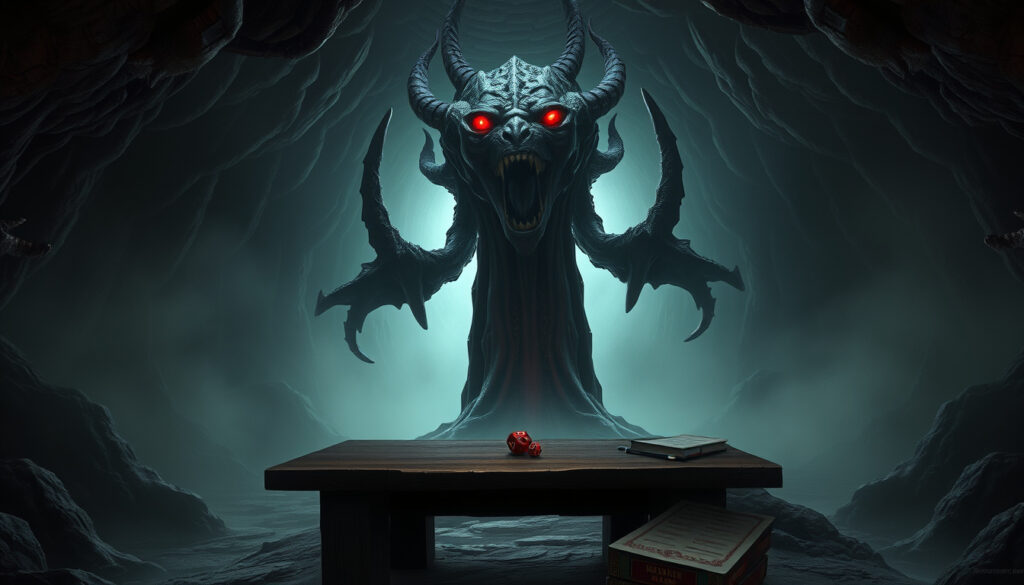
Mind Flayer: Stranger Things and D&D Explained
Anyone who’s watched Stranger Things knows the creeping dread of the Mind Flayer, that towering shadow from the Upside Down. But the name comes straight from a 1977 Dungeons & Dragons monster manual, and the two creatures share little more than a title. This article untangles what the Mind Flayer actually is in both universes, how it connects to Vecna, and why fans still argue over whether it’s dead.
First appearance in Stranger Things: Season 2, 2017 ·
Alternate name in D&D: Illithid ·
Primary ability: Psionic control / hive mind ·
Number of children Vecna chose: 12 ·
Demogorgon is a Mind Flayer: No (different creature)
Quick snapshot
- The Mind Flayer is the main villain of Stranger Things seasons 2–3 (Polygon (gaming & culture outlet))
- Vecna is a separate being created by the Mind Flayer (Polygon)
- In D&D, illithids are mind flayers with a hive mind (Polygon)
- Whether the Mind Flayer was completely destroyed at the end of Season 3
- If the Mind Flayer existed before the Upside Down was created
- The exact nature of the Mind Flayer’s intelligence and motivation
- 1979 – Henry Creel (001) taken by the Mind Flayer
- 1984 – Mind Flayer first manifests in Hawkins
- 1985 – Physically defeated by fire and gate closure
- 1986 – Vecna acts independently; Mind Flayer’s status unknown
- Season 5 will likely reveal the Mind Flayer’s true fate
- D&D fans continue to explore illithid lore in Baldur’s Gate 3
- Cross-franchise analysis remains a niche but growing interest
| Label | Value |
|---|---|
| First Appearance (Stranger Things) | Season 2, Episode 6 (“The Spy”) |
| Alignment (D&D) | Lawful Evil |
| Hive Mind | Yes – controls all connected creatures |
| Connection to Vecna | Psychic link; Vecna is its servant/agent |
| Weakness | Fire/heat (in Stranger Things); psionic disruption (in D&D) |
What exactly is the mind flayer?
Mind Flayer in Stranger Things: The Shadow Monster
In the show, the Mind Flayer is a malevolent shadow-like entity that controls the Upside Down. It first appeared in Season 2, Episode 6, where the boys recognize it from their Dungeons & Dragons campaign. According to the Duffer Brothers, the design was deliberately kept amorphous to evoke an ancient, unknowable horror (Polygon (gaming & culture outlet)). The creature uses minions like Demogorgons, Demodogs, and the Flayed to carry out its plans (Couch Soup (fan analysis site)).
What makes the Stranger Things version distinct is its lack of a physical, humanoid form. It’s a towering shadow or spider-like mass, not a tentacle-faced psychic alien. It operates through a hive mind, able to possess multiple hosts at once.
The show’s Mind Flayer is terrifying precisely because it has no recognizable body – it’s a cloud of malice, not a monster you can stab.
The implication: the Stranger Things Mind Flayer is a cosmic force, not a creature you can fight with a sword.
Mind Flayer in Dungeons & Dragons: The Illithid
In D&D, mind flayers (also called illithids) are psionic humanoids that operate as a hive mind. First introduced in the 1977 Monster Manual, they are described as subterranean creatures that loathe sunlight (Polygon). They regard most humans as livestock to consume – specifically, they eat brains. They communicate in their own language and other underground tongues.
In D&D lore, illithids are lawful evil, driven by hunger and a desire for domination. They are not a single entity but a species, each with its own Elder Brain that controls the colony. The Monster Manual describes them as “horrifying, brain-eating monsters” with powerful psionic abilities (Nerdist (pop culture and entertainment site)).
How are Vecna and the Mind Flayer connected?
Origin of Vecna (001) and his powers
Vecna is the human Henry Creel (001), who was taken by the Mind Flayer in 1979. According to the show’s lore, the Mind Flayer gave Vecna his powers and they share a psychic connection. Vecna acts as a sort of general or herald for the Mind Flayer, carrying out its will in the human world (Polygon).
This relationship is unique to Stranger Things. In D&D, Vecna is a separate entity entirely – a lich god of secrets, not a servant of the illithids. The show merged the two by making Vecna a human infused with the Mind Flayer’s power.
The psychic link between Vecna and the Mind Flayer
Season 4 reveals that Vecna can see through the Mind Flayer’s eyes and vice versa. The Mind Flayer’s hive mind allows Vecna to control the Upside Down’s creatures. This link is also why the Mind Flayer was able to “speak” to Will in Season 2 – it was using Vecna’s connection to the human world.
Fan theories on Reddit suggest that the Mind Flayer may have been using Vecna as a bridge to fully enter our dimension (Reddit (fan discussion)). The catch: if Vecna is destroyed, the Mind Flayer loses its primary agent, but the hive mind might still persist.
Is the Mind Flayer dead?
The events of Stranger Things Season 3
In Season 3, the Mind Flayer possessed people in Hawkins, building a physical body from melted flesh and chemicals. The group defeated it by using fire (Joyce and Hopper’s plan) and then closing the gate to the Upside Down. The creature appeared to disintegrate when the portal closed (Couch Soup).
However, the hive mind nature suggests that part of it may still exist in the Upside Down. The Duffer Brothers have hinted that the Mind Flayer is not fully gone, only weakened.
Theories on the Mind Flayer’s survival
As of Season 4, the Mind Flayer does not appear directly, but Vecna is active. Some fans speculate that the Mind Flayer retreated deeper into the Upside Down to recover. Others argue that the Mind Flayer was indeed destroyed, and Vecna is now the sole top predator. The show has not confirmed either.
Why this matters: if the Mind Flayer is dead, Vecna’s independence makes him the final boss of Season 5. If it’s alive, we may see a two-front war between the Mind Flayer and Vecna.
Is the Mind Flayer really evil?
Alignment in Dungeons & Dragons
In D&D, mind flayers are typically lawful evil. They are not mindlessly destructive; they follow a strict hierarchy under an Elder Brain and act out of hunger and ambition. They enslave other races and consume brains, but they do so with cold calculation. The Monster Manual states they “regard all other intelligent creatures as either food or slaves” (Nerdist).
Motivations in Stranger Things
In Stranger Things, the Mind Flayer is portrayed as purely malevolent and destructive. It has no apparent goal beyond spreading and consuming. The Duffer Brothers have said they wanted a villain that felt “like a force of nature, not a person” (YouTube (interview with creators)). The hive mind lacks empathy, which aligns with a concept of evil without moral choice.
The trade-off: the D&D mind flayer is evil by choice, with a society and goals. The Stranger Things version is evil by nature – it simply is what it is, like a hurricane.
Is a demogorgon a Mind Flayer?
Demogorgon in Stranger Things vs. D&D
In Stranger Things, the Demogorgon is a separate species from the Mind Flayer. The Demogorgon is a bipedal, predatory creature that first appeared in Season 1. The Mind Flayer arrived later and is clearly distinct – larger, shadowy, and more intelligent. The kids named the Demogorgon after the D&D monster, but it’s not the same thing.
In D&D, Demogorgon is a demon prince, a prince of demons, completely unrelated to illithids. He is a two-headed, ape-like demon with immense power, not a psionic humanoid. The two are often confused by fans because of the naming convention in Stranger Things.
Key differences from the Mind Flayer
To make it clear, here’s a comparison:
Four items, one pattern: the D&D versions are distinct, but the show uses names as a loose framework.
| Feature | Mind Flayer (Stranger Things) | Mind Flayer (D&D) | Demogorgon (Stranger Things) | Demogorgon (D&D) |
|---|---|---|---|---|
| Origin | Upside Down entity | Illithid species from the Underdark | Upside Down predator | Demon prince from the Abyss |
| Appearance | Shadowy, amorphous, spider-like | Humanoid with tentacle face | Bipedal, flower-faced predator | Two-headed, ape-like demon |
| Abilities | Hive mind control, possession | Psionic domination, brain theft | Super strength, portal creation | Demonic magic, two heads |
| Alignment | Evil (force of nature) | Lawful Evil | Bestial (neutral evil?) | Chaotic Evil |
| Role in show | Main antagonist (S2-3) | N/A (just name) | First antagonist (S1) | N/A (just name) |
The pattern: the show uses D&D names as a children’s naming framework for unfamiliar threats, as Mike Wheeler originally did. The creatures themselves are original creations.
Timeline: The Mind Flayer’s appearance in Stranger Things
- 1979 – Henry Creel (001) is taken by the Mind Flayer and becomes Vecna.
- 1984 – The Mind Flayer first manifests in Hawkins after Eleven opens the gate. It begins influencing the Upside Down.
- 1985 (summer) – The Mind Flayer possesses people, builds a physical body, and is defeated by fire and the gate closure.
- 1986 (spring) – Vecna acts independently; the Mind Flayer’s status is unknown. Season 4 shows no direct Mind Flayer activity.
The implication: the Mind Flayer has been a threat for at least 7 years in the show’s timeline, and its return remains a major question.
What we know and what we don’t
Confirmed facts
- The Mind Flayer is the main villain of Stranger Things seasons 2–3
- Vecna is a separate being created by the Mind Flayer
- In D&D, illithids are mind flayers with a hive mind
What’s unclear
- Whether the Mind Flayer was completely destroyed at the end of Season 3
- If the Mind Flayer existed before the Upside Down was created
- The exact nature of the Mind Flayer’s intelligence and motivation
Perspectives on the Mind Flayer
“We wanted a villain that felt like a force of nature, like a dark cloud, not a person. The name Mind Flayer from D&D was perfect because it already had that creepy, psychic connotation.”
— The Duffer Brothers, in an interview with YouTube (interview with creators)
“Mind flayers are terrifying because they are intelligent, lawful evil beings that see you as a walking snack. They don’t kill for fun; they kill for lunch.”
— Dungeons & Dragons 5e Monster Manual, as quoted by Nerdist (pop culture site)
“The Mind Flayer in Stranger Things is basically a giant space spider from another dimension. The D&D one is a guy with a squid on his face. They’re not the same.”
— Reddit user, r/DnD (fan discussion)
For Stranger Things fans, the Mind Flayer’s fate remains the biggest cliffhanger heading into Season 5. The Duffer Brothers have set up a world where the Mind Flayer may be down but not out, and Vecna’s independence only complicates the picture. Whether the creature returns as a shadowy storm or a refined psychic menace, one thing is clear: the name “Mind Flayer” now carries weight across two universes, and the conversation between them is just getting started.
Related reading: **Nancy Wheeler: Character Guide, Relationships, and Actor Facts** · **Dacre Montgomery: Age, Height, Wife, and Why He Left Hollywood**
youtube.com, youtube.com, youtube.com, youtube.com, youtube.com, youtube.com, imdb.com, hauptblick.de
Frequently asked questions
Can the Mind Flayer be killed permanently?
The show has not confirmed a permanent death. In Season 3, it was seemingly destroyed by fire and the gate closure, but its hive mind nature suggests parts may survive. The Duffer Brothers have not ruled out a return.
What powers does the Mind Flayer have?
In Stranger Things, the Mind Flayer can control multiple hosts, create a physical body from organic matter, and communicate telepathically. In D&D, illithids have psionic abilities like mind blast, telekinesis, and plane shift.
Is the Mind Flayer present in Baldur’s Gate 3?
Yes, mind flayers (illithids) are central to Baldur’s Gate 3, which features a mind flayer tadpole that infects the player. The game explores the lore of the Elder Brain and the hive mind.
What is the Mind Flayer’s weakness in Stranger Things?
Fire and heat are effective against the Mind Flayer’s physical form. In the show, the group uses fire to burn the creature’s body, and the gate closure cuts off its connection to the Upside Down.
How does the Mind Flayer control people?
It uses a hive mind connection. Once a person is “flayed,” the Mind Flayer can see through their eyes, speak through them, and even absorb them into its physical body. This is similar to the D&D illithid’s ability to dominate minds.
Does the Mind Flayer have a physical body?
In Stranger Things, it can create a physical body from melted flesh and chemicals, but its natural form is a shadowy, amorphous entity. In D&D, illithids have a permanent humanoid body with tentacles.
What is the origin of the name ‘Mind Flayer’?
The name comes from Dungeons & Dragons, where it was first used in the 1977 Monster Manual for the illithid. The Stranger Things characters adopted it because the monster’s behavior reminded them of the D&D creature.
Are there multiple Mind Flayers in D&D?
Yes, mind flayers are a species. Each colony has an Elder Brain that controls the group. In Stranger Things, there is only one Mind Flayer, but it controls a hive of minions.
More related posts
 Siberian Cat: Guide to Temperament, Size, and Allergies
 Karl Howman: The Life and Career of Brush Strokes’ Jacko
 The Great Gatsby Musical – Broadway and London Guide
 Harrison Sullivan: HSTikkyTokky’s Legal Troubles & Documentary
 AFC Bournemouth vs Liverpool F.C. Standings: H2H & Results
 Goldman Sachs: Pay, Layoffs, Culture & How It Makes Money
 James Lance: Age, Biography, Wife, and Movies from Ted Lasso
