Edward Hopper: Famous Paintings, Life, and Loneliness
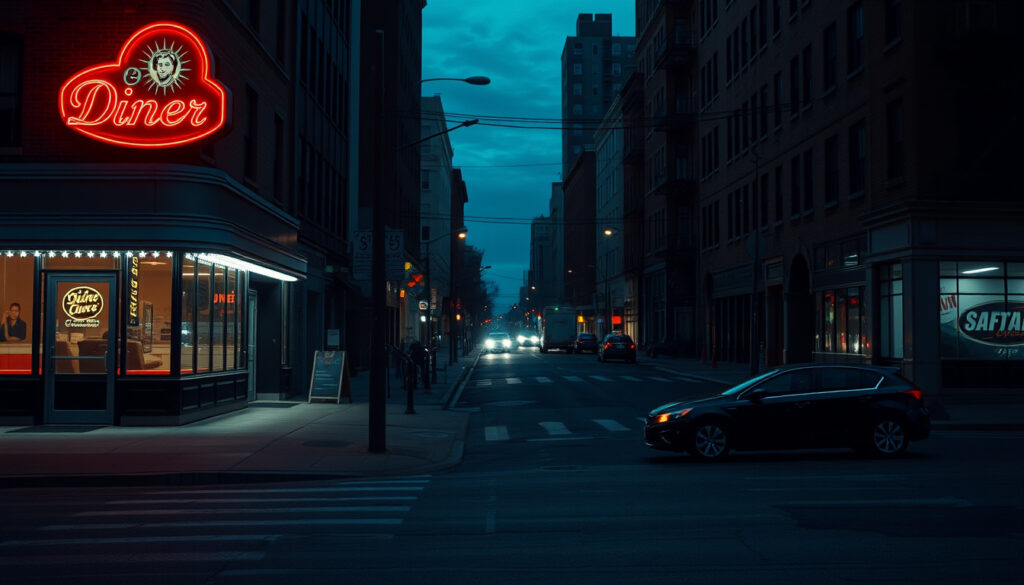
You’ve probably seen a Hopper painting before — that silent diner at night, or a woman alone in a theater balcony. The stillness is unmistakable. Edward Hopper turned humble storefronts and empty lobbies into the most enduring visual shorthand for modern solitude, and his market value has climbed right alongside that legacy.
Born: July 22, 1882, Nyack, New York ·
Died: May 15, 1967, New York City ·
Known for: Realist painting and printmaking ·
Most famous painting: Nighthawks (1942) ·
Auction record: Chop Suey, $91.9 million (2018) ·
Family: Married to Josephine Nivison Hopper; no children
Quick snapshot
- Hopper was an American realist painter and printmaker (Wikipedia)
- He married Josephine Nivison in 1924 (Wikipedia)
- Nighthawks (1942) is his most widely recognized painting (Art & Object)
- Whether Hopper consciously intended the loneliness label is debated
- Which painting is the saddest is subjective and interpretive
- Chop Suey set Hopper’s auction record in 2018 at $91.9 million (Christie’s)
- Nighthawks sold to the Art Institute of Chicago in 1942 for $3,000 (Cool Stories About Art)
- Museum demand for Hopper’s lesser-known works may push new auction highs
Eight key facts, one pattern: Hopper’s life and market both center on a small set of core works and a single long partnership.
| Full name | Edward Hopper |
| Born | July 22, 1882, Nyack, New York |
| Died | May 15, 1967, New York City |
| Medium | Oil, watercolor, etching, printmaking |
| Spouse | Josephine Nivison Hopper (m. 1924) |
| Children | None |
| Known for | American realist paintings of urban and rural life |
| Signature work | Nighthawks (1942) |
The pattern: Hopper’s biography is compact — one spouse, no children, a single famous canvas, and a market driven by scarcity.
Hopper’s images of isolation command the highest prices in American realist auctions — the lonelier the scene, the bigger the sale.
What was Edward Hopper best known for?
American realism and printmaking
Edward Hopper was an American realist painter and printmaker, born in Nyack, New York, on July 22, 1882 (Wikipedia). His work is anchored in twentieth-century American realism — scenes of diners, gas stations, storefronts, and theaters that feel both ordinary and charged. Hopper also produced significant etchings and watercolors, especially during his summer trips to New England.
Early life and training
Hopper studied at the New York School of Art under William Merritt Chase and Robert Henri, then made several trips to Paris between 1906 and 1910 (Wikipedia). He absorbed Impressionist and Post-Impressionist influences but resisted their pull, turning instead toward a quieter, more grounded realism. For years he worked as a commercial illustrator — a job he disliked — because his fine art didn’t sell.
Recognition and legacy
Hopper did not make a living from his art until he was in his 40s (HENI). His first solo exhibition came in 1920 at the Whitney Studio Club. By the 1950s, the Whitney Museum staged a major retrospective. He died in New York City on May 15, 1967 (Wikipedia).
The implication: Hopper’s career arc — decades of obscurity followed by late recognition — mirrors the quiet, overlooked settings he painted.
What is Hopper’s most famous painting called?
Nighthawks at the Art Institute of Chicago
The most frequently cited answer is Nighthawks (1942) (Art & Object). Painted in about six weeks and completed just after Pearl Harbor, Nighthawks shows three customers and a server inside a late-night diner. It sold to the Art Institute of Chicago in 1942 for $3,000 (Cool Stories About Art) and has never been sold at auction because it belongs to the museum’s permanent collection.
Other famous Edward Hopper paintings
Beyond Nighthawks, Hopper’s best-known works include Early Sunday Morning (1930), Gas (1940), Chop Suey (1929), and Automat (1927) (Art & Object). Each painting places a figure — or the absence of one — in a distinctly American setting. Automat, for instance, captures a lone woman at a window table, her face illuminated by a cold overhead light.
Why Nighthawks became iconic
- The painting has been parodied, referenced, and reproduced more than any other Hopper work.
- Its composition — a glass-walled diner, angled perspective, sharp electric light — is instantly recognizable.
- Critics connect the mood to social alienation in modern American life.
Why this matters: Nighthawks is Hopper’s cultural anchor, but its museum ownership means the artist’s auction market is built on everything but his most famous image.
What was Edward Hopper’s most expensive painting?
Chop Suey and the 2018 record
Chop Suey (1929) sold for $91,875,000 at Christie’s in New York on November 13, 2018, setting Hopper’s auction record (Christie’s). The painting was part of The Barney A. Ebsworth Collection (Christie’s). All three women in the painting were modeled by Hopper’s wife, Josephine Nivison, who posed for the female figures (Christie’s lot page). The scene depicts the Far East Tea Garden on Columbus Circle, a restaurant that Hopper and Josephine frequented in the early years of their marriage (Christie’s).
How Hopper prices compare
Hotel Window (1955) brought $26.5 million at auction in 2006. Nighthawks, the cultural heavyweight, has no auction price because it belongs to the Art Institute of Chicago. The pattern: Hopper’s auction record is held not by his most famous work, but by a less-reproduced interior scene — one that shares the same quiet, introspective quality as Nighthawks.
Why Hopper paintings sell for high prices
- Relatively small body of oil paintings — about 350, according to Christie’s estimates.
- Museum holdings pull most major works out of private circulation.
- Cultural cachet: Hopper’s visual language has been absorbed into film, photography, and advertising.
For collectors, Hopper’s market is supply-constrained by his modest output and by museums that rarely deaccession. That scarcity underpins the nine-figure ceiling on Chop Suey.
The catch: Hopper’s auction record depends on a painting about chop suey — a Chinese-American dish — that has none of the name recognition of Nighthawks, proving that scarcity, not fame, drives seven figures into nine.
What was Edward Hopper like as a person?
Marriage and studio life
Hopper married fellow artist Josephine Nivison in 1924. They first met as students, many years before they married (Christie’s). They lived in New York City in a studio on Washington Square and summered on Cape Cod. Josephine modeled for many of his paintings and kept detailed records of his output, titles, and exhibition history (Wikipedia). In 1927, they bought a used 1925 Dodge and took road trips up the Maine coast (Portland Monthly).
Routine and creative temperament
Contemporaries described Hopper as reserved, deliberate, and private. He worked slowly, often spending weeks or months refining a single composition. Hopper hated the word “loneliness,” according to one account (Cool Stories About Art) — though whether he consciously rejected the loneliness label is debated. What’s clear is that his working method produced paintings that viewers consistently read as solitary.
Reputation among contemporaries
Fellow artists respected his commitment to realism during decades when abstraction dominated the New York scene. He was not a joiner; he avoided the art-world social circuit and focused on his Washington Square studio.
The pattern: Hopper’s private, disciplined life matched the quiet interiors he painted. Josephine Nivison was not his muse in the passive sense — she managed his archives, posed for his figures, and co-signed his career from inside the same studio.
Why do Hopper’s paintings feel so lonely?
Urban solitude
Hopper’s compositions often isolate a single figure in urban interiors — an empty diner, a theater balcony, a hotel room. The figures rarely interact, and when they do, the connection feels hollow. This has led critics to connect the mood to social alienation in modern American life.
Light and shadow
His use of harsh light — often from an unseen source — and long shadows creates emotional distance. Light does not warm Hopper’s scenes; it exposes them. The effect is not so much sad as watched.
Windows and voyeuristic framing
Windows, empty spaces, and figures looking outward heighten isolation in Hopper’s paintings. The viewer becomes a voyeur, peering into private moments that the figures themselves may not even register.
- Nighthawks is often cited in popular discussions of sad or lonely paintings.
- Automat places a lone woman in a harsh public space.
- Gas shows a single attendant at a roadside station at dusk.
Hopper’s critics have debated for decades whether his paintings are lonely or simply still. The distinction matters because it changes whether his work is about isolation or observation.
The trade-off: The loneliness label has made Hopper a cultural shorthand for alienation, but it may also flatten a more complicated range — stillness, patience, and a quiet refusal to explain.
Did Edward Hopper have any children?
No children
Edward and Josephine Hopper had no children (Wikipedia). The couple devoted their energy to their respective studio practices and to one another.
Life with Josephine Nivison
Josephine Nivison Hopper was Hopper’s wife and close artistic collaborator. She managed correspondence, tracked sales, kept detailed journals of his paintings, and posed for the female figures in many of his most famous works. She was a trained painter herself, though her career was overshadowed by her husband’s.
The Hopper estate and legacy
After Josephine died in 1968, much of Hopper’s collection was bequeathed to the Whitney Museum of American Art. The lack of children helped shape how the estate was distributed — rather than passing to descendants, Hopper’s work went largely to museums (Wikipedia). That institutional ownership is one reason Hopper’s paintings rarely appear at auction, which in turn drives up the prices when they do.
The implication: The absence of direct heirs concentrated Hopper’s legacy into museum collections, which both preserved his work and created the scarcity that fuels his auction market today.
Timeline of Edward Hopper’s life
- 1882 — Edward Hopper was born in Nyack, New York, on July 22.
- 1906–1910 — Hopper made several trips to Paris and Europe, absorbing modern art influences.
- 1913 — Hopper exhibited at the Armory Show and sold his first painting.
- 1920 — Hopper’s first solo exhibition was held at the Whitney Studio Club.
- 1924 — Hopper married fellow artist Josephine Nivison.
- 1942 — Hopper painted Nighthawks, later acquired by the Art Institute of Chicago.
- 1950 — The Whitney Museum staged a major Hopper retrospective.
- 1967 — Hopper died in his New York City studio on May 15.
Hopper’s timeline runs parallel to the rise of American modernism — but he advanced his own version of realism at a time when the art world was moving in the opposite direction.
Quotes from Edward Hopper
Great art is the outward expression of an inner life in the artist.
— Edward Hopper
If you could say it in words there would be no reason to paint.
— Edward Hopper
Josephine Nivison Hopper’s journals and exhibition records are used by curators to document Hopper’s works and daily studio life.
— Christie’s
Edward Hopper turned ordinary American interiors into a visual language that still defines modern solitude — and that language has real market value. For the Whitney Museum, which holds the bulk of his estate, the challenge is stewarding a legacy that is more commercially valuable than ever. For collectors, the choice is clear: bid on the few paintings that leave museum walls, or watch from outside the glass.
gill-lagodich.com, thehistoryofart.org, en.wikipedia.org, christies.com, christies.com, nyhetssnack.se
Frequently asked questions
What is Edward Hopper’s most famous quote?
“Great art is the outward expression of an inner life in the artist” is among his most attributed quotes, though his wife also noted his reluctance to verbalize his work.
When and where did Edward Hopper die?
He died on May 15, 1967, in his New York City studio on Washington Square (Wikipedia).
Who was Edward Hopper’s wife?
Josephine Nivison Hopper, a fellow painter whom he married in 1924. She modeled for many of his works and kept meticulous records of his career (Wikipedia).
Where can I see Nighthawks?
Nighthawks is in the collection of the Art Institute of Chicago, which acquired it in 1942 (Cool Stories About Art).
What techniques did Edward Hopper use?
Hopper worked primarily in oil on canvas, using careful geometric composition, dramatic lighting, and muted color palettes to create emotional distance.
Was Edward Hopper a realist or a modernist?
He is classified as an American realist painter, but his work shares spatial concerns with modernism. He deliberately avoided abstraction throughout his career.
More related posts
 James Lance: Age, Biography, Wife, and Movies from Ted Lasso
 Ashley Roberts: Relationship, Net Worth, Career & Biography
 Black Cat Meaning in Ireland: Luck, Lore & Symbolism
 Rosie Jones: Comedian, Disability, Marital Status, and Career
 Regina George: Character Analysis & Cultural Impact (Mean Girls)
 King Combs: Biography, Age, Net Worth, Feud with 50 Cent & More
 Crystal Palace vs Brentford – Prediction H2H Stats Tickets
