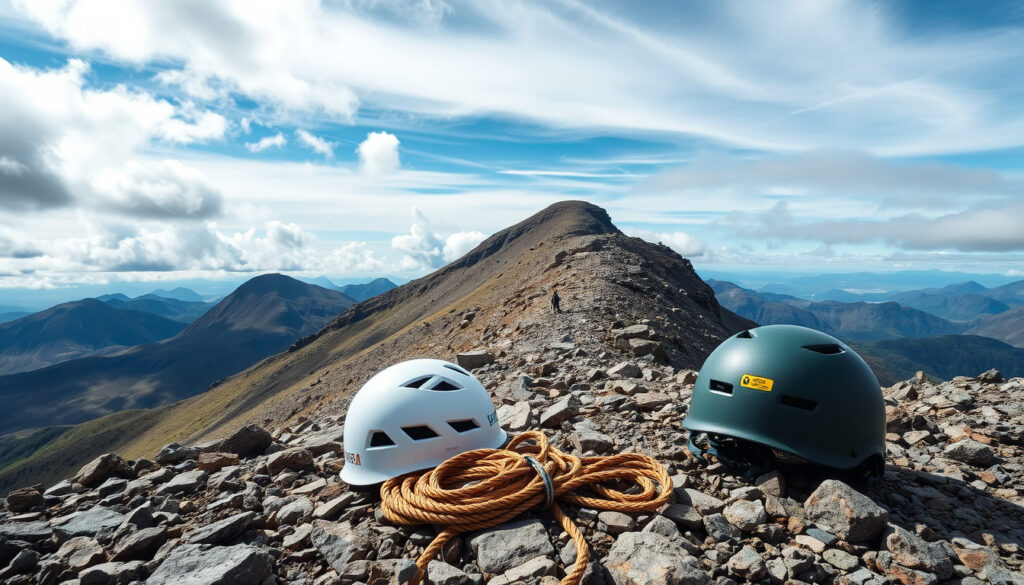
Ben Nevis Mountain: Climbing, Safety, and Key Facts
There’s a reason why Ben Nevis draws over 150,000 climbers each year: it’s the highest peak in the British Isles, standing at 1,345 meters, but the real draw is the challenge of a non-technical hike that still demands respect. This guide covers everything from route planning to safety, so you can decide if the UK’s tallest mountain is right for you.
Height: 1,345 m (4,413 ft) ·
Location: Grampian Mountains, Lochaber, Scotland ·
Annual Climbers: 150,000+ ·
First Ascent: 1771, by James Robertson ·
Standard Route Length: 10.2 miles (16.4 km) out-and-back ·
Recorded Deaths: Several dozen since records began; average 3–4 per year
Quick snapshot
- Ben Nevis is the highest mountain in the British Isles at 1,345 m (VisitScotland (official tourism board))
- The standard Mountain Track is a strenuous but non-technical hike (Live for the Outdoors (outdoor specialist))
- Exact etymology of ‘Ben Nevis’ debated: ‘venomous mountain’ vs. ‘head in the clouds’ (Wikipedia (encyclopedic source))
- Historical death count varies due to incomplete records before the 20th century (Live for the Outdoors)
- Several dozen deaths recorded; weather is a major risk factor (Ben Nevis website (official mountain site))
- Route length estimates vary: some guides cite 15–17 km round trip (Live for the Outdoors (route guide))
- First recorded ascent in 1771 by James Robertson (Wikipedia)
- Mountain Track established as the standard route by the late 19th century (VisitScotland)
- Continued pressure on search and rescue services as visitor numbers grow (Countryfile (BBC conservation magazine))
- Ongoing calls for better visitor education on weather and route planning (Walkhighlands (specialist hiking guide))
Eight key facts at a glance, ranging from location to the standard route’s demands.
| Label | Value |
|---|---|
| Country | Scotland, United Kingdom |
| Mountain Range | Grampian Mountains |
| Elevation | 1,345 m (4,413 ft) |
| Prominence | 1,345 m (highest in UK) |
| First Recorded Ascent | 1771 (James Robertson) |
| Classification | Munro |
| Standard Route Length | 10.2 miles (16.4 km) out-and-back |
| Average Ascent Time | 7–9 hours (round trip) |
What country is Ben Nevis in?
Ben Nevis sits in the Scottish Highlands, near the town of Fort William. It’s part of the Grampian Mountains, a range that stretches across central Scotland. The mountain lies entirely within the United Kingdom, specifically in the council area of Highland. According to VisitScotland (the national tourism authority), the standard ascent starts at the Glen Nevis Visitor Centre, just a few miles from Fort William’s town centre.
The implication: For anyone planning a trip, Fort William serves as the natural base, with accommodation, gear shops, and transport links to the trailhead.
Is Ben Nevis the tallest mountain in the UK?
Yes. With an elevation of 1,345 meters (4,413 feet), Ben Nevis is the highest mountain in the British Isles. It outranks the second-highest, Ben Macdui in the Cairngorms, by about 36 meters. The classification of “Munro” – a Scottish mountain over 3,000 feet – applies to both, but Ben Nevis holds the title of the most prominent peak in the UK. Wikipedia (the open encyclopedia) notes that it is also the most prominent mountain in the British Isles, with a prominence of 1,345 meters.
How does Ben Nevis compare to other UK peaks?
- Ben Nevis: 1,345 m – highest in the UK
- Ben Macdui: 1,309 m – second highest
- Snowdon (Yr Wyddfa): 1,085 m – highest in Wales
- Scafell Pike: 978 m – highest in England
The pattern: Ben Nevis is not just the tallest; it’s also the start of a natural hierarchy of UK peaks. For hikers aiming to bag all the highest summits, Ben Nevis is the logical first objective.
Why is Ben Nevis called the venomous mountain?
The name “Ben Nevis” comes from the Gaelic Beinn Nibheis. The most common translation is “venomous mountain,” possibly referring to the dangerous weather or the steep cliffs that have claimed lives. However, an alternative interpretation – “mountain with its head in the clouds” – describes the frequent cloud cap that envelops the summit. Wikipedia (the open encyclopedia) acknowledges both theories, noting that the exact etymology remains debated.
The name that warns of danger also captures the mountain’s dramatic weather. For a beginner, the “venomous” label is less about the climb itself and more about what happens when the clouds roll in.
The trade-off: The ambiguity means you can’t rely on the name alone to gauge difficulty. It’s a poetic warning, not a technical rating.
Is Ben Nevis a difficult climb?
The standard Mountain Track – also called the Pony Track or Tourist Track – is a long, strenuous hill walk rather than a technical climb. In summer, it requires no ropes or climbing gear, but it does demand good fitness and navigation skills. Live for the Outdoors (outdoor specialist) describes it as suitable for “fit beginners,” but warns that the upper section becomes rougher and more exposed.
Can a beginner climb Ben Nevis?
Yes, but only with proper preparation. The Mountain Track is the safest route for beginners, according to Love from Scotland (travel guide), but it’s not an easy walk. The 1,345-meter ascent from near sea level makes it physically demanding. Beginners should allow 8–10 hours, check weather forecasts, and carry navigation tools and appropriate clothing.
What are the top 3 hardest mountains to climb?
Hardest by technical difficulty often refers to routes requiring mountaineering skills. For Ben Nevis, the North Face routes (such as Tower Ridge) are considered serious climbing objectives. Raw Adventures (guided mountain company) states that these require specialist equipment and experience. In the UK, the hardest mountains by technical climb include the Cuillin Ridge on Skye, the Aonach Eagach ridge, and Ben Nevis’s North Face in winter.
The implication: For most visitors, “difficult” on Ben Nevis means endurance, not technical climbing. The real challenge is the weather.
How long does it take to climb up Ben Nevis?
The standard round trip on the Mountain Track takes 7 to 9 hours for most walkers, though slower parties may need up to 10 hours. The distance is about 10.2 miles (16.4 km) with an elevation gain of roughly 1,300 meters. Countryfile (BBC conservation magazine) gives a range of 6 to 10 hours depending on pace and conditions.
What if I need the toilet on Ben Nevis?
There are public toilets at the Glen Nevis Visitor Centre near the start of the Mountain Track. Once on the trail, there are no facilities. The summit has no shelter, toilets, or water. VisitScotland advises planning for this: carry a portable toilet kit if needed, and follow the Leave No Trace principle.
For a beginner, the lack of facilities is a real logistical hurdle. The 7–9 hour window means you’ll need to manage hydration, food, and bathroom breaks entirely on your own.
The catch: Many first-time climbers underestimate the need for self-sufficiency. It’s not a day hike in a city park.
Is it safe to climb Ben Nevis?
Ben Nevis is safe for prepared climbers, but the mountain carries real risks. The main dangers are rapidly changing weather, loose rock near the summit, and the exposed cliffs of the North Face. Ben Nevis website (official mountain safety resource) warns that the path near the summit passes close to a 2,000-foot drop. Average recorded deaths are 3–4 per year, with many linked to slips in poor visibility or inadequate gear.
How many climbers have died on Ben Nevis?
Since the 19th century, several dozen fatalities have been recorded. Exact numbers are hard to pin down because early records are incomplete. Live for the Outdoors notes that the annual average is around 3–4, though individual years can be higher. The most common causes: falls, hypothermia, and heart attacks.
Why is Ben Nevis so dangerous?
The danger comes from a combination of factors: the mountain’s height (1,345 m), its location in the path of Atlantic weather systems, and the steep drop-offs near the summit. Winter conditions can turn the standard route into a serious mountaineering objective. UK Mountains Directory (hiking resource) states that winter snow and ice make the route treacherous even for experienced hikers.
The mountain’s most dangerous feature is the false sense of security in clear weather. The lower section is easy, but near the summit, the path narrows and the cliffs are unforgiving. Never attempt the summit without a map, compass, and emergency shelter.
The pattern: The same attributes that make Ben Nevis a classic hillwalk – easy access, a well-built path, dramatic scenery – also create the conditions for tragedy when underestimated.
What type of mountain is Ben Nevis?
Ben Nevis is a volcanic mountain that was heavily eroded by glaciers during the last Ice Age. Geologically, it consists mainly of granite and metamorphic rocks. It is classified as a “Munro” – a Scottish mountain over 3,000 feet (914 m). Wikipedia explains that the mountain’s summit is a large plateau, whereas the North Face contains some of the UK’s most challenging climbing routes.
The implication: Knowing the geology helps explain why the summit is a relatively flat, stony plateau – and why the North Face has such dramatic cliffs. It’s a mountain shaped by fire and ice.
How to Prepare for Climbing Ben Nevis
Preparation makes the difference between a great day out and a dangerous situation. Follow these steps before you set off.
- Check the weather – Use the Met Office mountain forecast for Ben Nevis. If high winds or heavy rain are forecast, postpone.
- Pack the essentials – Waterproof jacket and trousers, hat, gloves, map, compass, headtorch, first aid kit, emergency shelter, and extra food and water.
- Wear appropriate footwear – Stiff-soled walking boots with ankle support, not trainers.
- Tell someone your plan – Leave your route and expected return time with a friend or accommodation staff.
- Start early – Aim to set off by 8:00 AM to allow plenty of daylight for the 7–9 hour round trip.
- Know the route – Study the Mountain Track description on Walkhighlands (specialist hiking guide) before you go.
The trade-off: Investing time in preparation may feel like a drag, but it’s the single biggest factor in reducing the 3–4 annual fatalities.
Upsides and Downsides of Climbing Ben Nevis
Upsides
- Reaching the highest point in the UK is a genuine achievement
- The standard route is accessible to fit beginners
- Stunning views of the Scottish Highlands on a clear day
- Well-maintained path with clear signage in summer
Downsides
- Weather can change rapidly, ruining visibility and safety
- No facilities on the mountain – you carry everything
- Long, demanding day – 7–9 hours is taxing
- Risk of death or injury if unprepared
Why this matters: The balance tips strongly in favour of preparation. The upsides are real, but the downsides are not warnings to stay home – they’re reasons to plan.
Clarity: What We Know and What We Don’t
Based on verified sources, here’s a clear split between confirmed facts and areas where uncertainty remains.
Confirmed facts
- Ben Nevis is the highest mountain in the British Isles at 1,345 m (VisitScotland)
- The standard Mountain Track is a strenuous but non-technical hike (Live for the Outdoors)
- First recorded ascent in 1771 by James Robertson (Wikipedia)
- Classified as a Munro (mountain over 3,000 ft) (Wikipedia)
What’s unclear
- Exact etymology of ‘Ben Nevis’ – ‘venomous mountain’ vs. ‘head in the clouds’ (Wikipedia)
- Historical death count varies by source due to incomplete records before the 20th century (Live for the Outdoors)
- Several dozen deaths recorded; weather is a major risk factor – exact annual average is uncertain (Ben Nevis website)
- Route length reported differently by various guides (15–17 km vs. 10.2 miles) (Live for the Outdoors (route guide))
Perspectives from the Experts
“Ben Nevis is the highest mountain in the British Isles, and the Mountain Track is the easiest route to the summit. It’s a long, hard walk rather than a climb, but it still requires fitness and preparation.”
— VisitScotland (official tourism board)
“The name ‘Ben Nevis’ is derived from the Gaelic ‘Beinn Nibheis’, meaning ‘venomous mountain’ – a fitting name for a mountain that can be deadly in bad weather.”
— Wikipedia (the open encyclopedia)
“The Mountain Track is a well-built, easy-to-follow path in summer, but near the summit it passes close to a 2,000-foot drop. Always stay on the main path.”
— Ben Nevis website (official mountain safety resource)
“Ben Nevis is a serious mountain; winter conditions turn it into a mountaineering objective. Even in summer, the weather can change in minutes.”
Ben Nevis remains a magnet for climbers from across the world, but it’s not a peak to be taken lightly. The standard route is within reach of a fit beginner, yet the mountain’s reputation for danger is earned. For the average visitor, the choice is clear: prepare thoroughly, respect the weather, and treat the summit as a reward for discipline, not a right. For the unprepared, the mountain’s “venomous” name may prove all too accurate.
Related reading: Sea Salts: Benefits, Types, and Health Considerations
climb-ben-nevis.co.uk, globalsummitguide.com, eliteguides.co.uk, explore-share.com, suomipress.fi
Climbers seeking detailed route information can refer to a Ben Nevis climbing guide for comprehensive safety tips and key facts.
Frequently asked questions
What is the best time of year to climb Ben Nevis?
Late May to early September offers the best chance of stable weather and longer daylight. Summer is the most popular season, but even then, be prepared for rain and wind.
Do I need special equipment for Ben Nevis?
In summer, you need sturdy walking boots, waterproof clothing, warm layers, map, compass, headtorch, and food/water. In winter, crampons, ice axe, and mountaineering experience are essential.
Are there guided tours for Ben Nevis?
Yes, several companies offer guided ascents, including Raw Adventures and others based in Fort William. Guided tours are recommended for beginners or those unfamiliar with mountain navigation.
Can I see the summit in bad weather?
Often not. The summit is frequently shrouded in cloud. Check the Met Office mountain forecast before you go. If visibility is poor, consider postponing.
Is there a mountain hut on Ben Nevis?
No. There is no shelter or bothy on the summit. The only facilities are at the Glen Nevis Visitor Centre at the start of the route.
How does Ben Nevis compare to Snowdon?
Ben Nevis is 260 meters higher, requires a longer round trip (7–9 hours vs. 5–7 hours), and has more severe weather. Snowdon is easier but still a challenging hike.
What is the easiest route up Ben Nevis?
The Mountain Track (also called the Pony Track or Tourist Track) is the easiest and most popular route. It starts from Glen Nevis and follows a well-defined path.
More related posts
 Megan Ramsay: Age, Career, and Why She Skipped Netflix
 Mrunal Thakur Biography: Age, Movies, and Marital Status
 Jamie Sives: Biography, Pronunciation & Game of Thrones Role
 George Michael: Death, Inheritance, and Legal Battle
 Taylor Kitsch: Biography, Career, and Personal Life Facts
 Ruby Bentall Biography, Age, Husband, Net Worth, Filmography
 HPV Vaccine Side Effects: Facts, Myths, and What to Expect
 Jorja Smith: Children, Partner, Drake Age & Ethnicity
