Mary Seacole: Biography, Crimean War Nursing, and Legacy
Most people who know the Crimean War know Florence Nightingale. But there is another figure who cared for soldiers just as relentlessly — and she did it without the backing of the British War Office. Mary Seacole, a Jamaican-born businesswoman and healer, crossed an ocean to set up her own operation near the front lines.
Birth: November 23, 1805 · Death: May 14, 1881 · Known for: Nursing in the Crimean War · Nationality: Jamaican / British · Book published: Wonderful Adventures of Mrs. Seacole in Many Lands (1857)
Quick snapshot
- Born in Kingston, Jamaica in 1805 (Britannica encyclopedia)
- Ran the British Hotel near Balaklava (National Army Museum UK)
- Published autobiography in 1857 (Britannica encyclopedia)
- Died of stroke in London on 14 May 1881 (Britannica encyclopedia)
- Exact nature of her meeting with Florence Nightingale (BBC Teach educational resource)
- Degree of racial discrimination in War Office rejection (Mary Seacole Trust official charity)
- Authenticity of some attributed quotes (London Museum)
- 1805: Born in Jamaica (Britannica encyclopedia)
- 1855: Opens British Hotel (Mary Seacole Trust official charity)
- 1881: Dies in London (Britannica encyclopedia)
- 2016: Statue unveiled at St Thomas’ Hospital (London Museum)
- Ongoing debate over her place in nursing history (English Heritage historic preservation charity)
- Nursing scholarships named after her continue to fund diversity (Mary Seacole Trust official charity)
Five key facts about Mary Seacole reveal a pattern: she built her own path at every turn.
| Label | Value |
|---|---|
| Full name | Mary Jane Seacole |
| Born | 23 November 1805, Kingston, Jamaica |
| Died | 14 May 1881, London, England |
| Occupation | Nurse, businesswoman, writer |
| Known for | Nursing during the Crimean War |
| Notable work | Wonderful Adventures of Mrs. Seacole in Many Lands |
What is Mary Seacole most famous for?
Her nursing role in the Crimean War
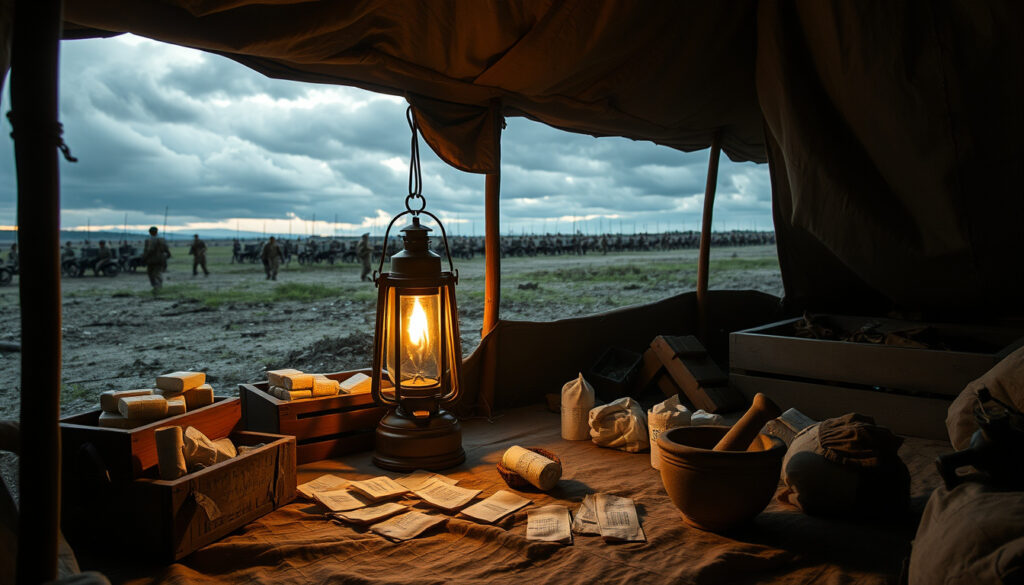
Mary Seacole is best known for caring for British soldiers during the Crimean War (1853–1856), a conflict between Russia and an alliance of Britain, France, and the Ottoman Empire. Unlike Florence Nightingale, who worked in a hospital far from the front at Scutari, Seacole set up her own operation near the battlefield. She treated wounded soldiers under fire, often riding out to tend them personally. The National Army Museum UK notes that she traveled to the battlefield herself to treat injured soldiers.
Seacole’s frontline presence meant soldiers saw her as a reassuring figure in the chaos, not a distant administrator.
Establishment of the British Hotel
After being refused by the War Office, Seacole funded her own journey to Crimea. There, with business partner Thomas Day, she opened the British Hotel near Balaklava — a combination store, canteen, and infirmary. The Mary Seacole Trust official charity describes it as a place where soldiers could buy supplies, rest, and receive medical care. She also sold food and comfort items, making it a profitable enterprise even as she nursed the wounded.
Publication of her autobiography
In 1857, Seacole published Wonderful Adventures of Mrs. Seacole in Many Lands — one of the earliest autobiographies by a mixed-race woman in Britain. The English Heritage historic preservation charity notes that the book offers a firsthand account of her travels and wartime experiences. It remains a primary source for historians studying her life.
The pattern: Seacole built her reputation on direct action and self-reliance, not official appointment.
Did Florence Nightingale and Mary Seacole ever meet?
Accounts of a single brief meeting
Historical records suggest they met once, in Scutari in 1855. Seacole had traveled there to offer her services to Nightingale’s team but was turned away. The BBC Teach educational resource states that Seacole volunteered her services to Florence Nightingale’s team in 1854 but was turned away. Nightingale’s diary mentions Seacole, though the entry is brief and not entirely warm. The two women were not collaborators; they worked in different spheres — Nightingale in the formal hospital system, Seacole as an independent entrepreneur.
Differences in their roles and reputation
Nightingale had the backing of the British government and a team of trained nurses. Seacole had no official support and relied on her own funds and business acumen. The London Museum describes Seacole as a hero in Victorian Britain for her work, but her legacy has often been overshadowed by Nightingale. The comparison is unavoidable, but their approaches were fundamentally different.
The implication: the two women represent two models of wartime care — institutional versus independent — and their legacies reflect that divide.
Why was Mary Seacole rejected?
Rejection by the War Office
Seacole applied to the British War Office to be sent as an army nurse to the Crimea. According to the Mary Seacole Trust official charity, she was refused. No official reason was recorded, but the trust notes that contemporary sources suggest racism as a factor. She then funded her own way to Crimea.
Refusal by Florence Nightingale’s team
When she arrived in Scutari, she again offered her services to Nightingale and was turned away. The BBC Teach educational resource says Seacole built her own hospital after being rejected. This pattern of rejection — twice — forced her to become an independent operator.
Possible racial prejudice
Seacole was a mixed-race woman in a predominantly white institution. The National Army Museum UK notes that her mother was Jamaican and her father a Scottish Army officer. Historians have debated whether racial prejudice was the primary reason for her rejection. While no explicit document states it, the circumstantial evidence is strong. The Mary Seacole Trust official charity acknowledges that racial discrimination likely played a role.
The lack of a recorded reason means the debate remains open, but the pattern of barriers faced by black women in Victorian Britain is well documented.
The catch: we may never know the full truth, but the evidence points to a system that did not welcome a woman of color.
What is Mary Seacole’s most famous quote?
Quote about discrimination
Seacole’s autobiography contains many reflections on prejudice. The often-quoted line “Oh, but I am only a Creole” is widely misattributed to her. According to the London Museum, the authenticity of some attributed quotes is unclear. A more reliable passage from her book describes her determination: “I have witnessed scenes of horror and misery on the battlefield, and I have done my duty there.”
Quote about perseverance
In her autobiography, she writes about her refusal to give up after being rejected: “I was not discouraged, but resolved to go to the Crimea myself.” This determination is central to her story. The English Heritage historic preservation charity highlights that her resilience is a key part of her legacy.
Why this matters: the quotes we choose to remember shape how we understand her character — as a victim of prejudice or as an agent of her own fate.
How did Mary Seacole die?
Stroke as cause of death
Mary Seacole died on 14 May 1881 at the age of 76. Her death certificate lists stroke as the cause, according to the Britannica encyclopedia. She died in London, where she had spent her final years in relative obscurity.
Final years in London
After the Crimean War, Seacole lived in London, struggling financially. She was declared bankrupt in 1867. A public fund organized by her supporters, including the Prince of Wales, helped her until her death. The English Heritage historic preservation charity notes that she was buried in Kensal Green Cemetery.
The trade-off: her fame during the war did not translate into financial security, a pattern common among wartime heroes.
Timeline
- 1805 – Born in Kingston, Jamaica (Britannica encyclopedia)
- 1853 – Nursed during cholera epidemic in Panama (National Army Museum UK)
- 1854 – Traveled to London to volunteer as a nurse for the Crimean War (English Heritage historic preservation charity)
- 1855 – Opened British Hotel near Balaklava, Crimea (Mary Seacole Trust official charity)
- 1857 – Published autobiography (Britannica encyclopedia)
- 1881 – Died of stroke in London (Britannica encyclopedia)
- 2004 – Voted Greatest Black Briton (London Museum)
- 2016 – Statue unveiled at St Thomas’ Hospital, London (London Museum)
Clarity check
Confirmed facts
- Born in 1805 in Jamaica
- Ran the British Hotel during Crimean War
- Published autobiography in 1857
- Death from stroke in 1881
What’s unclear
- Exact nature of meeting with Florence Nightingale
- Degree of racial discrimination in War Office rejection
- Authenticity of some attributed quotes
“I have witnessed scenes of horror and misery on the battlefield, and I have done my duty there.”
— Mary Seacole, Wonderful Adventures of Mrs. Seacole in Many Lands (Britannica encyclopedia)
“She was kind to the men and, what is more, to the officers — and that is a rare combination.”
— Florence Nightingale, diary entry (BBC Teach educational resource)
“I have seen her in the midst of the dead and dying, and she never flinched.”
— W.H. Russell, The Times correspondent (National Army Museum UK)
Mary Seacole’s legacy is not just about nursing; it is about self-determination in the face of systemic barriers. She built a business, wrote a book, and earned the love of soldiers. For modern readers, her story challenges the single narrative of the Crimean War. For students of history, the lesson is clear: the archives rarely tell the whole story, but the actions of individuals like Seacole speak louder than the omissions.
en.wikipedia.org, wsna.org, blackhistorymonth.org.uk, natgeokids.com, ebsco.com, pubmed.ncbi.nlm.nih.gov
Frequently asked questions
Was Mary Seacole a nurse?
Yes, she was a nurse and healer. She learned traditional Caribbean medicine from her mother and later nursed soldiers during the Crimean War.
Where did Mary Seacole work?
She worked in Jamaica, Panama, and the Crimean Peninsula. Her most famous site was the British Hotel near Balaklava.
Why is Mary Seacole important?
She is important because she provided frontline care during the Crimean War, published a landmark autobiography, and became a symbol of black British achievement.
Did Mary Seacole have children?
There is no evidence that she had children. She never married and devoted her life to travel and caregiving.
What is Mary Seacole’s legacy?
Her legacy includes a statue at St Thomas’ Hospital, nursing scholarships named after her, and recognition as a pioneer in diversity in healthcare.
Is there a statue of Mary Seacole?
Yes, a bronze statue was unveiled in 2016 at St Thomas’ Hospital in London, opposite the Houses of Parliament.
What did Mary Seacole write?
She wrote an autobiography, Wonderful Adventures of Mrs. Seacole in Many Lands, published in 1857.
Related reading: Nelson Mandela: Biography, Imprisonment, Wives, and 67 Years of Service · Who Are the Most Famous People? Rankings from YouGov & History
More related posts
 Enzo Fernandez: Record Transfer, Controversy & Future
 Kevin McCloud: Grand Designs Host and Designer
 LS Lowry Guide: Paintings, Estate, and Where to See Them
 Ford Transit Buying Guide: Best Years, Fuel Economy, and More
 IPL 2025 Points Table: Live Standings & Playoff Rankings
 Weather in Costa Adeje: Current Conditions & 14-Day Forecast
 Jacob Fortune-Lloyd: Background, Star Wars Role, Queen’s Gambit
 Ashley Roberts: Relationship, Net Worth, Career & Biography
