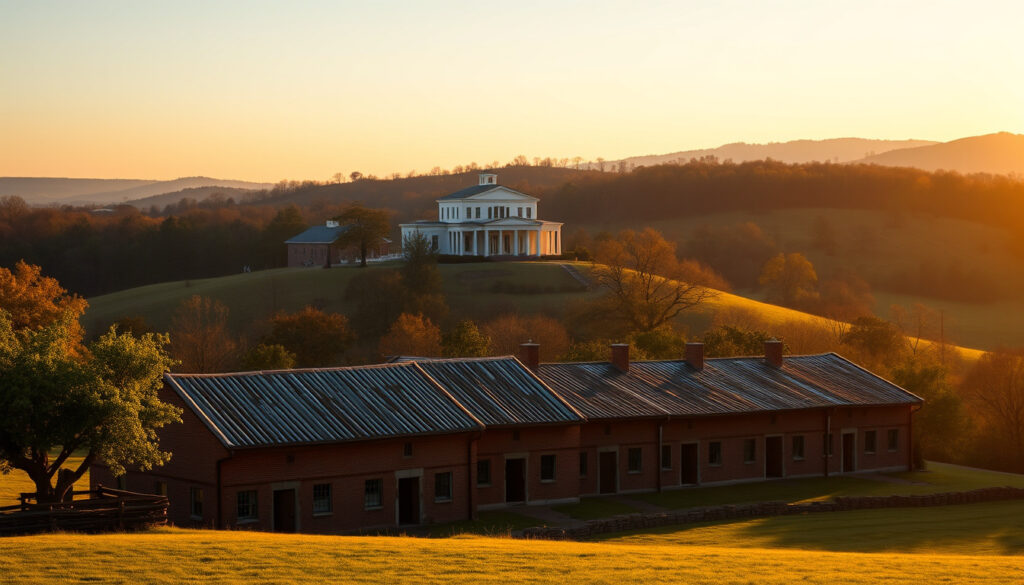
Thomas Jefferson: Biography, Presidency, and Contradictions
Few names from America’s founding carry as many contradictions as Thomas Jefferson. He drafted the words that launched a republic and served as its third president, yet he also enslaved more than 600 people across his lifetime — a count documented by the American Revolution Institute.
Born: April 13, 1743 · Died: July 4, 1826 · Presidency: 1801–1809 · Major achievement: Principal author of the Declaration of Independence · Enslaved people: More than 600 in his lifetime
Quick snapshot
- Principal author of the Declaration of Independence (White House Archives (official presidential history))
- Third U.S. president, 1801–1809 (National Park Service (U.S. federal historic site))
- Owned more than 600 enslaved people over his lifetime (American Revolution Institute (historical education organization))
- Exact number of people he enslaved — “more than 600” is the standard figure, not a precise total (Encyclopedia Virginia (state historical encyclopedia))
- How many enslaved people Jefferson freed — estimates range from two to seven (PBS American Experience (public television history series))
- Precise wording of his last words, commonly reported as “Is it the Fourth?” (President Thomas Jefferson (biographical archive))
- 1806: Jefferson calls on Congress to prohibit the transatlantic slave trade — the push that led to the federal ban (Cushwa Center, University of Notre Dame (university research center))
- 1803: Louisiana Purchase, the land deal that reshaped the United States (Encyclopaedia Britannica (reference publisher))
- What to watch: every major expansion of Jefferson’s presidency — the Purchase, the slave-trade ban, the embargo — came with costs that historians still weigh differently. (Cushwa Center, University of Notre Dame (university research center))
- Historians keep reassessing the gap between his egalitarian writing and his lifelong slaveholding (White House Historical Association (White House history nonprofit))
- DNA and documentary evidence on Sally Hemings has reshaped the public portrait of Jefferson’s private life (PBS American Experience (public television history series))
Eight facts anchor the standard biography, and Biography.com’s Jefferson profile keeps the basics straight.
| Category | Detail |
|---|---|
| Full name | Thomas Jefferson |
| Born | April 13, 1743 (Shadwell, Virginia) |
| Died | July 4, 1826 (Monticello, Virginia) |
| Presidency | 3rd President (1801–1809) |
| Vice President | Aaron Burr (1801–1805), George Clinton (1805–1809) |
| Political party | Democratic-Republican |
| Major works | Declaration of Independence; Notes on the State of Virginia |
| Spouse | Martha Wayles Skelton |
What was Thomas Jefferson most famous for?
The short answer is the Declaration of Independence. The White House Archives’ presidential biography puts it plainly: Jefferson is remembered first for writing the document that announced a new nation, and second for the presidency that followed (White House Archives (official presidential history)).
What were Thomas Jefferson’s major accomplishments?
- Principal author of the Declaration of Independence
- Third U.S. president, 1801–1809
- Oversaw the Louisiana Purchase, 1803
- Founded the University of Virginia, 1819
The Louisiana Purchase is the one that still startles people: an executive action that changed the country’s geography overnight. The university he founded in his later years was, in his own design, a deliberate break with the religious colleges of the era — an “academical village” built around reason.
What is Thomas Jefferson’s legacy?
Jefferson’s legacy is a contest between the Declaration’s language and the plantation economy that paid for Monticello. No modern account can honestly present one without the other.
- For two centuries, his words have been the common property of American reformers — abolitionists, suffragists, civil rights leaders.
- The same man held more than 600 people in slavery; that contradiction is not a footnote, it is the story.
- Historians continue to debate how much of his antislavery language was conviction and how much was performance — the evidence cuts both ways.
The implication: Jefferson’s fame rests on words that outlived him, and on deeds that complicate those words — the two cannot be separated.
What did Jefferson say about slavery?
Jefferson wrote more searching criticisms of slavery than almost any other Founding Father — and then spent his adult life as an enslaver. PBS’s American Experience sums up the tension: he was a slave owner who wrote passionately of freedom (PBS American Experience (public television history series)).
Jefferson pressured Congress to end the transatlantic slave trade while hundreds of people remained enslaved on his own plantations. The ban he helped set in motion became law — the institution itself went nowhere.
How many slaves did Jefferson own in his lifetime?
- More than 600 people over the course of his life, by the standard count in the snapshot above.
- He was a slaveholder throughout his adult life (Biography.com (digital biography publisher)).
- The people he enslaved worked at Monticello and his other plantations, sustaining the household that hosted the era’s leading intellectuals.
The scale is the thing: this was not a marginal arrangement. In 1806 Jefferson used his annual message to Congress to call for a ban on the transatlantic slave trade, and Congress complied — a rare moment when his antislavery words became federal policy (Cushwa Center, University of Notre Dame (university research center)).
What were Jefferson’s views on race?
- In Notes on the State of Virginia, he attacked slavery as a moral and political evil.
- In the same pages, he asserted that Black people were inferior in intellect and appearance.
- His preferred solution was gradual emancipation paired with colonization — removing freed Black people from the United States.
That combination — antislavery conviction, racial prejudice, and colonization — appears throughout his writing. Encyclopedia Virginia treats it as the central tension of his racial thought (Encyclopedia Virginia (state historical encyclopedia)). The White House Historical Association notes that Jefferson could defend gradual emancipation and repeat racial prejudice in the same document (White House Historical Association (White House history nonprofit)). His colonization scheme came with a blunt premise: he did not believe free Black and white Americans could live together as equals (Biography.com (digital biography publisher)).
The pattern: Jefferson was not a man who denied slavery’s evil. He was a man who could not live without it.
Did Jefferson free his slaves when he died?
No — at least not in any way that changed the institution. The National Park Service is blunt: Jefferson favored emancipation as an idea, freed no one during his lifetime, and freed three people in his will (National Park Service (U.S. federal historic site)).
Why didn’t Jefferson free all his slaves?
- He died deeply in debt, and his heirs needed the estate’s value.
- Of the more than 600 people he enslaved, only a handful were freed — a ratio that sits at the center of his biography (Encyclopedia Virginia (state historical encyclopedia)).
- After his death, the remaining enslaved community at Monticello was dispersed to settle the estate.
The estimates of how many he actually freed range from two to seven, depending on how manumissions and bequests are counted — the range noted in the snapshot above. What is not in dispute is the scale of what he left undone.
The man who wrote “all men are created equal” freed three people in his will — and died owing so much money that his plantation and the people who worked it were sold to settle the estate.
What this means: Jefferson’s end-of-life choices were not a refusal to confront slavery; they were a confirmation that he had organized his entire life around it.
What did Jefferson say before he died?
In the popular telling, Jefferson’s last words were “Is it the Fourth?” — a question about whether the 50th anniversary of the Declaration had arrived. The line is reported, not documented, and it reads like the ending a playwright would write. What is documented is the date itself: he died at Monticello on July 4, 1826 (President Thomas Jefferson (biographical archive)).
How did Thomas Jefferson die?
- He was 83 years old.
- His death came fifty years to the day after the Declaration was adopted.
- His health had been failing for weeks, and the end came at home, in his own bed.
Jefferson’s last words are remembered precisely because they fit the story Americans wanted — a founding genius exiting on schedule. Whether he actually said them is less certain than the legend.
Why this matters: the manner of Jefferson’s death has become part of his political legacy — a final scene written, conveniently, by the calendar.
Did people like Jefferson as President?
For most of his first term, yes. Jefferson was re-elected in 1804, and his personal popularity survived the brutal politics of the era. But the White House Historical Association describes an administration that governed through constant partisan conflict, capped by an embargo that proved widely unpopular (White House Historical Association (White House history nonprofit)).
Jefferson entered the presidency promising to limit federal power, and left it after expanding the presidency in ways his critics never forgave — the Louisiana Purchase first, then the embargo that strangled American trade.
The pattern: Jefferson the partisan was more complicated than Jefferson the icon — loved by voters, loathed by Federalists, and increasingly trapped by events abroad.
What did JFK say about Jefferson?
At a 1962 White House dinner for Nobel laureates, President John F. Kennedy delivered the most famous presidential compliment ever paid to Jefferson. He told the assembled scholars that the room held the most extraordinary collection of talent and human knowledge ever gathered at the White House — with the possible exception of when Jefferson dined alone. The full line appears in the quotes section below.
Why does the line still land?
Kennedy’s joke works because Jefferson really was a one-man Enlightenment: author, architect, scientist, diplomat, university founder. The uncomfortable part is that the same man’s household economy ran on slavery.
The line endures because it is funny, generous, and true all at once. It also lets Jefferson stay human — witty, brilliant, impossible to imagine at a boring dinner table — even as the larger record keeps him complicated.
Key dates in Thomas Jefferson’s life
Seven dates mark the arc of Jefferson’s public life — the same sequence preserved across the White House Archives’ presidential history (White House Archives (official presidential history)).
| Date or period | Event |
|---|---|
| April 13, 1743 | Thomas Jefferson born in Shadwell, Virginia |
| 1776 | Principal author of the Declaration of Independence |
| 1789–1793 | First U.S. secretary of state |
| 1801–1809 | Third president of the United States |
| 1803 | Louisiana Purchase |
| 1819 | Founded the University of Virginia |
| July 4, 1826 | Died at Monticello |
The takeaway: Jefferson’s public timeline is remarkably legible — steady rises, one giant land deal, one university. The private timeline, by contrast, is where the contradictions live.
Thomas Jefferson: what’s confirmed and what’s unclear
Confirmed facts
- Jefferson was the principal author of the Declaration of Independence.
- He served two terms as the third U.S. president, 1801–1809.
- He enslaved more than 600 people over his lifetime (Encyclopaedia Britannica (reference publisher)).
- He founded the University of Virginia in 1819.
What’s unclear
- The exact number of people he enslaved is not known; “more than 600” is a floor, not a census.
- The precise wording of his last words is uncertain; the famous “Is it the Fourth?” rests on accounts passed down by his family.
- How much religion shaped Jefferson’s antislavery convictions remains an open scholarly question (Cushwa Center, University of Notre Dame (university research center)).
- Most historians accept that Jefferson and Sally Hemings had a long relationship and that he fathered her children, but the private record is thin (PBS American Experience (public television history series)).
The tension: the facts of Jefferson’s public life are not seriously disputed. What remains contested is how to weight them against the facts of his private one.
Thomas Jefferson in his own words
Two quotes frame the gap between Jefferson’s ideals and his actions: one he wrote, one he inspired.
“I tremble for my country when I reflect that God is just.”
— Thomas Jefferson, Notes on the State of Virginia (National Park Service (U.S. federal historic site))
“I think this is the most extraordinary collection of talent, of human knowledge, that has ever been gathered together at the White House, with the possible exception of when Thomas Jefferson dined alone.”
— John F. Kennedy, White House dinner for Nobel laureates, 1962 (Encyclopaedia Britannica (reference publisher))
Jefferson’s words in Notes were never meant for a wide audience; Kennedy’s toast was meant to be heard once. Both survive because each tells us something true about how America sees him — and how it keeps coming back to his contradictions.
Jefferson left Americans a double legacy: the most quoted case for human equality in the English language, and a life that depended on the labor of more than 600 enslaved people. For educators, public historians, and anyone who still reaches for “all men are created equal,” the choice is no longer whether to include both halves of that record, but how to present them side by side — or watch the next generation do it without the varnish.
Frequently asked questions
What was Thomas Jefferson’s education?
Jefferson studied at the College of William & Mary in Williamsburg, then read law under George Wythe and began practicing law in 1767 (American Revolution Institute (historical education organization)).
Where is Thomas Jefferson buried?
At Monticello, his home in Albemarle County, Virginia — the same hilltop where he died on July 4, 1826 (President Thomas Jefferson (biographical archive)).
What was the Louisiana Purchase?
The 1803 purchase of the Louisiana Territory from France, which roughly doubled the size of the United States and opened the continent to westward expansion (American Revolution Institute (historical education organization)).
What political party did Thomas Jefferson belong to?
The Democratic-Republican Party — the party he built around strict readings of the Constitution, and the ancestor of today’s Democratic Party (White House Historical Association (White House history nonprofit)).
Did Thomas Jefferson support the Bill of Rights?
Yes. While serving as minister to France, Jefferson pushed James Madison to add a bill of rights to the Constitution, and their correspondence helped shape the first ten amendments (White House Archives (official presidential history)).
More related posts
 India vs New Zealand Cricket Scorecard: 2025-26 Matches & Records
 Kirsten Farage: Age, Nationality, Job, Marriage to Nigel Farage
 Fat Face Sale UK – Up to 70% Off Clothing and Accessories
 Nomination Charms Ireland: Where to Buy & Materials
 Napoleon Dynamite: Autism, Racism & Cult Status Explained
 Brian Clough: Career, Quotes, Controversies & Family Life
 Captain Hook: Villain, Origin & Character Analysis
 Eric Morecambe: Wife, Last Words, Real Name & Legacy
