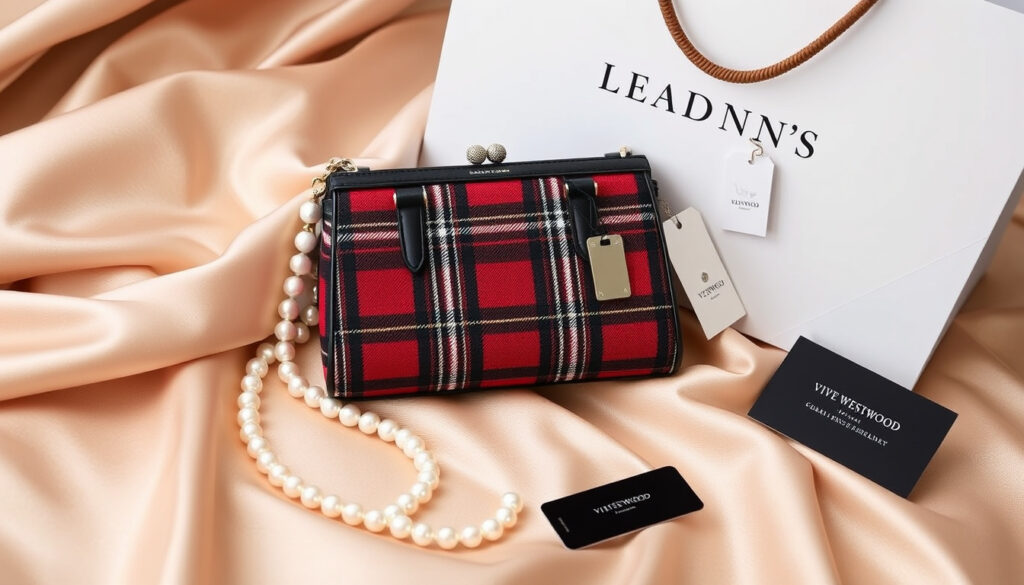
Vivienne Westwood Buying Guide: Worth, Price, and Ownership
There aren’t many designers whose name instantly signals both safety pins and serious money, yet Vivienne Westwood manages that contradiction better than almost anyone. Most people landing here are weighing the same question: is the brand worth the price, or is the price just the logo?
Founded: 1971 ·
Founder: Vivienne Westwood ·
Headquarters: London, UK ·
Known For: Punk and New Wave Fashion ·
Iconic Product: Orb Necklace
Quick snapshot
- Westwood died on 29 December 2022 (Encyclopaedia Britannica (reference work))
- The company behind the label is Vivienne Westwood Ltd. (Vivienne Westwood’s official brand history (house archive))
- Creative direction is led by Andreas Kronthaler. (Encyclopaedia Britannica (reference work))
- Her real name was Vivienne Isabel Swire. (Encyclopaedia Britannica (reference work))
- Net worth estimates range from about $50 million to $185 million (Celebrity Net Worth (celebrity wealth tracker); MediaMass (celebrity news aggregator); TheRichest (wealth and lifestyle site))
- The brand’s long-term creative path after Kronthaler is an open question. (Celebrity Net Worth (celebrity wealth tracker))
- Whether newer pieces will hold value as collectibles is unproven. (Celebrity Net Worth (celebrity wealth tracker))
- 1971: Let It Rock opens on Kings Road. (ABC News (US broadcaster))
- 1981: Pirates, the first runway collection (ABC News (US broadcaster))
- After 2022: the house continues under Kronthaler. (ABC News (US broadcaster))
- Expect Orb jewellery on resale platforms below retail.
- UK outlet villages are the discount route for new stock.
- Authentication checks matter more as discounts deepen.
Ten facts, one pattern: a counterculture rebel built a luxury house with the same hands that made punk’s uniform.
| Fact | Detail |
|---|---|
| Born | 8 April 1941 (Encyclopaedia Britannica (reference work)) |
| Died | 29 December 2022 (Encyclopaedia Britannica (reference work)) |
| Real name | Vivienne Isabel Swire (The Met (museum essay)) |
| Founder | Vivienne Westwood |
| Headquarters | London, UK |
| Founded | 1971, first boutique on Kings Road (Vivienne Westwood’s official brand history (house archive)) |
| Iconic product | Orb necklace, Mini-Crini |
| Price range | £100 – £5,000 |
| Creative direction after 2022 | Andreas Kronthaler (Finance Monthly (business publication)) |
| Reported net worth at death | Around $50 million; estimates vary (Celebrity Net Worth (celebrity wealth tracker)) |
Who is the owner of Vivienne Westwood now?
Vivienne Westwood’s real name and early life
- Born Vivienne Isabel Swire in Glossop, Derbyshire.
- Her first shop, opened with Malcolm McLaren, became a meeting point for London’s underground scenes.
Westwood’s route into fashion ran through London’s street culture, not a couture apprenticeship. The shop was renamed SEX in the 1970s, a moment ABC News highlighted when it reported on her death (ABC News (US broadcaster)), and everything the label became grew out of that single storefront.
The label that began as a counterculture experiment grew into a global luxury house.
Who owns the brand after her death?
- The company operates as Vivienne Westwood Ltd.
- Creative direction sits with Andreas Kronthaler, her husband.
- The house continues to run its boutiques and wholesale business.
Westwood died on 29 December 2022. The company did not close with her: it kept the corporate structure and handed creative control to Kronthaler, her husband.
The ownership answer is corporate rather than personal — the label sits inside the company, and the creative voice belongs to Kronthaler.
Did Vivienne Westwood have children?
- Two sons: Joseph and Ben (Australia Watch (legacy and family coverage))
The family story adds context, but it does not change the ownership answer above.
What was her net worth?
- The most repeated figure at death was around $50 million.
- Finance Monthly, citing public probate records and a Forbes estimate, also placed the estate near $50 million (Finance Monthly (business publication))
- Higher estimates, reportedly as large as $185 million, circulate in celebrity-wealth databases.
The spread is wide because the company is private: no public financial statement settles the number, so every estimate is an outside calculation.
The implication: the ownership question has a corporate answer, and the personal story that built the brand is now one part of a larger business.
Why is Vivienne Westwood so expensive?
The price gap between Westwood and most contemporary labels comes down to one thing: the archive.
Heritage and craftsmanship
- The Met credits Westwood with introducing underwear as outerwear, reviving the corset, and inventing the mini-crini (The Met (museum essay))
- Those innovations anchor the house in fashion history rather than seasonal trends.
Museum recognition of this kind is rare, and it functions as a certification of cultural value. Few commercial labels can point to an institutional essay that treats their founder as a defining figure of twentieth-century design.
High-quality materials and limited production
- Small production runs and premium materials are the standard explanation for luxury pricing.
- The house prices itself in the same bracket as established European tailoring labels.
Luxury pricing is not only about cost; it is about controlled supply. Limited quantities keep discounts rare and resale demand alive.
Brand positioning and exclusivity
- The first ready-to-wear collection arrived in 1981, giving the label four decades of fashion-week history.
- The punk origin story adds a rebellious edge that polished luxury brands cannot copy.
The result is a brand that can charge heritage prices without a conventional heritage narrative.
Buyers are paying for a documented place in fashion history, not for leather and brass. The Met’s recognition is the institutional validation that keeps resale prices alive.
The pattern: scarcity and story, not raw materials, are what justify the gap between a £100 accessory and a £5,000 tailored coat.
Is Vivienne Westwood worth buying?
The fair answer depends on which piece you mean, not just which brand.
Pros of investing in Vivienne Westwood
- Designs with museum recognition hold long-term cultural value.
- The orb necklace is a recognizable entry point with active demand.
- Heritage pieces age better than most seasonal luxury goods.
Cons to consider
- Retail prices run well above outlet and resale levels.
- New-season, non-iconic pieces are harder to resell.
- Counterfeit risk makes the second-hand market a minefield.
Resale value and longevity
- Designs with museum recognition tend to hold interest longest.
- Vintage Westwood is actively traded on resale platforms.
For most buyers, the sensible route is to focus on the pieces the brand is actually known for. The orb necklace and the mini-crini carry the story; obscure seasonal items carry far less of it.
The second-hand market rewards icons and punishes experiments. Anyone buying a seasonal Westwood piece should expect the resale value to fall, because collector demand concentrates on the orb and the mini-crini.
The trade-off: buy the icon at the right price and the value story works; overpay for a trend piece and the second-hand market will be unforgiving.
Where is it cheapest to buy Vivienne Westwood?
There are two different answers: cheapest for new stock, and cheapest overall.
Outlet stores and online sales
- UK outlet villages such as Bicester Village carry the brand at discounted prices.
- Authorized multi-brand retailers run seasonal markdowns online.
Buyers looking for discounted new stock usually start at Bicester Village, where the brand operates an outlet. Online, the label’s own site rarely discounts, but authorized retailers such as Farfetch and Matchesfashion occasionally mark down seasonal pieces.
Comparing London vs other cities
- London’s own boutiques hold the line on full price.
- For international visitors, duty-free can make purchases cheaper than UK retail.
London is the brand’s home market and its full-price heart. Tourists who can reclaim tax effectively pay less than UK residents; locals get the better deal at the outlet.
Second-hand and resale market
- Vetted resale platforms such as Vestiaire Collective carry authentic pieces below retail.
- Vintage orb jewellery moves quickly and rarely sits unsold.
For shoppers comfortable with pre-owned, resale is where the steepest discounts live. The trade-off is authentication: the deeper the discount, the more carefully the piece needs checking.
The cheaper the deal, the more carefully the orb logo and serial details need checking. An outlet price from an authorized store is safe; anything that looks too close to wholesale on a resale platform is where the risk lives.
What this means: the cheapest new price in the UK runs through outlet stock, and the cheapest authentic price anywhere runs through resale — with authentication as the price of entry.
Is it okay for Muslims to wear Vivienne Westwood?
There is no explicit Islamic ruling that forbids wearing the brand itself. The question that actually matters is design-specific.
The brand’s punk and rebellion associations
- The house was built on 1970s punk provocation — an anti-establishment energy, not a religious critique.
- For some wearers, that rebellious identity is part of the appeal; for others, it is a reason to look more closely at individual pieces.
Punk styling was political, not theological. The movement’s targets were consumerism and conformity, and Westwood’s later activism pointed the same energy at climate change.
Religious considerations on jewellery and clothing
- Some Westwood designs include crosses and other symbolic motifs, so the specific piece matters.
- Most staple items — orb jewellery, tartan, tailoring — carry no such imagery.
For Muslim buyers, the practical guide is to judge the garment: does this exact piece contain symbols that conflict with your values? That judgment belongs to the individual, not to the brand.
Vivienne Westwood’s own activism and views
- Westwood became one of fashion’s most visible climate activists in her later career.
- Her campaigns focused on consumption and the environment, not on religion.
The label’s founder was openly critical of consumer culture but did not direct that criticism at religious belief.
The same house that made rebellion fashionable now asks luxury prices, and the religious question rests on the symbol on the piece, not the name on the label.
Why this matters: no blanket ruling answers the question for every design, so the decision stays with the buyer and the specific garment.
Vivienne Westwood history at a glance
- 1971: Let It Rock opens at 430 Kings Road, Chelsea.
- 1976: The boutique becomes SEX.
- 1981: Pirates, the first ready-to-wear runway collection.
- 1988: A second London boutique opens on Davies Street (Vivienne Westwood’s official brand history (house archive))
- After 2022: Creative direction continues under Andreas Kronthaler (Finance Monthly (business publication))
Why this matters: the timeline shows a house that kept reinventing itself for five decades, and that staying power is exactly what the price tags are selling.
Confirmed facts and what remains unclear
Confirmed facts
- Westwood died on 29 December 2022.
- The label operates as Vivienne Westwood Ltd., with Andreas Kronthaler in creative control.
- Her real name was Vivienne Isabel Swire.
- She had two children, Joseph and Ben.
What’s unclear
- Her exact net worth at death — estimates span from $50 million to $185 million.
- The brand’s long-term creative direction after Kronthaler.
- Whether newer pieces will retain collector value.
- Whether the estate’s probate valuation will ever be made fully public.
- Whether the brand’s net worth will ever be publicly audited is unknown.
The pattern: the confirmed facts are biographical, while the financial and strategic questions remain open.
What the record says
Two documented statements frame the house’s standing.
Vivienne Westwood is one of the most influential British fashion designers of the twentieth century.
— The Met (museum essay)
Westwood and McLaren staged their first ready-to-wear collection, Pirates, in 1981.
— ABC News (US broadcaster)
What this means: the cultural claim behind the price tags is backed by institutional opinion, even if the financial record stays private.
Most luxury labels sell you a story; Westwood’s story happens to be true. The label that helped define punk now charges heritage prices, and the value holds only when the buyer matches the piece to the history. For UK buyers, the decision is clear: buy the icon at outlet or resale prices, or skip the logo and spend the same money with a brand that doesn’t carry five decades of documented design influence.
Related reading
- Sid Vicious: biography, death, and legacy — the punk and new wave scene Westwood helped shape.
- Neneh Cherry: family, hits, and meaning — a musician whose career crossed the same London fashion moment.
Frequently asked questions
Is Vivienne Westwood a luxury brand?
Yes. The house operates at luxury price points and holds museum-level recognition, with The Met describing Westwood as one of the most influential British designers of the twentieth century.
How can I tell if a Vivienne Westwood piece is authentic?
Check the orb logo, engraving, and any serial or year marks, and buy only from the brand’s own stores, authorized retailers, or vetted resale platforms. A price far below typical outlet levels is a red flag.
Does Vivienne Westwood have sales or discounts?
Yes, though the brand rarely discounts on its own site. Official outlet stock and seasonal markdowns at authorized multi-brand retailers are the main routes to discounted new pieces.
What is the most popular Vivienne Westwood item?
The Orb necklace is the best-known entry piece, while the mini-crini is the most historically significant design.
Where can I buy authentic Vivienne Westwood online?
Use the brand’s official online store or authorized retailers; for pre-owned pieces, vetted resale platforms such as Vestiaire Collective offer the best prices.
Does Vivienne Westwood have a flagship store?
Yes, in London and other major capitals. The London story goes back to the original Kings Road boutique that opened in 1971.
How does Vivienne Westwood sizing compare to other brands?
Cuts vary widely between tailoring, denim, and accessories, so check the product size guide before ordering. Vintage pieces in particular can fit differently from modern ones.
More related posts
 Reena Virk: Under the Bridge Fact vs. Fiction – Full Case Guide
 5ft 3in in cm: Exact Conversion and Context
 Kaido Lee Roberts: Age, Girlfriend, Dhar Mann Quit Rumors
 Theo James: Biography, Family Career & Rumors Fact-Check
 Anthony Ramos: Biography, Allegations, and Personal Life
 Thomas Doherty: Age, Height, Relationships, and Career Updates
 Stellan Skarsgård: Bio, Children, Net Worth & Languages
